
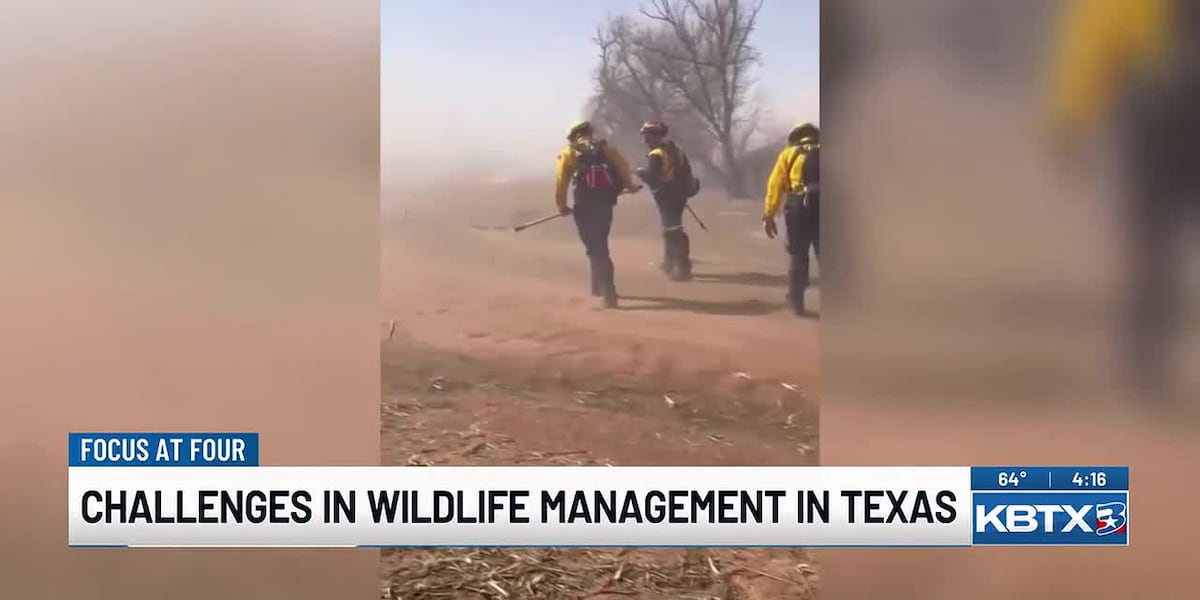
BRYAN, Texas (KBTX) – The 8 Ball and Lavender wildfires, which burned a combined 32,000 acres across the Texas Panhandle, have been declared 100% contained.
A Texas A&M researcher says the growing wildfire threat extends beyond weather and ecology — it’s rooted in who is moving into rural communities.
Professor David Matarrita-Cascante, with the Department of Rangeland, Wildlife and Fisheries Management, has been studying the issue through Texas A&M’s Hazard Reduction and Recovery Center. His research points to a decades-long trend of urban residents relocating to rural areas and constructing homes within natural landscapes — creating what researchers call the Wildland Urban Interface, or WUI.
“When you put homes within those natural environments, you’re putting together fuels with ignition,” he said. “And that ignition comes from human activities. And that immediately increases the risk and the fires.”
The study found approximately 50% of new rural landowners are absentee property owners — meaning the property serves as a second or third home. That disconnect complicates fire education and mitigation efforts, the researcher said.
“When you have a population that doesn’t know really how to manage fire and they’re not present or they’re not integrated into the community, it’s hard to get them to understand how they can contribute,” he said.
Dispersed, hard-to-reach properties also strain emergency response capabilities.
“Sometimes they have to make choices about if they can even reach these communities because there might not be a space for their fire trucks, there might not be a possibility to turn around.”
Copyright 2026 KBTX. All rights reserved.