
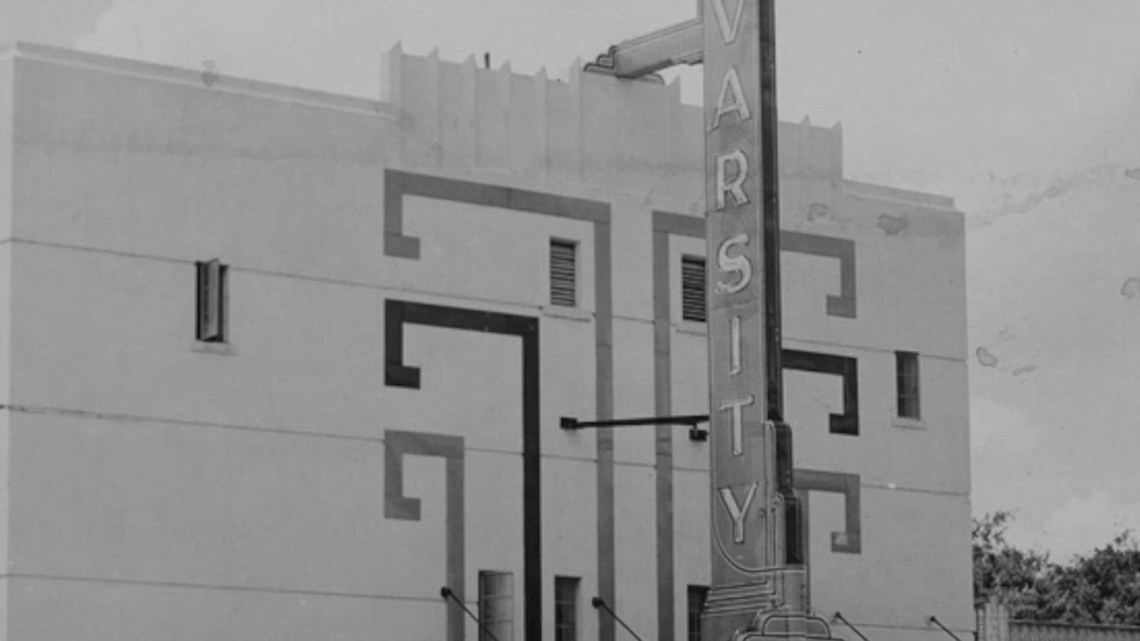
A series of pranks carried out by some University of Texas students helped to open movie theater doors to Black Austinites.
AUSTIN, Texas — Austin in 1960 was slowly outgrowing its image as only a college town as the population approached 200,000. But like most cities in the South, Austin was really two towns: one for whites and one for Blacks, with whites generally living west of what was to become Interstate 35, and Blacks and Hispanics on the east.
Black Austinites were not allowed in many of the local businesses, including stores, restaurants and theaters.
That year, a small group of University of Texas students, most of them white, began protests at two movie theaters on The Drag to get them to admit Black Austinites. The Varsity Theater and the Texas Theater were targets for protests known as “stand-ins.”
“We would walk in line and we had to have at least one Black student come out with us because we were mostly white, and we would get in line at the ticket window and ask if we could buy two tickets or a ticket for myself and for my friend here, the Black kid who would be next to us,” said former UT student Jim McCulloch in a 2015 interview for a documentary about the local civil rights struggle called “Stand-Ins.” “And then they would, of course, deny the ticket. So, we’d go back around to the back of it and stand in line again.”
With the protesters getting back in the ticket line again and again, others waiting to buy tickets would get frustrated and leave. The theaters lost money.
Though they were non-violent, the UT students who were occasionally joined by some local high school students were threatened, spat at and occasionally roughed up.
One student planning meeting at the university YMCA/YWCA in 1960 nearly cost lives when two UT students who opposed desegregation built a pipe bomb and used it.
“When two young men tried to throw a pipe bomb through the window, they were having some sort of brotherhood conference there was integrated,” Leon McNealy said. “And that would have been probably one of the biggest civil rights killings in the country. But the throw was a tough one and it hit one of the supports and went down this deep stairwell which contained the explosion.”
McCulloch and McNealy, among a group of former students who participated in the 1960-1961 protests, were interviewed for a 2015 civil rights documentary produced by People’s History in Texas. The video tells the story of how the protests eventually led to change.
By the next year, the student stand-ins had forced the Texan and the Varsity theaters to open their doors to Black people, though other movie houses in town remained whites-only for a few more years, until 1964 when civil rights for all became the law of the land.