
On January 20, 2025, Donald Trump started his second term as President of the United States. That same week, Trump maximized the utilization of Immigration and Customs Enforcement and began targeting immigrants. He started with an order for increased detention and launched widespread enforcement, including large-scale worksite raids.
Social media platforms swarmed with videos capturing the grueling arrests by ICE. These videos captured agents invading workplaces, detaining workers, intercepting school drop-offs and loitering outside of homes, schools and places of worship, often resorting to tactics such as physical violence, manipulation and coercion.
Under these videos, comment sections are filled with polarizing viewpoints regarding Trump’s new controversial political fixation. Some viewers praised ICE for demanding long-awaited accountability from immigrant communities. On the other side, people responded with fear, anger or heartbreak. Underneath the polarization, something vulnerable emerged: shared emotional intensity. People aren’t merely debating the ethics behind ICE’s actions; they’re reacting to grief.
“One of my friends was driving late at night … When the police stopped them, she wasn’t even driving … and the police shined their light in her eyes and asked her if she was legal,” said Lindsey Carrizales, sociology sophomore. “(It) changed my view with how I need to be more careful. My mom, she’s more scared for me … she makes me carry my birth certificate with me everywhere I go.”
Grief isn’t just defined as an emotional response to a significant loss; it’s a manifestation from the environment around you. Political grief occurs when individuals “experience a loss of safety, trust or hope for the future because of government practices and backlash to enacted policies”. Sensations like this reveal how political views are derived from experiences, not just policy. In fact, our political beliefs are often filled to the brim with emotions, allowing it to influence how students understand power and belonging — creating powerful, justice-oriented political demands.
As a product of my ancestors’ sacrifice to leave their homeland in pursuit of the American dream, I endlessly grieve with my Hispanic community as they continue being targeted by ICE. These are people whose backgrounds aren’t so different from mine. Like many others, my ancestors wished for more than what their native country had to offer. They wished to escape the poverty and violence that accompanied their home. They took that wish and allowed it to become their reality.
Despite their inability to see the fruits of their sacrifice, I embody it everyday.
My situation is not the blueprint — it’s pure luck. My ancestors were fortunate enough to have the resources that ensured the security of their offspring. Others aren’t so fortunate, leaving them to make hard decisions.
Understanding that the story isn’t black and white is what drives my grief. And as a result, it embodies my sympathy.
Not a day goes by where I don’t see the reality of today’s political climate: where kids are used as bait to lure parents, and families resort to hiding at home in fear of separation. Seeing people who share my heritage and speak my native tongue portrayed as criminals transforms a common political topic into something deeply personal.
Whenever I see the news, the anger and sadness I feel is part of a collective grief.
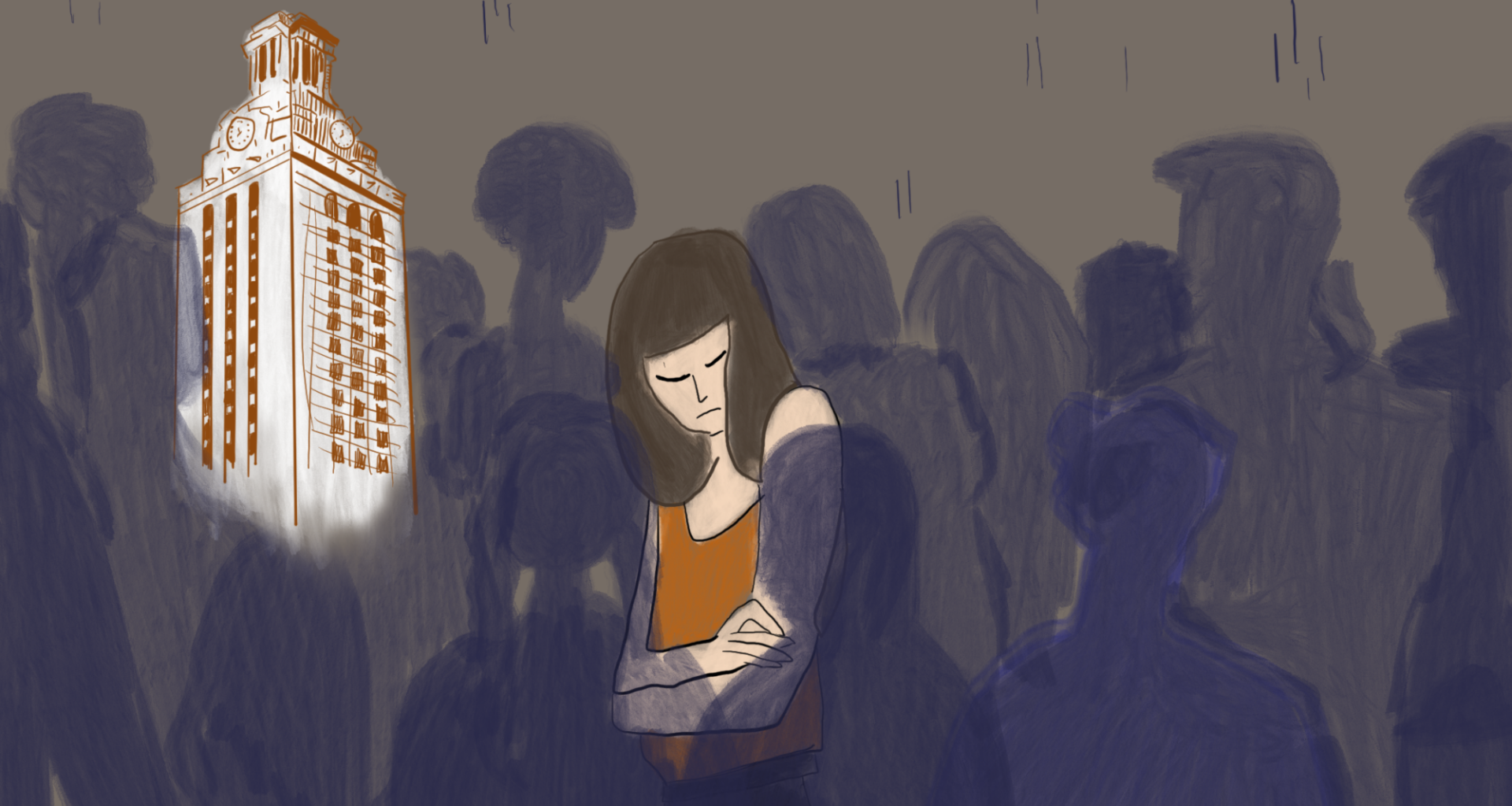
UT is littered with people who share my pain, yet it rarely surfaces in our political discussions. Instead, it disguises itself as defensiveness and hostility. When we interpret these deep emotional responses as overreactions, we fail to recognize that many students aren’t just responding to political debates, but to threats to their identity and security.
People don’t realize that, when we internalize these emotions, we often experience symptoms that are dismissed as burnout or “compassion fatigue.” In reality, we’re feeling the weight of witnessing harm while feeling powerless against it — often resulting in cynicism toward institutions, resentment toward opposing viewpoints or withdrawal from civic life altogether.
Like all grief, it can lead to feelings of hopelessness and isolation, preventing us from moving forward. However, when students allow themselves space to understand their emotional responses, grief can become agency.
“With collective loss and feeling vulnerable or not knowing what to do, one of the things that can help is engaging in your community at a local level,” said Bethany Albertson, associate government professor who specializes in political psychology.
Grief can motivate students to vote, tell their stories and advocate for at-risk communities. Action born from grief often carries a durability that rage alone cannot sustain, because grief is rooted in care rather than reaction.
Debates over ICE often center on policy and legality, but they also carry deep human connection. The grief and fear many experience are not distractions from politics; they are part of it. Recognizing this allows us to view political decisions as lived expressions before worldly debate.
Huerta is a government junior from Victoria, Texas.