
”The Simpsons” theme song has existed for so long that even the few people who have never seen an episode would recognize it.
The man who created the song was confident that neither the music nor the actual show would ever been seen by a real audience. That Bart, Homer, Lisa, Maggie, Milhouse, Smithers and Monty Burns would never become “stars” with 40-year careers on TV.
“It was a lucky moment. It’s one of the few things I’ve done where the idea came to me instantly,” said Danny Elfman, the man who created series’ famous introductory music. “I had met with (show creator) Matt Groening, who played for me a rough open of the show. He wanted me to score it.”
This would have been in the late 1980s, when the Simpsons were a short on ”The Tracey Ullman Show.”
“I was driving home, and I heard this crazy piece of retro music. I got home, and I just sat down and wrote it. I ran to the studio to record it, and I sent it over to Matt,” Elfman told the Star-Telegram. “I can only tell you that 95 percent of the time it does not go this way, and on the rare occasions it does work. I felt absolutely no pressure because I didn’t expect anyone to see the show. I was just doing it for fun. The show was so crazy that I thought it would get canceled after three episodes. I wasn’t feeling the sense that I was writing something that would last forever. I thought it would just be fun to record.”
“The Simpsons” may last forever. The show first aired on Dec. 17, 1989. According to The Hollywood Reporter, the series has been renewed for a 40th season, and is scheduled to be on at least until 2029.
Elfman, who is 72, remains a name in the niche world of TV and film composing, a path that he fell into while he was still the frontman for the ‘80s band Oingo Boingo. Elfman has been composing for 35 years, and his credits include the music for “Spider-Man,” “Doctor Strange in the Multiverse of Madness,” “Send Help,” “Good Will Hunting,” “Milk,” “Men in Black,” “Desperate Housewives,” “Tales of the Crypt” and many others.
He scored 17 films for director Tim Burton, including “Batman,” “Pee-wee’s Big Adventure,” “Beetlejuice,” “Edward Scissorhands,” “Charlie and the Chocolate Factory,” “Big Fish,” “Alice in Wonderland,” “Beetlejuice Beetlejuice” and “The Nightmare Before Christmas.”
That music is the source of his latest “show,” this time a live performance with the Dallas Symphony Orchestra. “Danny Elfman’s Music from the Films of Tim Burton” will play at the Meyerson Symphony Center in Dallas for a three-day run starting March 13. The concert includes the scores from those films with visuals on big screen, and will feature a live performance by Elfman.
He talked to the Star-Telegram about this new show, his career, and what a “note” means for a film composer.
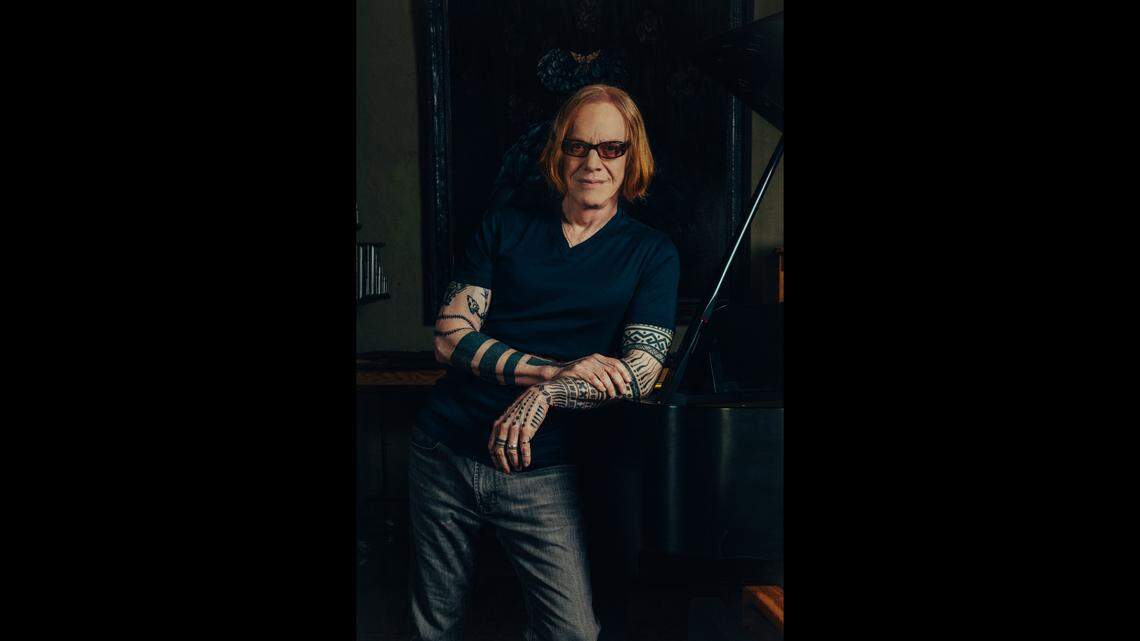
Award-winning film/TV composer and musician Danny Elfman will play his “Music from the Films of Tim Burton” with the Dallas Symphony on March 13-15 at the Meyerson Symphony Center in Dallas. Ethan Benavidez Photo provided by Ethan Benavidez
Star-Telegram: Are the nerves for leading an orchestra and singing a song the same in front of a live audience?
Danny Elfman: I’ve had stage fright ever since I started this 50 years ago. That’s never gone away. I will go on stage and sing, and I enjoy it. I wrote ”The Nightmare Before Christmas,” and to perform that live is fun.
S-T: What made you decide to score movies and TV shows?
Elfman: I didn’t make the decision. When I was called to do the movie ”Pee-wee’s Big Adventure,” I thought it was going to be a song with Oingo Boingo. I didn’t think it was going to be a score. Tim (Burton) said, “I want you to score it,” and I didn’t know if I agreed with him.
I went home and wrote it and put it on a cassette. He called me back and, “You got the job.” I thought about turning it down. I thought, I’m not equipped for this. This wasn’t intentional.
S-T: Actors will often complain of being handed “notes” from other actors or directors, and directors say the same of being handed notes from “the studio.” Does a composer receive notes?
Elfman: No one is free from notes. It’s different. A composer gets their notes from the director. A director gets the note from studio. Half the job of a composer is to get inside the head of the director, and find that place that satisfies what they are imagining. That can be tricky. Some directors are very fussy and very specific, but can’t explain why something isn’t working. You really have to do some detective psychological work. How do I find that? That is the harder part of the job.
S-T: You have earned a name in your industry. Does that give you creative freedom to do as you see necessary?
Elfman: I wish that were the case, but it’s not. Even directors who come in really impressed with my career, they are what they are, and they have to hear things and go, “Yes that works for me.” Or I had a director tell me, “Can you be more Danny Elfman?” I knew immediately what he was saying.
S-T: Is technology any more or less of a threat to your profession than other parts of the film industry?
Elfman: Up until now, technology has been making things better easier, faster and more accessible to more sounds. It’s all positive. Now with AI, I am glad I was in when I was in. I wouldn’t be surprised if in 10 years half of the scores could be done by AI. Half of the scores I hear now could be done by AI.
To create something that makes an imprint that the audience takes back home in their heads, that’s the challenge.
S-T: Which of your scores are you most known for?
Elfman: It’s hard to say. I can say when people talk to me and ask for autographs, the things I will see the most of are “Batman,” “Edward Scissorhands,” “Nightmare before Christmas,” “Pee-wee’s Big Adventure,” “Beetlejuice.” All of those early Tim Burton works.
S-T: Some music lovers have suggested that award-winning film composer John Williams “saved classical music.” Do you agree with that assessment?
Elfman: I wouldn’t necessarily agree. There is a big difference between film music and concert music. That’s why I started 12 or 14 years ago diving into that world. The challenges in concert music are vast. When performing film music on stage, it’s saving an orchestral music experience. I call that concert film music. It’s different. It’s great to get an audience in front of a live symphonic orchestra. I think that’s helped introduce symphonic to music to audiences that otherwise may not have seen it.
S-T: You had a cameo in the 1986 movie “Back to School” starring the late comedian Rodney Dangerfield. Did you ever get to spend any real time with him?
Elfman: Rodney actually called after the movie was done. It was at a time I was crazy busy. He asked me to score another movie to work on and I couldn’t do it. It breaks my heart in hindsight. All I can say is he was lovely, and amusing just like he was onscreen.
S-T: Is there anything you’ve scored that you can’t listen to?
Elfman: That goes for just about everything. Until I did the Burton-Elfman shows, the box set and the live shows that I will soon do, anything I’ve done, that’s the last I’m going to hear it. I’m weird. I listen to it, and I am thinking about it relentlessly; once it’s recorded, the ship has sailed and that’s what it is, and I don’t want to hear it again.
Otherwise, I’d still be working on “Pee-wee’s Big Adventure.”
S-T: Thank you very much for your time and continued success with your future projects.
Elfman: Thank you so much.
Fort Worth Star-Telegram
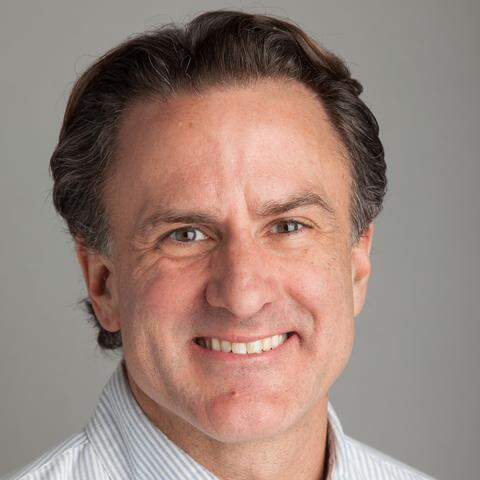
Mac Engel is an award-winning columnist who has covered sports since the dawn of man; Cowboys, TCU, Stars, Rangers, Mavericks, etc. Olympics. Movies. Concerts. Books. He combines dry wit with 1st-person reporting to complement an annoying personality.
Support my work with a digital subscription