
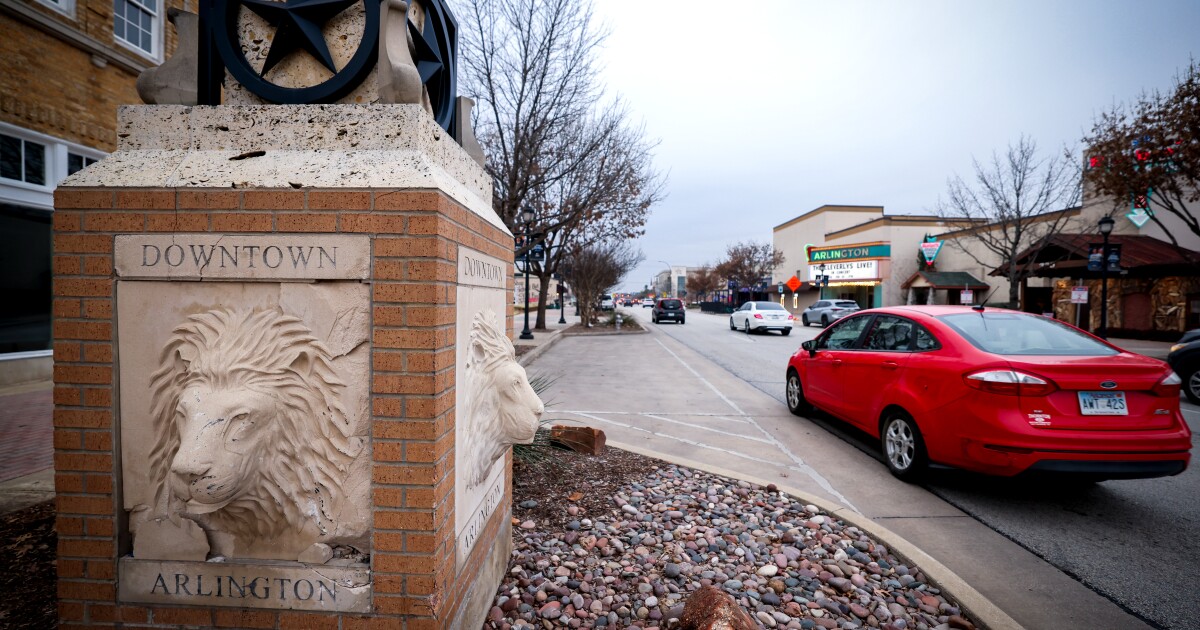
Arlington’s plans for implementing form-based code in the city are, well, taking form.
The initiative looks to reimagine zoning in the city, focusing less on what developments are allowed in specific areas and instead creating a list of acceptable options for that space’s use – such as retail, office, multi-family and mixed use.
But the code goes beyond that, standardizing the smaller details on development, such as a range of height options based on location, types of parking required and even aesthetics to create a theme or atmosphere in parts of the city.
The council will learn more about the draft proposal at its afternoon workshop Tuesday.
The code, if given the final go-ahead by council, will go into effect in a pilot area with a focus on downtown and its connections to the entertainment district.
The city’s plan puts neighborhoods into one of five different categories, known as sub-districts: traditional neighborhood, urban neighborhood, corridor mixed use, downtown core and downtown gateway.
Developments in those neighborhoods will have different requirements and limits for things like building height, distance between buildings and the street and types of parking. The city can also include requirements for building materials, styles and the types of developments.
‘Protect single-family neighborhoods’
Discussion and planning for form-based code has been going on for more than a year, and single-family neighborhoods have been a key point of discussion.
Several council members, especially District 7 Council member Bowie Hogg, have been passionate about safeguarding privacy and limiting density in those sub-districts, and it’s something the city’s plan has taken into account.
Hogg did not respond to requests for comment about the draft proposal’s efforts to achieve that.
For instance, developments in single family neighborhoods under the current planned proposal would be limited to 2.5 stories while, for example, urban neighborhood developments would have to be at least three stories and no taller than five.
Hogg has emphasized on multiple occasions that shorter height limits on buildings will make it easier for homeowners to have privacy in their backyards – something that could be lost if a tall apartment structure is built nearby.
Traditional neighborhoods would also be primarily, if not entirely, homes, while urban neighborhoods would see a mix of apartments and first-floor corner retail uses.
And while these changes are intended to transform parts of the city, property owners won’t have to alter existing construction to match the rules.
That’s according to Jayashree Narayana, principal at consulting firm Livable Plans and Codes who has been working with the city in creating the plan. She said these new rules would only apply to new developments or major alterations to existing buildings.
“Obviously, the code wouldn’t require them to do anything unless they are planning to make improvements to the property, and even then it’s a tiered approach,” she said. “You want to make sure that it makes sense given the level of investment they’re making on the property.”
A new, faster process
Arlington City Council will not review every proposed development in the form-based code area under the current planned proposal, allowing for a faster and less expensive process for developers.
Narayana said one goal of form-based code is speeding up the administrative steps of development by simplifying the process.
So long as the development’s intended use is among those allowed and developers meet requirements for things like setback, building materials, facade themes and parking, approval can come from city staff.
That’s because the city will be less involved in managing specific uses of land if it moves forward with this plan.
“A lot of the detail in the code is to make sure that there is predictability of outcomes, so that it’s not a free-for-all and developers just can’t do whatever they want,” Narayana said. “It is going to be within the rules of the game.”
The current process for approval usually takes five or six months, with up to a year for larger development projects, according to the city.
Under form-based code, the city anticipates that process would be shortened to average around three months once a proposal is submitted.
A big part of that comes from having to work out those small details that would already be sorted under form-based code.
Small changes, like those that don’t conform to building height or landscaping requirements, that don’t fit the rules can be handled by a zoning administrator, adding an average of 15 to 20 days to the process.
Major modifications would be reviewed by a third-party design agency before going the the city council for approval – estimated to add a month to the process.
Even with major modifications, most projects are expected to have their answer on approval in less time than the shortest expectation under current zoning laws.
While the process will be sped up under the draft proposal, Narayana said change should still be expected to come slowly – over the course of up to two decades before the area takes a more permanent form.
She pointed to cities like McKinney and Roanoke, which have implemented form-based codes. Those areas have changed dramatically, but the transformation happened over the course of 15 to 20 years.
“It’s a long-term, 15, 20, 30-year project,” Narayana said. “It’s not going to be overnight, and so everyone has to have patience.”
Property value, both in terms of market and taxable value, should be expected go up over time, but only in increments as developments matching the new code populate the area.
Got a tip? Email James Hartley at jhartley@kera.org. You can follow James on X @ByJamesHartley.
KERA News is made possible through the generosity of our members. If you find this reporting valuable, consider making a tax-deductible gift today. Thank you.