
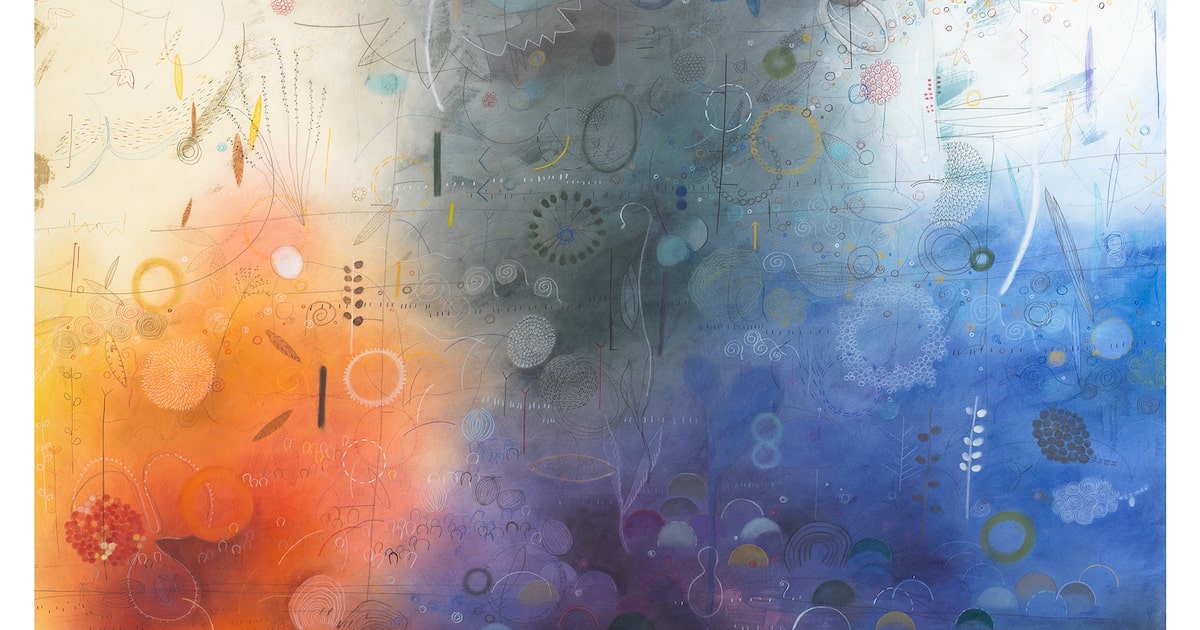
Gathering together works collected in the last few years by 42 area art collectors, the enlightening “Fields of Vision” at the Green Family Art Foundation shows the value of midsize venues in the city’s artistic ecosystem. Being too large and ambitious for a commercial gallery, while too of-the-moment for a slow-moving museum, an exhibition like this would otherwise have had a hard time finding a home. But the Green’s moderate size is just right for the purpose.
In the catalog’s informative introduction, curator Sara Hignite touches on many different subjects present in the show, although the collection of works is too diverse to be united by any single topic (the post-COVID vibe of dislocation and reconsolidation comes closest to being an overarching theme).
While not coalescing into an overall narrative, taken wall by wall, Hignite’s savvy curation offers a broad perspective on the state of art collecting in Dallas. An example is in the first gallery, visible from Flora Street even before one enters. (A perk of the Green’s outstanding location and free admission: A visit can be easily added to a trip to the Arts District.)
On the left wall are two pictures, by Berndnaut Smilde and Ravelle Pillay, that partake of the grand pictorial tradition that continued for centuries until it was disrupted by Marcel Duchamp’s invention of conceptualism, which would dominate contemporary art.
News Roundups
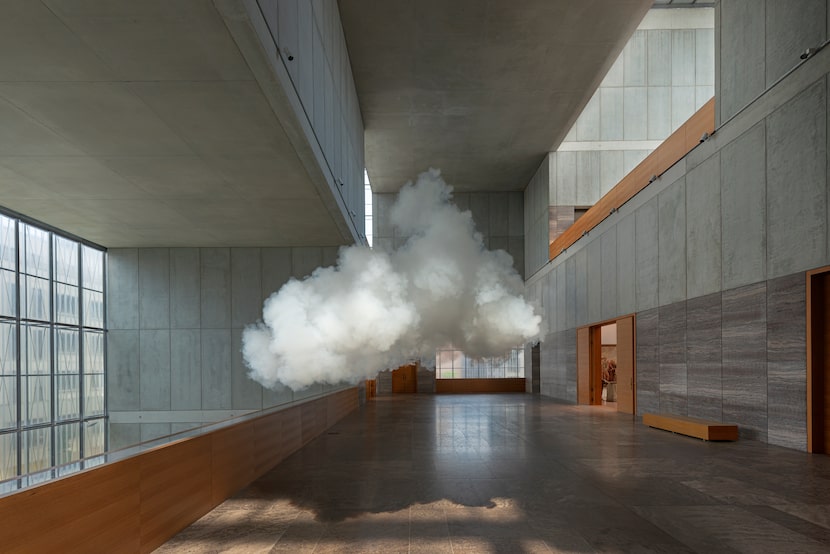
The clouds come indoors in Berndnaut Smilde’s 2021 digital C-type print “Nimbus Mdbk” and other artworks in the Dutch artist’s Nimbus Series.
Gowri and Alex Sharma / Courtesy of the artist and Ronchini, London
On the right wall, facing the check-in desk, are works by Ja’Tovia Gary and Samuel Levi Jones, both of which make forceful statements about politics and social justice. Taken together, the works in the first gallery lead a viewer to expect a serious and sober show.
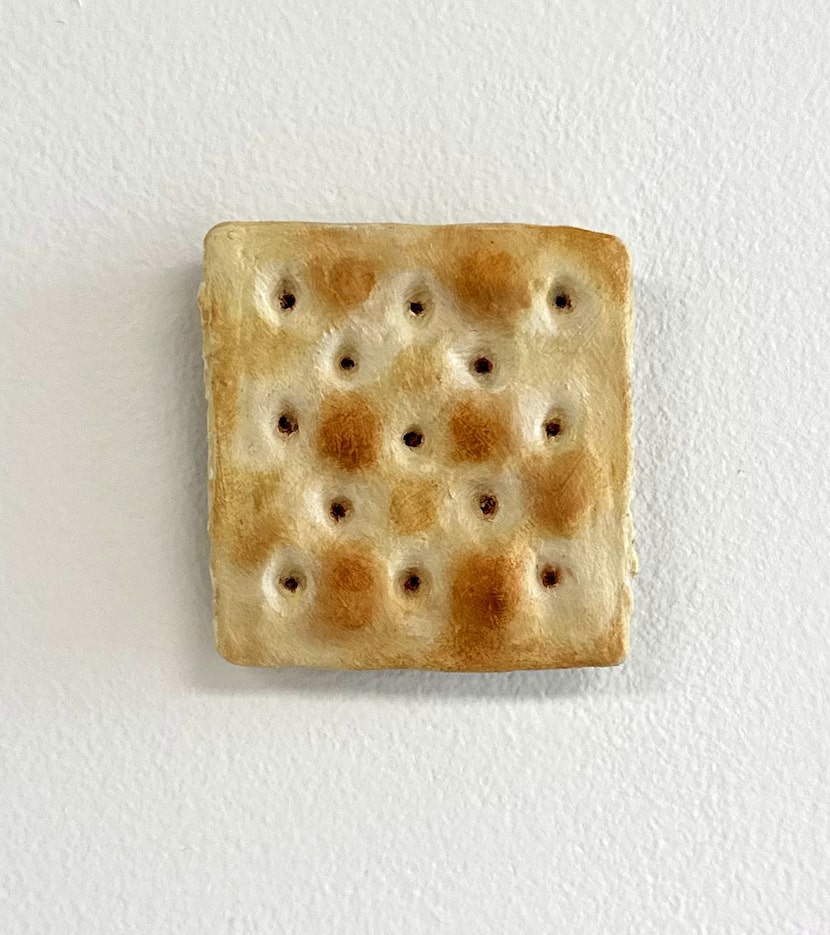
Tamara Johnson’s hyperrealistic 2023 work “Cracker 2” features a saltine cracker crafted from pewter and oil paint.
Collection of Grace Cook / Courtesy of Keijsers Koning
But then, just as one is about to walk into the next room, one spots Tamara Johnson’s hyperrealistic saltine cracker replica crafted from pewter and oil paint, hung almost too unobtrusively to notice. The work, the wall text says, simulates “a familiar and ubiquitous object of ritual, comfort and sustenance.”
Playing off the conceptual revolution instigated by Duchamp (via Piero Manzoni and Maurizio Cattelan), Johnson’s tasty-looking treat lightens the mood and lets a viewer know to expect the unexpected in the galleries to follow.
The pleasant experiences to be had are many. One for me is the chance to be introduced to a newer generation of collectors. Among the lenders to the show, alongside the Dallas art patrons who have supported the culture for many years, and whose tastes will be familiar to any local art lover, are a number of younger names, whose choices suggest where the culture is headed.
Among the younger generation, jewelry designer Elizabeth Hooper O’Mahony lent a robotic portrait by Wanda Koop that gave me a sense of what the face of ChatGPT might look like, if it had one. Real estate developers Chris and Calvin LaMont, the hosts of Buy It or Build It on HGTV, lent the works by Jones and Thokozani Madonsela. Juan O. Cavazos lent a conceptual piece by Arlington-based legend Celia Álvarez Muñoz. Christopher Scott and Cody Fitzsimmons, proprietors of Oak Cliff’s Tureen gallery (where Muñoz also recently showed), lent an oversize Easter egg by Matthew Langan-Peck. As in an Edith Wharton novel, the mingling of cultural elites from different generations and backgrounds, like different mixers in a cocktail glass, creates unexpected, stimulating combinations.
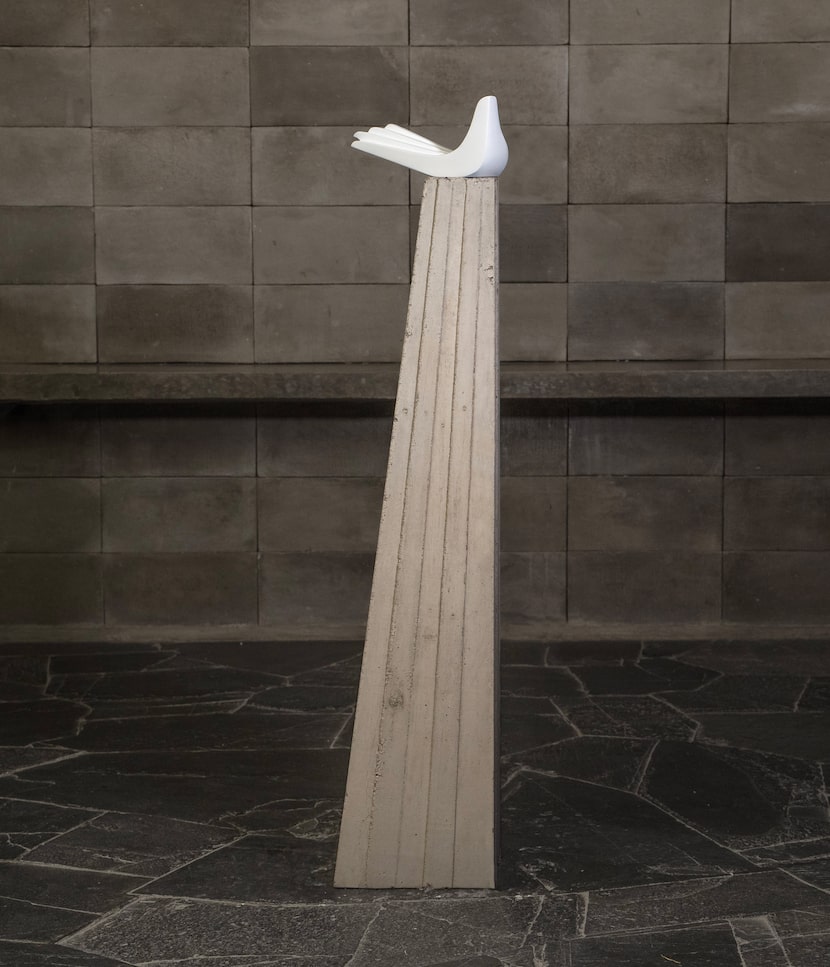
Pedro Reyes’ 2023 bronze-and-concrete work “Ahimsa” is a subtly poignant monument to peace.
The Collection of Craig and Kathryn Hall
My other favorites included Navajo painter Emmi Whitehorse’s suggestion of uncanny parallels between surrealism and Native American traditions; a painting by Sarah Sze, best known for her room-size sculptural installations, whose aesthetic proves surprisingly translatable into a two-dimensional format; seeing Lonnie Holley, of Birmingham, Ala., use flattened Cubist space to make subtle reference to American racial history; and Pedro Reyes’ subtly poignant monument to peace, like a miniature Ashoka pillar pointing to the heavens.
In a period when it is easier than ever to collect artwork from anywhere in the world, without the need for local institutions to intermediate, the question arises: How much of a connection does there need to be between the artists and the collectors within a local community? On the one hand, it seems the days when a group like the Dallas Nine of the 1930s could be defined by a single shared location, style and outlook, and be supported primarily by local institutions, are long gone.
On the other hand, at least nine of the 42 artists in this show were born, live or have lived in the Dallas area: a healthy representation. But in the global art system of today, each one of them has taken a different path through institutions far beyond Dallas, not to mention developed a unique style and approach; they share no common “Dallas” identity on which a viewer could peg their work. In that sense, the show’s diversity is an apt reflection of the large, varied and fast-growing metropolis.
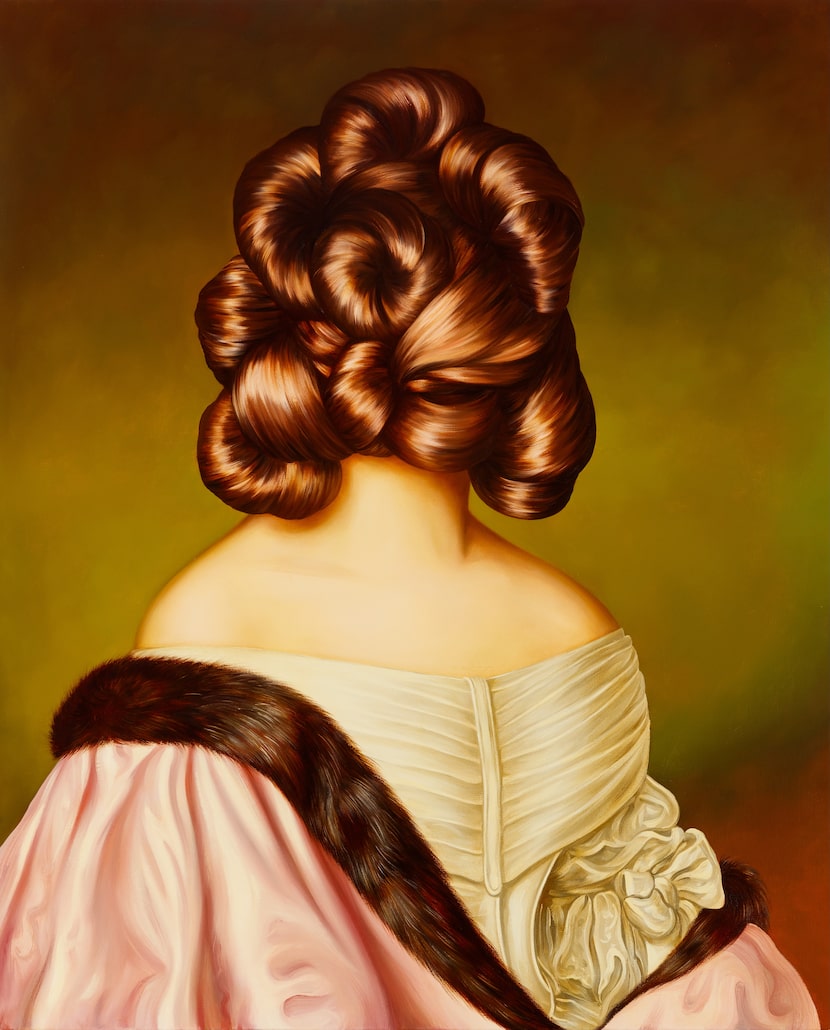
Polish surrealist painter Ewa Juszkiewicz’s 2020 oil-on-canvas work “Untitled” is featured in the exhibition.
Kevin Todora / Courtesy of the Karpidas Family
Details
“Fields of Vision: Dallas Collects, curated by Sara Hignite” continues through Aug. 9 at the Green Family Art Foundation, 2111 Flora St., Dallas. Admission is free. Open Wednesday through Friday from 11 a.m. to 5 p.m., Saturday and Sunday from 11 a.m. to 6 p.m. 214-274-5656. greenfamilyartfoundation.org.