
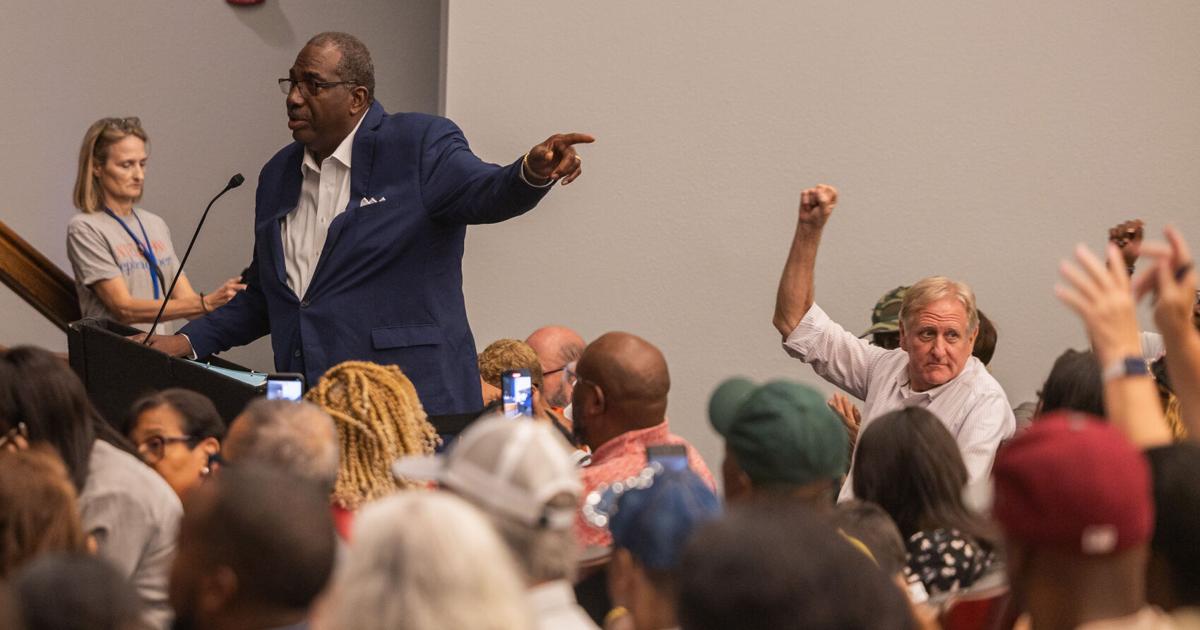


Texas Sen. Royce West, D-Dallas, testifies during the Texas House of Representatives’ Select Committee on Redistricting’s public hearing July 28, 2025, at UTA.
As UTA celebrates another Black History Month, the university’s growth can be measured not only in the rise of new residence halls and academic buildings but in the leaders who once walked its campus and went on to shape communities far beyond it.
When UTA alumnus Royce West arrived on campus in the spring of 1971, his focus was singular: football. But over the course of his collegiate career, his path shifted from the stadium lights to advocacy, finding his voice as a campus leader.
From 1974 to 1975, West served as UTA’s student body president, becoming the first African American elected to the position. West is an Omega Psi Phi fraternity alumnus and has been recognized by the university as a distinguished alumnus.
Now serving as a Texas state senator, West still traces his approach to leadership back to Cooper Street roadblocks, student housing projects and lessons he learned about pushing for institutional change.
This interview has been edited for brevity and clarity.
The Shorthorn: How has being Student Government president impacted your life in regard to public work and public service?
Royce West: I’m still involved in public services, number one, because that’s what it was about being at UTA. I can recall doing several projects, specifically one concerning student housing. UTA has always been known as the commuter campus, even though now it has more dormitory space. Back then, most of the students were living off campus and they had apartment selector service that would navigate for students for a fee. And I said, “These are my students, I need to use Student Government to navigate and get a fee.” And we put it in to take money and put it in the student treasury.
We were so successful that the private sector decided to get an attorney general’s opinion that we couldn’t do that. Had I known then what I know now, I would have fought their opinion. Surely the Student Government should be able to, then and now, be able to think about different projects that raise money for the student treasury.
Cooper Street used to be a source of a lot of anxiety, and students made it really clear they wanted the Student Government to do something about it, and we decided to place a roadblock. You can imagine the calls; people were mad as hell, but we got the attention of the administration. I think that was the beginning of an earnest conversation about providing a bridge over Cooper Street. Even though it took several years, we were able to impact change. And so, I learned how to impact change, and then ultimately got a law degree, ran for district attorney in the mid ’80s, was the Democratic nominee and ultimately ran for state Senate in 1992 and became the state senator.
The Shorthorn: What responsibility do you think leaders have to create opportunities for the next generation?
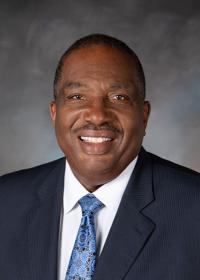
Photo courtesy of the Texas State Senate
Royce West: Even though I’ve been the senator for District 23 for 33 years, I’m not going to be here forever, so I’ve got to make certain I’m preparing the next generation to become a leader here in the state Senate seat. Same thing there at UTA. We made certain that once my office term was up, we had others waiting in the wings in order to continue the program we had started.
The Shorthorn: What does it mean for you to watch young Black students thrive in spaces that were less inclusive?
Royce West: It means the world, because it shows that change has been made. I know that we’re in a world of anti-DEI, and the question is, what does that mean? Are people of color and women better off now than they were in the past? Yes. Is there still a lot of work to be done? Yes. What I recommend is that people understand and appreciate the impact of DEI and make certain to respond accordingly.
The Shorthorn: Is there anything else that we did not touch on during this conversation that you think is important for people to know about?
Royce West: The reality is, I will always be a Maverick. I will always be a Maverick as it relates to making certain that people have the opportunities to be successful, specifically students from UTA.
@tay._.sansom