
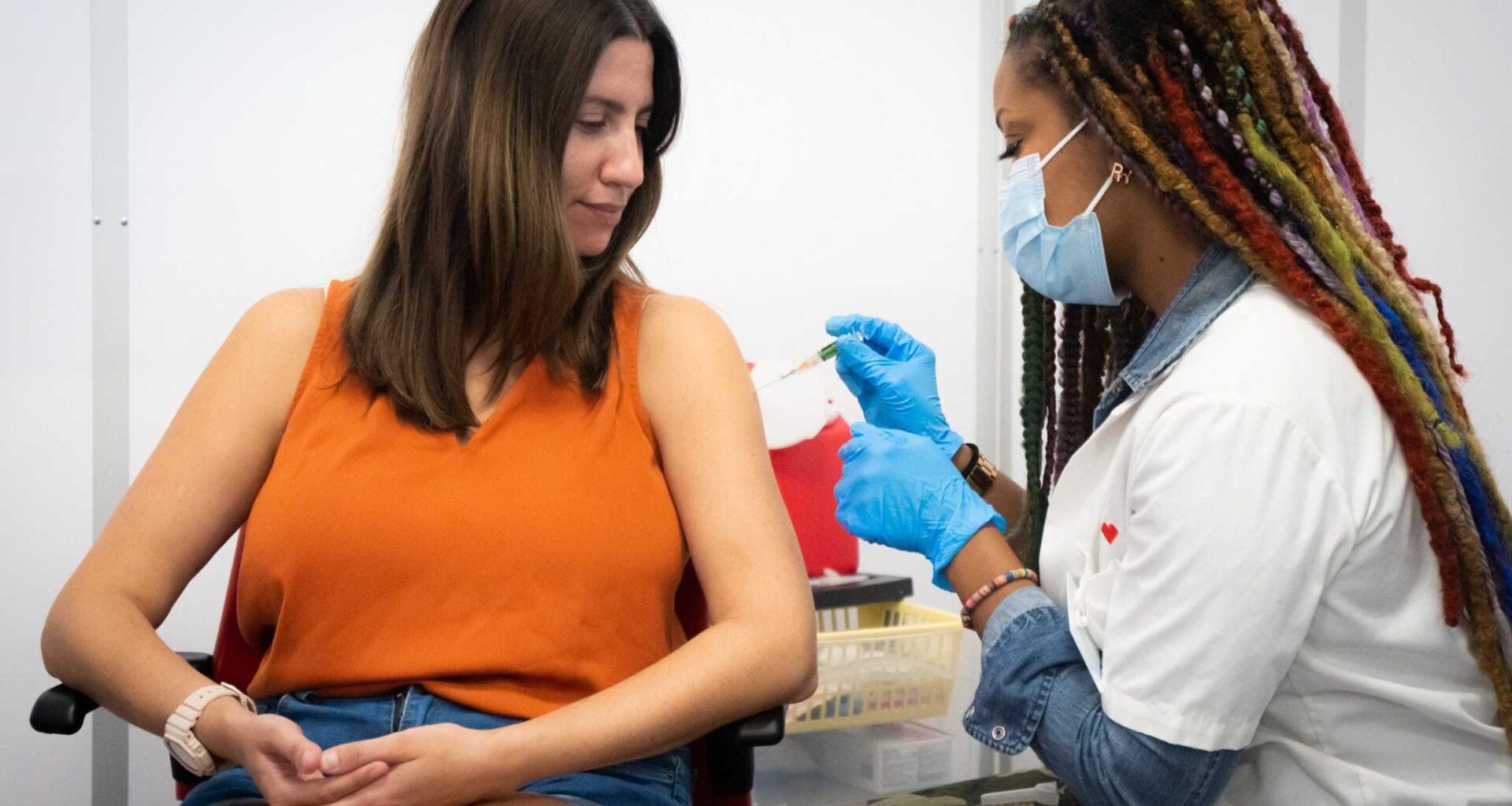
Right now what’s going around Central Texas is mainly different cold varieties.
ProfessionalStudioImages, Getty
We’re still in the heart of cold, flu and allergy season in Central Texas. We asked local clinics what viruses and infections they are seeing in patients right now.

The no-name respiratory virus
Boring old common colds that don’t have fancy names are the thing doctors are seeing most often. Doctors are swabbing them for flu and COVID, but they come back negative, said Dr. Cara Lye, a pediatrician with Austin Regional Clinic in Bee Cave.
Article continues below this ad
Sometimes these colds come with a lingering cough. After two weeks of a cough or any symptoms that aren’t going away or are worsening, you should see a doctor to rule out another kind of infection. Viruses can lead to pneumonia, or an ear or sinus infection that would need further treatment.
Monica Ortiz receives her flu vaccination from Rochelle Guyse, a pharmacy manager at a South Austin CVS. Right now flu B is having a moment.
Sara Diggins/American-Statesman
Is flu season over?
Article continues below this ad
What has changed is the type of flu, said Dr. Natalie Tarrant, a pediatrician at Texas Children’s Hospital in Austin. Recently, she’s seen what she calls “an explosion” of flu B instead of flu A, which had been dominant and included the subtype of H3N2. Flu B typically happens later in the season. This year is following that pattern.
The symptoms are very much the same: fever, body aches, runny or stuffy nose, cough, chest congestion, headache, sore throat, fatigue, sweating and chills, but some people also have experienced nausea, diarrhea and stomach pain.
Some of the patients who are coming in with flu B now are the same people who were in clinics for flu A in December and January, Tarrant said, reiterating that getting one type of flu doesn’t save you from getting a different type of flu in the same season.
Article continues below this ad
This year’s flu shot wasn’t as effective at preventing flu, but it continues to prevent severe illness and death. Lye has seen her patients who have had the flu shot bounce back more quickly and be back in school sooner than patients who have not been vaccinated.
Flu, if caught early, can be treated with antiviral medications to lessen symptoms and their duration.
What other illnesses are out there?
RSV (respiratory syncytial virus) has moderate levels in the community, but a low number of cases in the local emergency rooms. Tarrant has had to send some younger patients with RSV to the hospital this season. Because there are now vaccines for babies, pregnant women and older people, there has been fewer serious cases in recent years, Lye and Tarrant both said. Lye worked in hospitals before coming to Austin Regional Clinic and said 80% of the babies in the hospital over the winter would be there for RSV before the vaccine was available. Now when the vaccinated babies get RSV, it’s been more like a cold, she said, and they often don’t end up in the hospital.
Article continues below this ad
Strep is having it’s typical run during the school year. It tends to happen in bigger kids and adults instead of the very young. Strep is known for its very sore throat without a cough, but with a fever. Some kids will have different symptoms. including stomach pain or vomiting, Lye said. Because of that variance, Lye tests for strep even when there isn’t a sore throat. Strep can show up in other places than the throat, including in a skin rash around the mouth and nose known as impetigo, and as an angry-looking rash around the anus. Because strep is a bacterium, antibiotics are needed to prevent it from affecting vital organs like the heart.
Croup cases show up during the winter flu season and are marked by a barking cough, usually in toddlers. Breathing treatments and steam help lessen the cough.
Whooping cough (pertussis) had a resurgence in the fall, but has been quieter this winter. This vaccine-preventable disease has a cough with a “whoop” at the end. Because it’s a highly infectious disease and is vaccine-preventable, doctors have to report it to the local public health department. Schools are expected to alert families if there has been a case. The danger with pertussis is the cough that can linger for weeks to months and difficulty breathing. It is particularly dangerous for infants.
Norovirus, which is known for its intense diarrhea and vomiting, definitely was circulating this fall, but cases have fallen recently. When it does emerge, it happens in clusters and quickly goes through families and even schools. Lye expects to see another spike in stomach viruses like the norovirus as the weather warms up in spring and summer.
Article continues below this ad
We’re not testing people as often for COVID-19 like we did in 2020. This winter has been the first winter since 2020 without a COVID-19 spike.
Ana Ramirez/Austin American-Statesman
COVID-19 has been low to very low all season in every aspect. The reason: We aren’t testing for it as often as we once did, Lye said. Also, our bodies have adapted to what was a novel virus and the virus has mutated, but hasn’t mutated as rapidly as the flu does every year, said St. David’s Medical Center’s infectious disease specialist Dr. Brian Metzger. Whether we have immunity from previous infections or from vaccines or a combination of both, our bodies are handling the disease. Of course, people who have immune system issues, are older or very young, continue to have risks for COVID-19 severe disease or hospitalization.
Mountain ashe juniper trees blow in the wind at Mary Moore Searight Metropolitan Park in Austin in January. Now, other trees have mainly taken over the allergy threat.
Jay Janner/Austin American-Statesman
Allergies continue
Often people will think it’s just allergies, but it’s really a virus or something else, Lye said. If you think it’s just allergies, but it’s not going away or corresponding with the allergy counts, you should see a doctor.
Article continues below this ad
Cedar fever season has been particularly terrible this year. “We’re ready for it to let up,” Tarrant said. It’s been particularly difficult for kids who have asthma.
Cedar fever does show signs of subsiding, though Austin is still seeing moderate amounts of the pollen from the ashe juniper tree. Right now, tree pollen, especially oak, elm and ash have kicked in and are at high or very high levels when combined. And, of course, mold, pet dander and dust mites never really go away.
What is coming in March?
Spring break can be both helpful and harmful to virus spread, Tarrant and Lye said. When there have been outbreaks of viruses or flu, being off school for a week can help that cycle come to an end.
Article continues below this ad
However, when people go traveling or are otherwise in crowded spaces, they can bring home new and different illnesses to their schools and communities after spring break is over. Lye is on the lookout for more flu and stomach viruses following spring break.
And for Austin, South by Southwest also can be a disease-spreader locally and then wherever attendees go after the event is over.