
Will Sturner was just a sophomore working for the TCU basketball team when he noticed something that didn’t add up. The players had massive social media followings. Brands were everywhere. Yet nobody was helping those athletes turn their presence into deals.
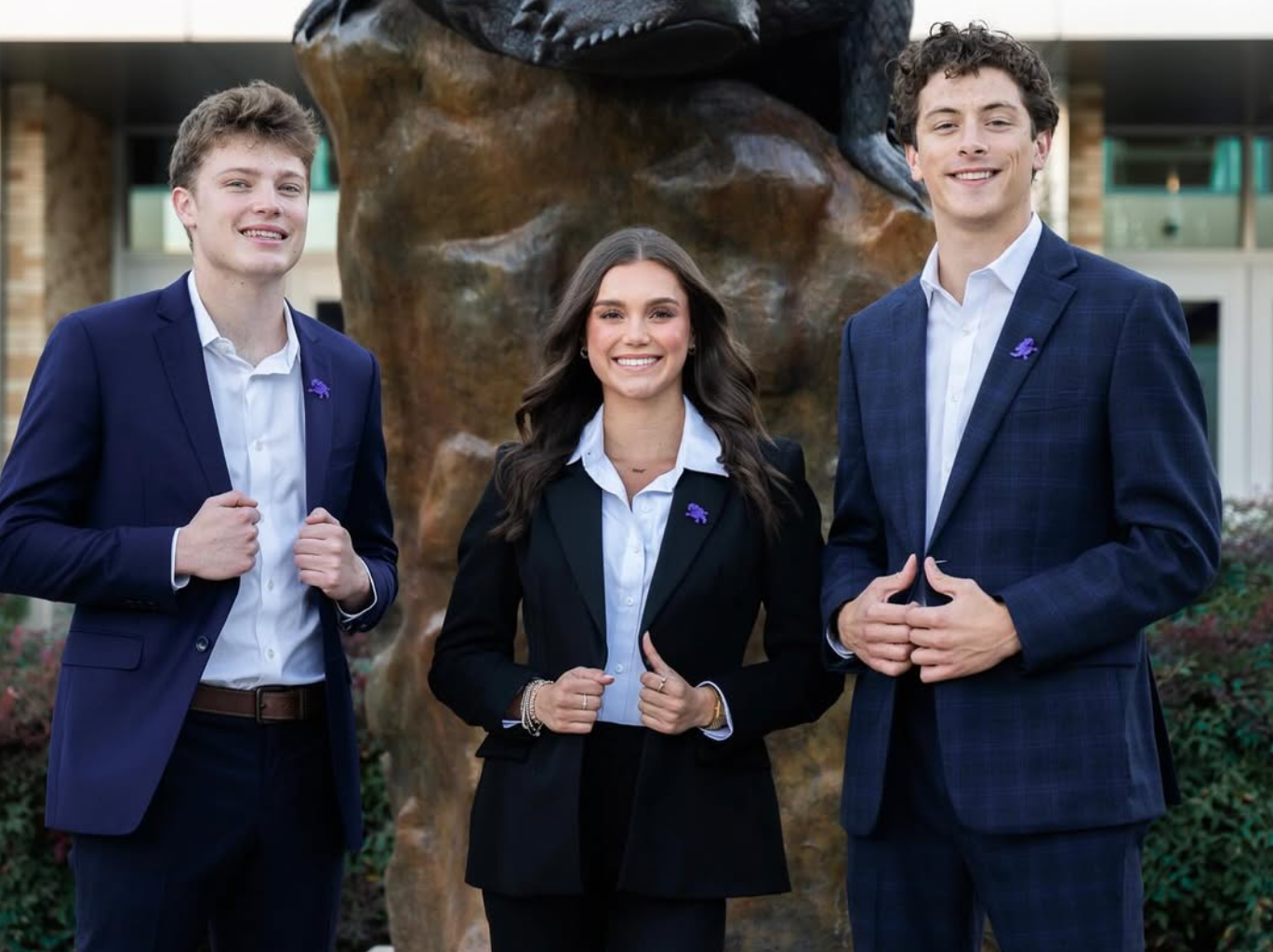
He decided to change that and Legacy Frogs was born. Founded by Sturner and fellow students Riley Richards and Philip Rosenfeld, Legacy Frogs is a first-of-its-kind, student-run NIL management program.
This year, it earned recognition as one of the Neeley School of Business’ elite programs, joining the likes of Neeley Fellows and Neeley Mentorship Program.
NIL, which stands for Name, Image, and Likeness, refers to the right of college athletes to profit from their personal brand, a right granted by the NCAA in 2021. The policy opened a new frontier for student-athletes, but navigating that frontier is easier said than done. Legacy Frogs was created to help bridge that gap.
Legacy Frogs launched without a blueprint to follow, “We really started with no idea what we were doing,” said Vice President of Brand Development Riley Richards. “But I think my favorite part of the impact that we’ve had is just showing that when you really dig deep and use the people that TCU has, incredible faculty who believed in us, it works.”
What began as a handful of students has grown into an organization of 32 members managing 13 student-athletes. Each athlete is paired with one content creator and one consultant who handle everything from social media strategy to brand outreach.
President Will Sturner credits the one-on-one approach as the program’s defining feature.”That’s what makes our organization so unique compared to other schools,” said Sturner.
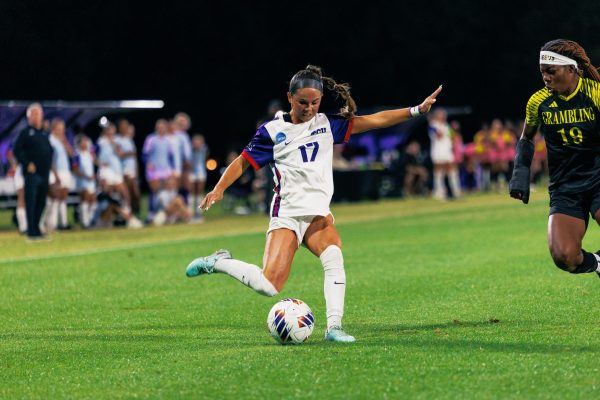 Legacy Frogs athlete Cameron Patton kicks the ball towards the net at Garvey-Rosenthal Stadium in Fort Worth, Texas, Nov. 14, 2025. The TCU Horned Frogs beat the Grambling State Tigers 7-0. (TCU360/Tyler Chan)
The primary quality Legacy Frogs looks for in an athlete isn’t follower count, it’s buy-in. “Most of what we’re looking for, honestly, is that they’re bought into the process,” Sturner said. They want the athletes to be “willing to put in the effort to grow their platforms,” said Sturner.
That philosophy is especially meaningful for athletes in smaller sports, who see far less NIL support than their football and basketball counterparts. Under the current nationwide revenue-sharing model, schools can allocate up to $20.5 million of athletic revenue for NIL deals, but that money flows primarily to high-profile athletes and programs.
Legacy Frogs is built for any athlete who wants to grow their brand. “Our whole thing is athlete first,” Richards said. “If they’re not willing to post two times a day, that’s no issue for us. We just want to help them.”
Hudson Hooper is often cited as a standout example. The TCU football linebacker grew from a few hundred followers to several thousand and secured multiple brand deals after fully committing to the program.
As a newly named Neeley elite program, Legacy Frogs is focused on thoughtful growth, scaling its athlete roster and membership while refining the processes that got it here. Sturner describes the cycle plainly: “Scale, focus on the process, scale, process.”
Long term, the organization hopes to become a genuine recruiting tool for TCU athletics, a resource prospective student-athletes can point to when choosing where to compete. For the students running it, it’s also career preparation. Many aspire to work in NIL management, athletics, or sports marketing after graduation.
“Having it be a premier program has already been a crazy accomplishment,” Sturner said. “I would love to just see it continue to be the go-to for athletes that want to grow their NIL and expand their brand.”