
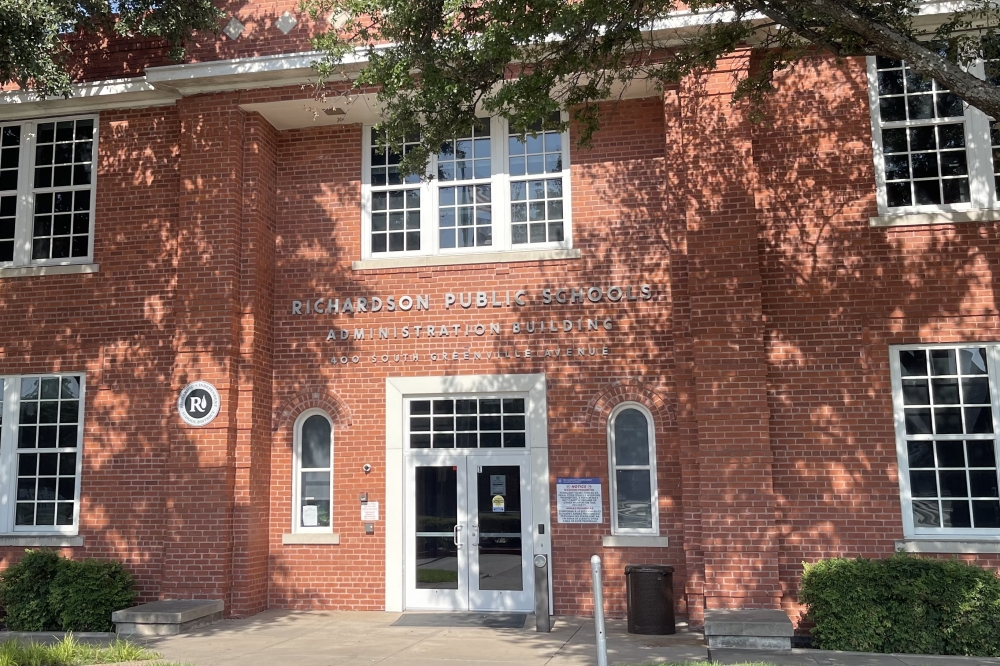
Richardson ISD is expected to see continued enrollment decline over the next decade, according to a demographic report presented to the school board on Feb. 19.
The big picture
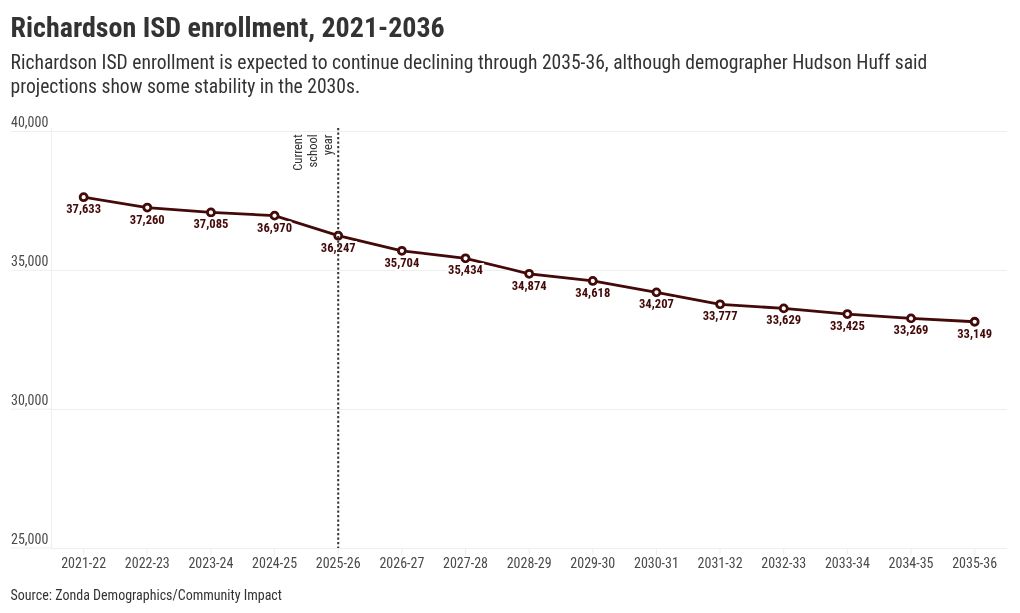
District-wide enrollment is currently at 36,247 students for the 2025-26 school year, said Hudson Huff with Zonda Demographics.
Enrollment declined by 723 students compared to last school year, with second through seventh grade experiencing the most significant drops. Huff said enrollment projections show continued decline over the next decade, with more significant drops predicted over the next several years.
Zooming in
RISD is primarily seeing enrollment declines in lower grades, Huff said, due to decreasing birth rates across the district. Middle schools and high schools are likely to remain stable for the next several years but will eventually start to see more significant drops.
Projections show the district dropping below 34,000 students in the 2031-32 school year, Huff said, due primarily to lower birth rates and the anticipated impact of school choice. He said enrollment decline could stabilize in the early 2030s.
“We do believe that we will start to stabilize, but we need some of those earlier grade group levels to start leveling out and picking back up,” Huff said.
Other factors contributing to the enrollment decrease include slight increases in unemployment rates as well as a lack of significant single-family housing development in RISD, Huff said.
What it means
Enrollment numbers are a key data point as RISD begins developing its budget for fiscal year 2026-27, Superintendent Tabitha Branum said. Texas bases school funding on attendance, so a decrease in students will result in a decrease in funding.
The predicted enrollment decline is spread across the district, not concentrated in a particular area or school. Branum said that means the decline will be seen in a few less kids per classroom rather than in sizable changes to a school’s grade size, which she said will make it difficult for the district to take significant cost-saving measures like collapsing a class or consolidating a campus.
“The fixed costs are the same; however, the revenue that’s needed in order to pay for those fixed costs is going down,” Branum said. “It makes it very challenging to find those opportunities to become more efficient.”
Also of note
Huff said the number of transfer students, both into and out of RISD, have remained fairly consistent. However, students transferring out of RISD to a virtual school increased by nearly 200 students this year compared to before the COVID-19 pandemic, which Huff said is a statewide trend.
Branum said the district is working on developing a virtual or hybrid program that aims to retain families who may be thinking about leaving the district to find a more flexible schooling option.
“Hopefully we will have that option right here, and they will choose our virtual option,” Branum said.
Another thing
Huff said housing affordability and availability also play a key role in district enrollment. There is much less new single-family housing development in the district than there was several years ago, Huff said, due to both high interest rates and limited lot inventory.
“With some of those higher price points, it is challenging for young families to move into the area,” Huff said.
However, Huff said there has been significant multifamily development, with 375 multifamily units currently under construction and nearly 1,300 units in various stages of planning across the district. RISD has a higher yield of students from multifamily housing than many other districts, Huff said.
What’s next
The board is set to receive presentations throughout the spring as district staff works to develop the budget, including information on potential budget reductions. The board is set to adopt the new budget in June.
“The way things were in public education 10 years ago, it’s just a new world,” board member Eric Eager said. “Some people can be scared about it, but we can also be excited about it and the opportunities to create new innovative programs.”