Editor’s Note: This is the first part of a
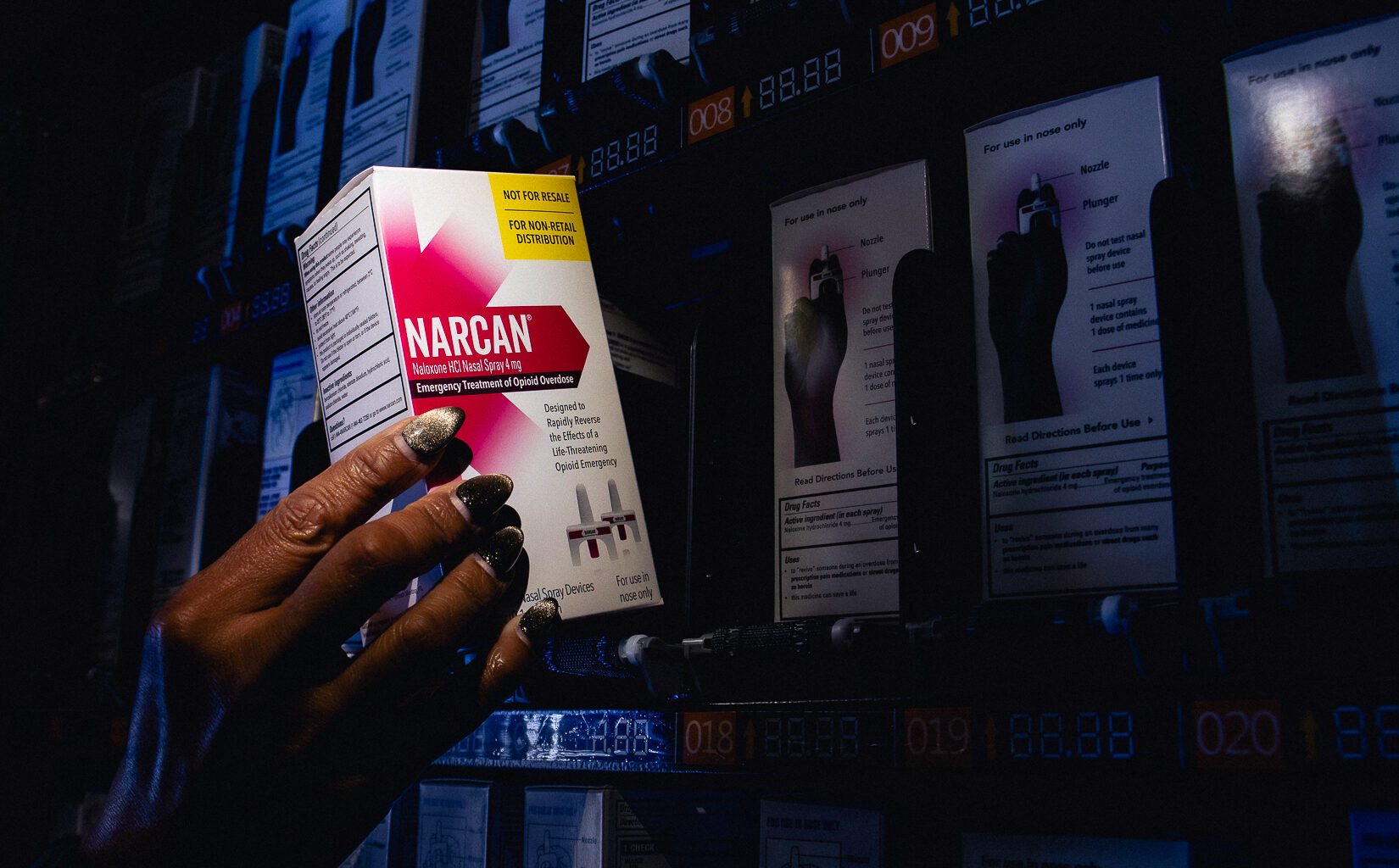
Students walking through the Union East Building at the University of Texas at El Paso (UTEP) this semester may notice something new on the first floor. A vending machine: not stocked with the usual snacks or drinks, but with free naloxone — the life-saving medication that can reverse a drug overdose in minutes.
Narcan, the brand name for the naloxone, is available to anyone at no cost with no questions asked; emphasizing accessibility for students.
The medication comes in the form of a nasal spray with instructions on how to use it on flyers attached to the machine.
The initiative was the result of nearly a year of conversations among students, faculty and administrators. For Student Government Association (SGA) Senator-at-Large, Alyson Andreu, a public health and psychology sophomore, the ideas began in a classroom and then became more personal.
“It was primarily personal research, and through classes where I realized the rise of fentanyl here in El Paso is a very serious issue, a serious issue that was being acknowledged and funded by the federal government,” Andreu said. “It caught my attention, and I did meet a couple overdose survivors, and that really moved me into beginning the conversations that led to this initiative.”
 Student Government Association (SGA) Senator-at-Large, Alyson Andreu, a public health and psychology sophomore. (Iziah Moreno)
According to data from the El Paso County Public Health (EPCPH) overdose dashboard, in El Paso County, drug overdose deaths rose from 141 in 2015 to 220 in 2023, a 68% increase. In 2024, however, overdose deaths decreased by about 26% to 163.
Numbers are still rising both statewide, however with The Department of State Health Services stating, “Texas is experiencing a drug poisoning epidemic.” From 2019 to 2024, the state saw a 68% increase in drug overdose deaths.
In 2023 alone, approximately 105,000 people died from a drug overdose in the U.S. according to the Center for Disease Control and Prevention (CDC). In nearly 43% of overdose deaths, a potential bystander was present.
Andreu conducted a needs assessment survey during a campus engagement fair and presented the results to administrators. Sharing that the journey was not simple.
“It’s a very controversial topic, very, very controversial,” Andreu said. “Maybe not everyone was on board, and it did take a little bit more of education, of promotional awareness, for people to understand [that] just because you aren’t seeing it doesn’t mean it’s not happening. Unfortunately, it’s a very real thing that’s going on, and it is affecting not only the student body, but a lot of people here in El Paso.
Chair of the Department of Social Work in the College of Health Science, Eva Moya, Ph.D., helped turn those early conversations into action. She learned about a regional hub that could supply state-funded naloxone vending machines and decided to apply for the university.
“I said, ‘You know what, let me just go ahead and apply for a Narcan dispensing machine, the largest one you can think of.,” Moya said. “So, I completed the application, I informed my dean that I was doing that, we were not sure if we’re going to get it, because it’s competitive, and there are only a few for the state.”
The machine and the Naloxone are supplied through a partnership with the Recovery Alliance, which serves as a regional distribution hub. Marisela Tavares is the Region 10 Naloxone Distribution Hub Project Coordinator in charge of restocking the vending machine.
The Recovery Alliance and Tavares work to provide free Naloxone to organizations and the El Paso community as well as overdose prevention and response training. Tavares said the vending machine model was intentional as stigma around substance use often keeps people from seeking help and resources.
“Nobody has to know that you’re getting it. You don’t have to fill out something. They don’t take your name; they don’t take your address, your phone number,” Tavares said. “You just go up to the machine, you get your free Narcan, and you go on your way.”
Since its instillation during the first week of class, Moya says the machine has required multiple restocks with hundreds of boxes taken within days.
But the machine in the Union is not the only part of the effort. Moya and her department have begun distributing Naloxone through small rolling carts nicknamed “Narcarritos”. The Narcarritos are located in different buildings across campus including the SGA office, the social work department, the occupational therapy department, the geological sciences building and the library.
The carts are stocked with free naloxone kits and informational flyers in English and Spanish, allowing students to “grab and go.”
“I want to see Narcan in housing. I want to see Narcan in the recreation center. I want to see Narcan [in] all the areas where there’s food, because those are the places where students congregate,” Moya said. “And then I want to see Narcan beyond UTEP.”
With the vending machine and the Narcarritos, Moya estimates that the university has distributed 1000s of boxes in the community.
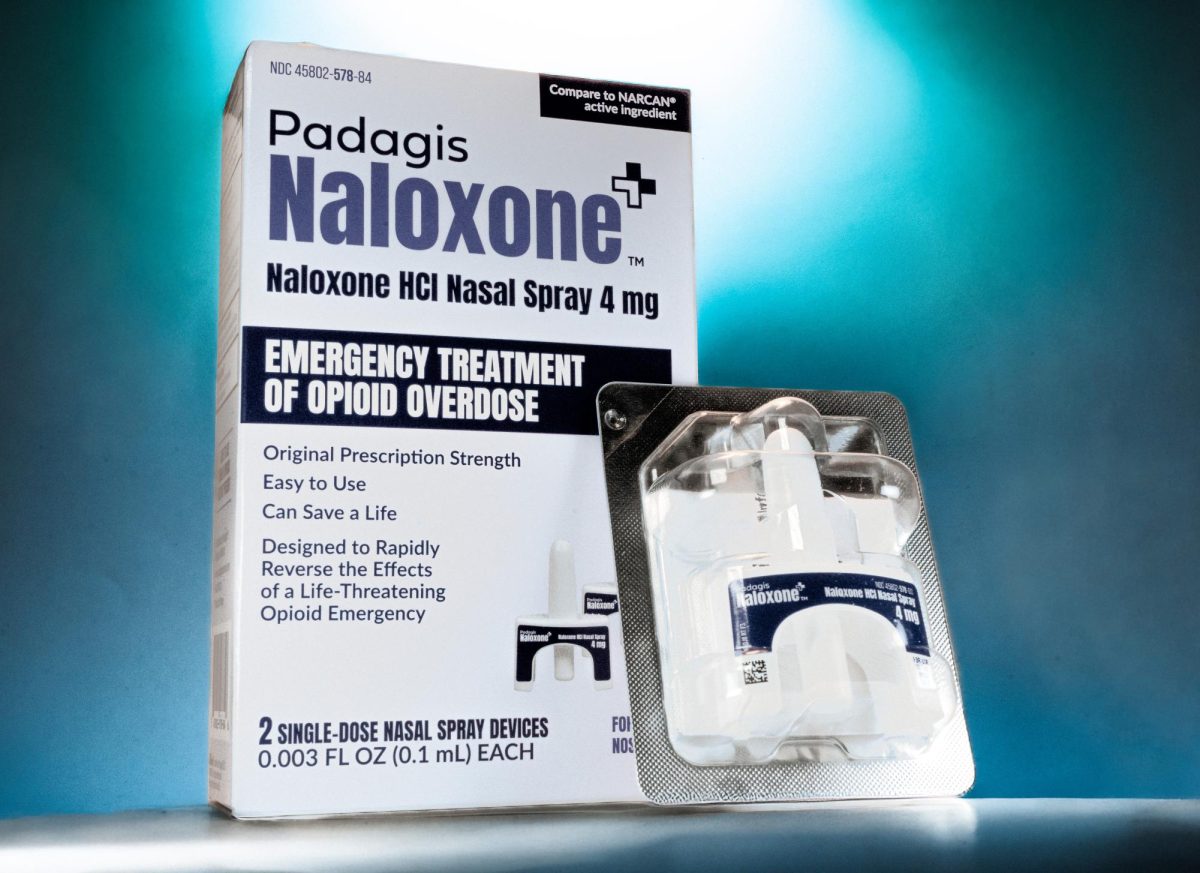
NARCAN (Naxolone) is available as a nasal spray and is an over-the-counter medicine, making it accessible for emergencies.
The long-term vision includes wall-mounted naloxone cabinets placed near AED machines and expanding distribution, including at large campus events.
For Andreu, the purpose of the initiative is simple:
“If it saves one person’s life, it did its purpose,” Andreu said. “One single person is all it takes, because it’s never too much to carry it around.”
Ximena Cordero is the editor-in-chief for The Prospector and may be reached at [email protected].edu and on LinkedIn @ximenacordero