
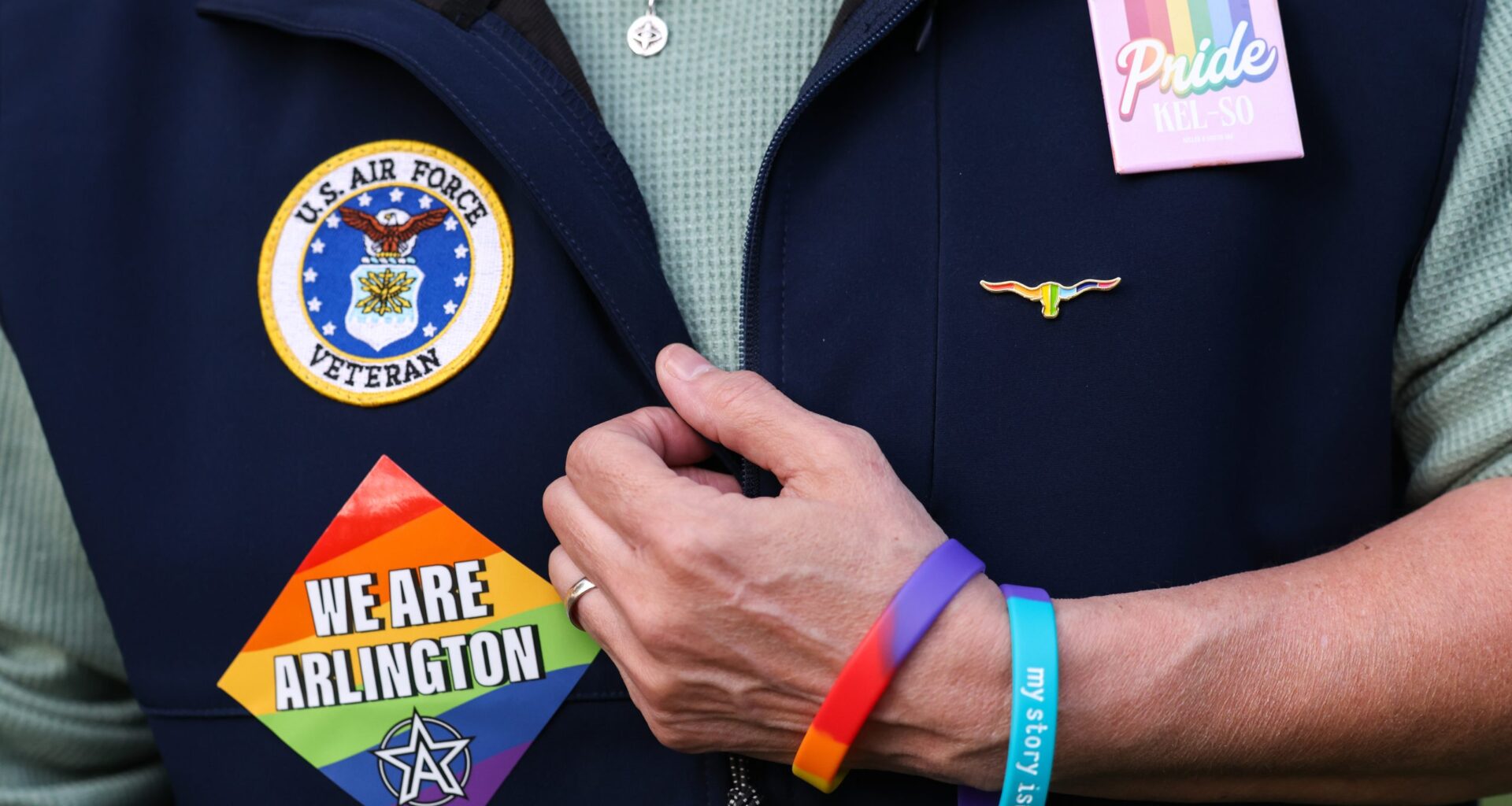
A group of about 30 Arlington residents stood up out of their seats and walked out of Arlington City Hall after council members passed Arlington’s new anti-discrimination ordinance.
The group gathered outside the building’s front entrance. DeeJay Johannessen, CEO of the HELP Center for LGBTQ+ Health, quickly grabbed the group’s attention before leaving after a long evening.
DeeJay Johannessen, CEO of the HELP Center for LGBT Health & Wellness, reacts to the passed anti-discrimination ordinance during a City Council meeting Feb. 24, 2026, in Arlington. After the vote, Johannessen told fellow attendees this is not over. (Christine Vo | Fort Worth Report)
Johannessen thanked the council members who voted against the ordinance, who he said stood with their community. “And when I say our community, I’m not talking gay community, I’m talking men, women, the disabled, race, religion, and LGBT,” Johannessen said. “I want to make one thing clear, this is not over. … We go home, brush off the dust, take a deep breath, and go right back in.”
The Arlington City Council voted 6-3 to pass the resolution Tuesday evening, with council member Barbara Odom-Wesley flipping her vote and dissenting. The new ordinance was created after the 2021 anti-discrimination ordinance was suspended in September.
In the new chapter, city staff cannot investigate or mediate any complaints of discrimination. It also does not clarify which classes are protected under the ordinance, such as sexual orientation or gender identity, as the past ordinance did, and defers to state and federal law.
City staff can still receive discrimination complaints made by staff members, but are required to refer them to other resources or to state or federal agencies to escalate the complaint.
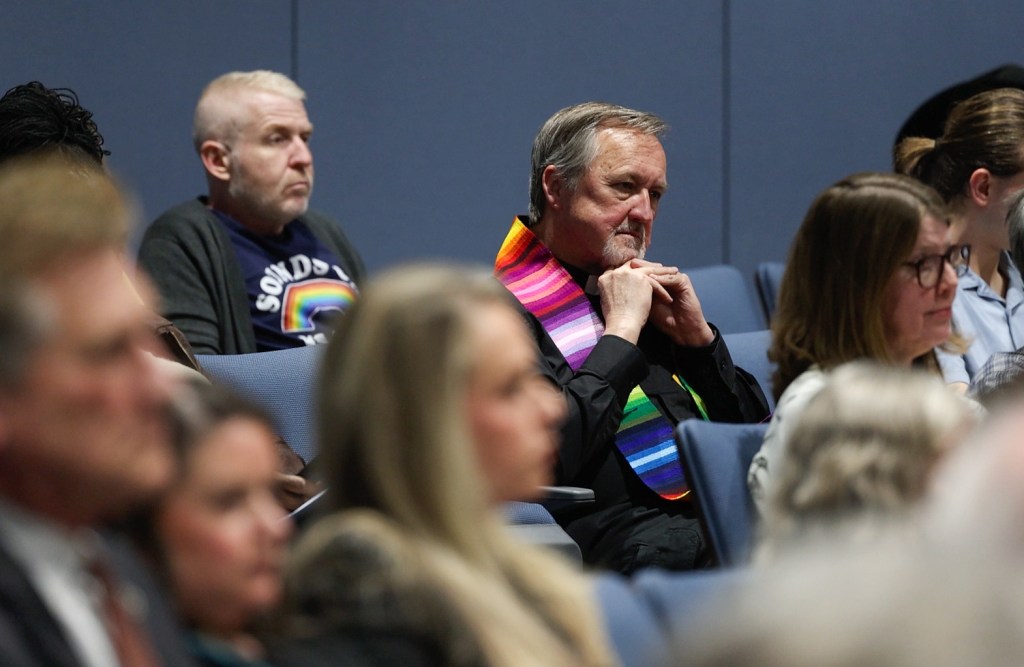 Retired pastor David Grable sits during a City Council meeting Feb. 24, 2026, in Arlington. Grable said the new anti-discrimination ordinance is empty, with no meaning or effect that relies on enforcement from an “unreliable government.” (Christine Vo | Fort Worth Report)
Keegan Dees, a 27-year-old resident born and raised in Arlington, said he attended every City Council meeting since the original ordinance was retracted. Though he said he expected the new ordinance to pass, he still felt he needed to show up in support of the community and for himself.
Dees shared that he had faced discrimination before, including being physically attacked due to his gender identity as a transgender man. He shared that having protection at the local level that ensures a record of incidents of discrimination, even if it cannot be escalated, is essential for the protection of the community.
“Everything kind of starts with your local government,” Dees said. “If I decided to take it to court, it says a lot more to a jury in a courtroom if I have something from my city that says, ‘Hey, we investigated. Here’s what we found.’”
Sharon Herrera, the founder of LGBTQ SAVES, said she feared the mental repercussions of weak discrimination protections.
She shared that she had attempted suicide when she was 15 years old due to a lack of support from her community. Herrera, who identifies as as apart of the LGBTQ community, emphasized the importance of discrimination protections at a local level to reaffirm to youth that they are protected.
“If I had seen somebody like this, or witnessed some kind of support, or (seen) a counselor or any adult, any affirming adult, things would have been different. And that’s why things like this are very critical,” Herrera said.
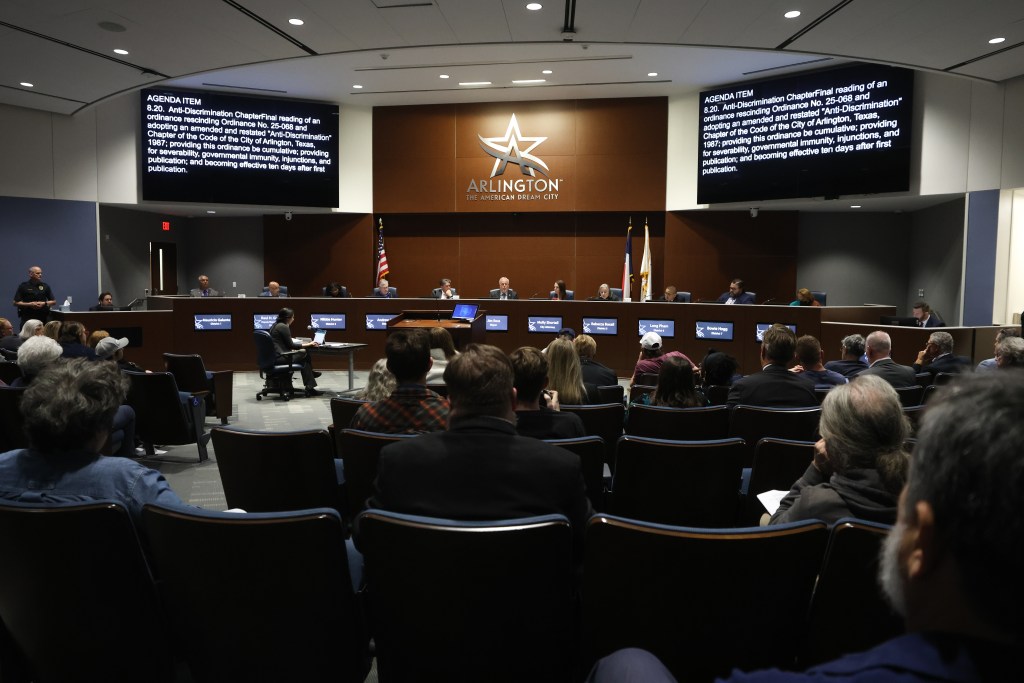 Attendees listen to Mayor Jim Ross speak about the anti-discrimination ordinance during a City Council meeting Feb. 24, 2026, in Arlington. The ordinance passed 6-3. (Christine Vo | Fort Worth Report)
Fifteen Arlington residents spoke out against the ordinance at the meeting, each sharing personal concerns with the lack of specificity in the new ordinance.
Donna Mack, an Arlington native and chair of the Mayor’s Committee On People with Disabilities, shared her concerns about the agencies people with disabilities may be referred to if they were to file a discrimination complaint.
“Many of the organizations that you guys are going to want to refer us to are federal agencies. Those have had budget cuts, and it’s just really scary,” Mack said.
Melanie Campbell Carter, representative for the League of Women Voters of Tarrant County, shared a statement on behalf of the organization’s president, Janet Mattern, who emphasized the need for leaders who protect residents from discrimination.
“(The anti-discrimination ordinance) lacks provisions for investigating and enforcing against discrimination and fails to bar discriminatory organizations from city contracts,” Campbell Carter said. “Local enforcement is crucial to safeguard marginalized groups when state or federal law may not apply. This ordinance weakens protections and sets a poor example.”
Mayor Jim Ross tells the crowd that “representing the body as an uncaring creature simply isn’t right” during a City Council meeting Feb. 24, 2026, in Arlington. Ross also said literature and posts misrepresented the anti-discrimination ordinance. (Christine Vo | Fort Worth Report)
Before the ordinance was voted on, Arlington Mayor Jim Ross addressed the crowd. Passing the ordinance would not strip citizens of all of their rights and would still address discrimination in some capacity at a local level, he said.
Ross emphasized that he does not disagree with anyone who is against the ordinance, but did not want to leave the city without any type of protection against discrimination.
“I’m not going to try to pretend like the ordinance that’s before us today is perfect. I don’t believe it is,” Ross said. “What I will tell you is that me and these eight other men and women up here worked our tails off to come up with something that could be passed, not perfection, not ideal.”
Despite the ordinance being passed, Johannessen said he feels hopeful and prepared to fill in gaps and provide support when necessary.
“We will continue to work to ensure that basic civil rights and (at) the local level are restored for every single person in this city, every guest in this city, will continue that fight. We will never stop that fight,” Johannessen said. “It is about looking at ways to work with the leadership, to work with other partners, to find a way that local protections can be restored.”
DeeJay Johannessen, CEO of the HELP Center for LGBTQ+ Health, reacts to the passed anti-discrimination ordinance during a City Council meeting Feb. 24, 2026, in Arlington. After the vote, Johannessen told fellow attendees this is not over. (Christine Vo | Fort Worth Report)
Bianca Rodriguez-Mora is a reporting fellow for the Fort Worth Report. Contact her at bianca@fortworthreport.org.
At the Fort Worth Report, news decisions are made independently of our board members and financial supporters. Read more about our editorial independence policy here.
This <a target=”_blank” href=”https://fortworthreport.org/2026/02/25/arlington-community-members-speak-out-against-the-passing-of-new-anti-discrimination-ordinance/”>article</a> first appeared on <a target=”_blank” href=”https://fortworthreport.org”>Arlington Report</a> and is republished here under a <a target=”_blank” href=”https://creativecommons.org/licenses/by-nd/4.0/”>Creative Commons Attribution-NoDerivatives 4.0 International License</a>.<img src=”https://i0.wp.com/fortworthreport.org/wp-content/uploads/2021/04/cropped-favicon.png?resize=150%2C150&quality=80&ssl=1″ style=”width:1em;height:1em;margin-left:10px;”>
<img id=”republication-tracker-tool-source” src=”https://fortworthreport.org/?republication-pixel=true&post=424721&ga4=2820184429″ style=”width:1px;height:1px;”><script> PARSELY = { autotrack: false, onload: function() { PARSELY.beacon.trackPageView({ url: “https://fortworthreport.org/2026/02/25/arlington-community-members-speak-out-against-the-passing-of-new-anti-discrimination-ordinance/”, urlref: window.location.href }); } } </script> <script id=”parsely-cfg” src=”//cdn.parsely.com/keys/fortworthreport.org/p.js”></script>