
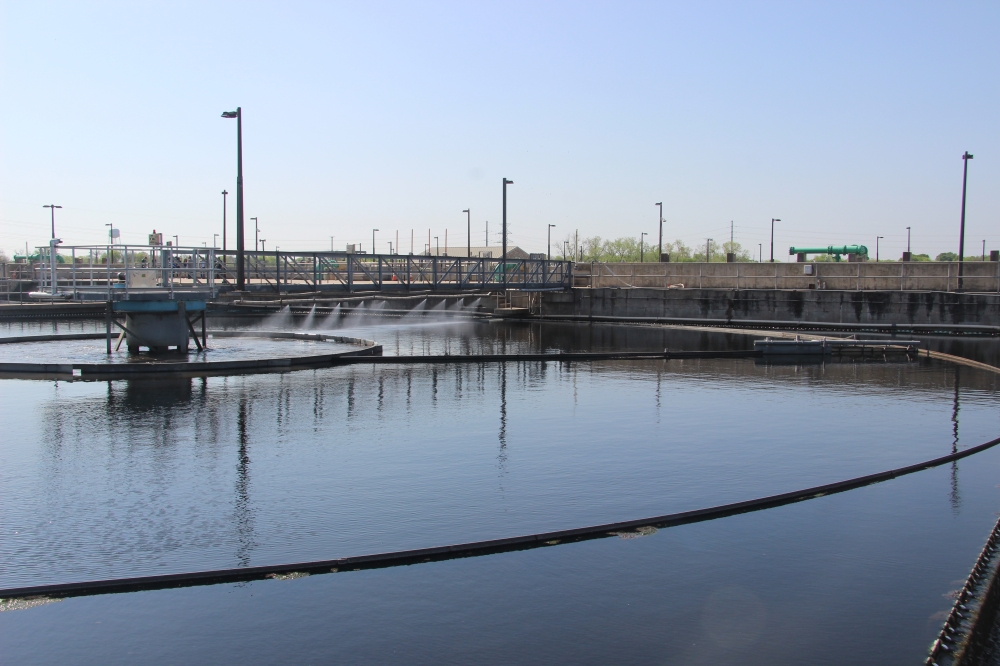
City officials will soon consider a $600 million or 66% increase to expected construction costs for the expansion of the Walnut Creek Wastewater Treatment Plant.
The big picture
Austin Water officials have described the initiative as a “generational” investment in an aging facility responsible for much of the city’s wastewater needs.
“>
The Walnut Creek plant first opened in the late 1970s with the ability to process 18 million gallons daily, or MGD, and it’s grown over the years to its current 75 MGD capacity. Actual treatment levels are closer to 60 MGD today but expected to near that 75 MGD limit in just a few years due to population growth, requiring the expansion initiative increasing capacity to 100 MGD by 2032.
Multiple contracts totaling more than $1 billion, both for the expansion and related modernization and facility improvements, were approved in 2024. Austin Water has anticipated securing federal and state loans for a large share of the project cost, and using local revenue bonds supported by rising utility charges.
The largest of the 2024 contracts was a $900 million agreement for preliminary engineering work by MWH Constructors, serving as the project’s construction manager at risk for the central expansion. In March, City Council will vote to increase that authorization up to a total of $1.5 billion for final construction due to updated project designs and other cost escalations, according to AW officials.
“At the time of May ‘24, we did not know a known construction cost. But as we have progressed the project through greater detail, we know have a better construction cost estimate that is now $1.5 billion, and that is what we are coming to City Council for on March 12,” Charles Celauro, AW assistant director of engineering services, told council Feb. 25.
Zooming in
The construction manager at risk process has allowed for more detailed and collaborative planning in the project’s early stages, Celauro said, and is resulting in a phased approach with more specialized contractors working on aspects of the plant along the way.
“We knew what we needed to build, but there was a whole lot of ground to cover to get to the point of being ready to construct it, “AW Director Shay Ralls Roalson said. “It has been very effective and productive having the contractor on the team during that final design and pre-construction services in order to shape, in order to understand what it’s going to take to deliver this project while keeping the plant in operation, and deliver it on time by 2032.”
 The multipart wastewater expansion and modernization project will be completed in 2032. (Courtesy city of Austin)The wastewater facility will remain open and functional over the multiyear project timeline. That requirement, the rising costs of goods and services, site constraints at the plant and other factors all contributed to the new $1.5 billion price tag, Celauro said.
In response to some council questions about the cost, utility officials noted the similar spikes for many public infrastructure projects in recent years. They also said the Walnut Creek site carries “unique” complexities that other AW projects will not experience, and that competitive bidding for future project stages is expected to help manage costs.
Roalson also told council that some Walnut Creek proposals were left on the cutting room floor, and the initiative includes only the essentials for the plant’s future.
“I will tell you there aren’t any ‘nice-to-haves’ in this project. This is absolutely what has to be built in order to achieve the treatment levels and capacity needed for the scope of this project,” she said.
Looking ahead
The $600 million project increase will be considered by council mid-March, an update that’ll be accompanied by a push for added financing.
Council previously authorized AW to work with the Environmental Protection Agency to secure Water Infrastructure Finance and Innovation Act, or WIFIA, low-interest loans totaling hundreds of millions of dollars. AW is looking to add about $550 million to its previous ask of roughly $450 million, for a total $1 billion in federal support.
Tina Romero, AW interim assistant director of financial services, said the EPA is excited with Austin’s participation in the infrastructure program and on board with the proposed increase.
The Walnut Creek expansion is also receiving $59 million in assistance from the Texas Water Development Board, an award approved by the body this month. That support under the Clean Water State Revolving Fund could save AW $10 million-$20 million over 30 years, Romero said.
The more than $400 million remaining, to be covered through revenue bonds, isn’t expected to further impact AW rates.
“[T]he team has worked closely with EPA and TWDB on funding opportunities that provide low-interest loans and favorable repayment terms to mitigate the financial impact of this generational project on our customers,” Roalson said in a February project memo.