
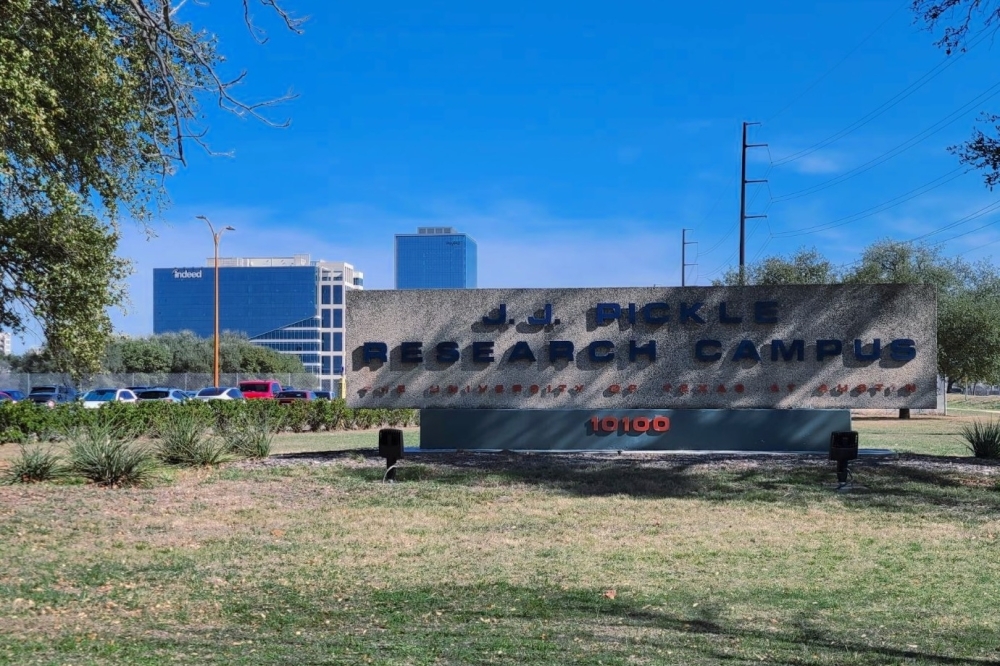
Nearly 400 acres of The University of Texas at Austin’s land is set to be rezoned for research and science uses, a move that could help clear the way for the future UT Medical Center’s development in Northwest Austin.
The big picture
First announced in 2023, the new medical center including a UT hospital and MD Anderson Cancer Center is envisioned as a multibillion-dollar addition to UT’s academic health system.
The project was originally planned for the former Frank Erwin Center site on 19 acres of UT Austin’s downtown campus off I-35. However, UT system officials stated last fall that the medical complex could instead be built in Northwest Austin, where the university already owns hundreds of acres of land, including its J.J. Pickle Research Campus.
That shift was confirmed this month by Kevin Eltife, UT System board of regents chair, who said the northern location would accommodate the medical center’s future expansion and leave the downtown site available for other uses. The medical center is set to open in 2030.
“The result of this partnership will allow Texans to harness both institutions’ mission of patient care, education, innovation, and research to create a once-in-a-generation opportunity to define the future [of] health care of Texas,” Eltife said Feb. 18.
Zooming in
Further details about the medical center project, such as its exact location or scope, haven’t been released as of early 2026. For now, UT is seeking to rezone several of its properties near The Domain, including the Pickle campus, specifically for research and science uses.
Eltife said the UT Medical Center would be situated west of the Pickle campus. University-owned land in that area includes The Shops at Arbor Walk retail plaza, an office building at Braker Lane and MoPac, and undeveloped land off Braker and Stonelake Boulevard. Those properties cover about 374 acres and are all included in the zoning case moving through city reviews.
“>
Austin’s Planning Commission unanimously advanced the rezoning item without discussion Feb. 24, and City Council is now scheduled to consider the request in late March. A UT representative declined to comment about the case or its impact on the medical center project after the commission’s vote.
The current process covers five tracts that currently hold industrial, institutional and mixed-use zoning. The change would label them all as Research and Sciences Mixed Use, or RSMU, in the area’s North Burnet/Gateway Regulating Plan.
 City Council approved the Research and Science Mixed Use subdistrict for the North Burnet/Gateway Regulating Plan in 2024. (Courtesy city of Austin)Council approved the research and science mixed use, or RSMU, subdistrict for that Northwest Austin plan in 2024, the latest in a series of planning updates to encourage denser additions around the North Burnet/Gateway area as new construction and redevelopment continue there. RSMU allows for high-density development with a mix of life science, lab and biomedical spaces alongside varied businesses, industrial and civic uses, and mid- and high-rise residences.
The UT land now being rezoned was designated for RSMU in the 2024 plan update. New buildings could reach up to 120-125 feet tall by right, and up to nearly 500 feet with development bonuses. Similar height allowances are also in place along Braker and Burnet Road east of The Domain under the North Burnet/Gateway Plan.
 The Research and Science Mixed Use subdistrict allows taller, denser construction with varied uses. (Courtesy city of Austin)What else?
The zoning case is progressing as UT Austin embarks on its first campus master plan initiative in over a decade. That project is aimed at “building cohesive connections” between the main downtown campus and other properties, including the future medical center, according to the university’s Feb. 23 announcement.
“With the pace of physical growth that we’re experiencing right now, this is an exciting moment to consider how our spaces can best support discovery, connection, and long-term impact,” Brent Stringfellow, UT architect and associate vice president for campus operations and planning, said in a statement.