
Texas sits right at the heart of a generational investment, the data center boom.
The Lone Star State is on track to have more data center capacity than any other state. This ongoing expansion means an extensive new pool of job opportunities and long-term economic advantages across Texas.
Although this sort of innovative landscape is worth embracing, Texas needs to home in on these benefits while working with local communities to address their concerns around this new era of infrastructure buildout.
Data center development involves long-term water planning, land-use coordination and infrastructure upgrades that can shape a community for decades. Texans living in these communities deserve both the economic tailwinds from these investments and a comprehensive strategy to ensure construction headlines are accompanied by responsible resource management.
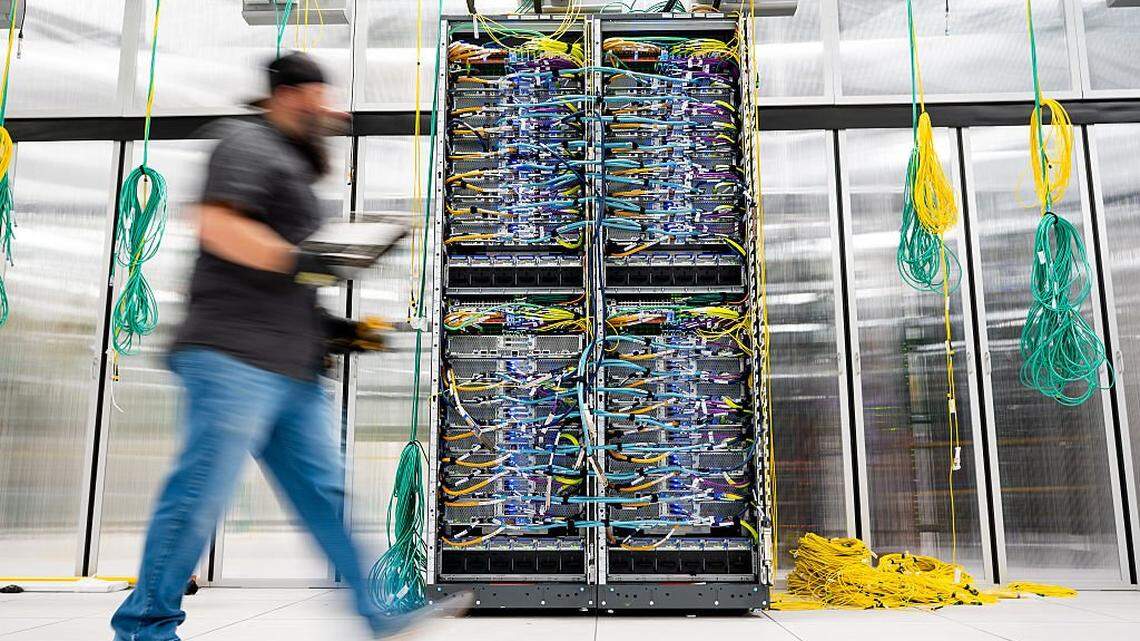
An Amazon Web Services technician passes on a AWS UltraServer in Austin, Texas on October 2, 2025. (Photo by Noah Berger/Getty Images via Amazon Web Services) Handout Getty Images
The good news is we don’t have to choose between the false narrative of growth and responsibility — we just need the right partners. Texas must put a framework in place to make sure data center development strengthens the fabric of local communities.
When it comes to energy, large load customers, such as data centers, should help cover the cost of keeping the grid strong and reliable. That could include investing in their own on-site backup power, supporting new generation or crafting thoughtful ways to respond to high power demand. States such as Indiana and Missouri have enacted capacity commitment frameworks that balance growth and consumer protections by requiring large industrial electricity customers to pay for the costs associated with serving their operations and prevent cost shifting to other ratepayers.
Some tech companies operating in Texas have gone further, establishing dedicated energy impact funds to support grid reliability and affordability for the communities around them — a model worth encouraging industrywide.
Long-term water planning must also be part of this conversation, especially in drought-prone regions across Texas. Many data center operators are adopting cooling technologies that use less water or recycle it more efficiently. Those practices should become the expectation in Texas, particularly where local aquifers are already under pressure.
Transparency and coordination with local water authorities and the public will ensure growth doesn’t come at the expense of future security. We have even seen some tech companies publish annual water metrics and commit to replenishing water reserves above and beyond companies’ actual use, including Texas-specific initiatives to restore wetlands, improve irrigation efficiency, and support regenerative agriculture in regions such as the High Plains and the Trinity-San Jacinto Estuary.
To foster a relationship between companies and local communities, economic incentives should be structured with community outcomes in mind. Tax incentives can be effective tools for attracting investment, but they should be paired with commitments that support local priorities, whether that’s infrastructure improvements, workforce training partnerships with community colleges, K-12 investments, or support for first responders and public services in fast-growing areas.
Housing affordability also deserves attention. At a time when longtime residents and essential workers are struggling to afford the cost of living in their own communities, innovative funding structures can channel data center revenues into affordable housing development. These collaborative approaches, coupled with thoughtful planning and responsible data center partners, can help preserve affordability and maintain community stability.
None of this requires turning away investment. In fact, it sends a clear signal about the kind of partners Texas wants: companies prepared to invest in the long-term success of the communities they enter.
Texans understand that economic growth and responsible governance go hand in hand. They want new jobs and a stronger tax base, but they also expect leaders to safeguard reliable power, sustainable water use and fair treatment for residents.
Texas leads in energy, technology, and manufacturing because it pairs opportunity with practical, forward-looking policy. Data centers should be no different.
George P. Bush served as Texas land commissioner from 2015 to 2023.
George P. Bush served two terms as Texas land commissioner. Do you have an opinion on this topic? Tell us!
We love to hear from Texans with opinions on the news — and to publish those views in the Opinion section.
• Letters should be no more than 150 words.
• Writers should submit letters only once every 30 days.
• Include your name, address (including city of residence), phone number and email address, so we can contact you if we have questions.
You can submit a letter to the editor two ways:
• Email letters@star-telegram.com (preferred).
• Fill out this online form.
Please note: Letters will be edited for style and clarity. Publication is not guaranteed. The best letters are focused on one topic.
Related Stories from Fort Worth Star-Telegram