
The Austin African American Firefighters Association mentors Black youth, addressing disparities and inspiring future firefighters.
AUSTIN, Texas — For decades, the Austin African American Firefighters Association (AAAFFA) has worked not only to protect the city, but to inspire the next generation of first responders. For its members, the work does not end when the sirens stop.
Darren Hyson, a 27-year veteran of the department and the association’s corresponding secretary, said mentorship is at the heart of the association’s work.
Hyson said many young people in Austin’s Black community are not exposed to firefighting as a viable career path.
“We wanted to fill the gap to tell them, ‘Hey, this is a great job. This is something you can do,’” Hyson said. “The city does have goals — they’ve always had goals — to try to make sure that the demographics of the city and the population are represented in our emergency services.”
According to AAAFFA leaders, the Austin Fire Department (AFD) has roughly 1,400 firefighters. Fewer than 200 are African American, a disparity Hyson and others say reflects a broader issue across the fire service nationwide.
Hyson, who spent his entire career in Austin, said serving the city — from delivering babies to rescuing residents during floods — was deeply rewarding. Through the association, he continues that service by helping organize scholarships, community events and recruitment efforts.
“It’s very humbling,” Hyson said. “When you see the face of someone who dreamed of being a firefighter all their lives and didn’t know how to go about it, and you can show them the road.”
Retired Fire Chief Richard Davis, a past president of the association, joined the Austin Fire Department in 1992 and became involved with the organization shortly after it formed in 1995. He said the association was born out of a need for diversity and support at a time when few Black firefighters served in the department.
“Back then, there weren’t too many of us in the fire department and the fire service in general,” Davis said. “We needed mentors. That’s why we all came together — to help each other out, to push each other along the way, to make rank and to get involved in the community.”
Davis, who served more than 31 years in the fire service, said early challenges included outdated requirements and lingering attitudes that discouraged minorities and women from pursuing firefighting careers. He recalled discovering a height requirement in a recruitment brochure that no one could justify — a standard he believed may have arbitrarily excluded some applicants.
Over time, Davis said meaningful progress has been made. But some barriers remain less visible.
“A lot of firefighters don’t actually get highlighted for some of the things they do,” Davis said. “They don’t get the awards. They don’t get the recognition.”
He said that recognition can be pivotal.
“It is that spark, that ignition, that these young kids want to see someone who looks like them being successful,” Davis said. “They don’t just need encouragement. They need evidence.”
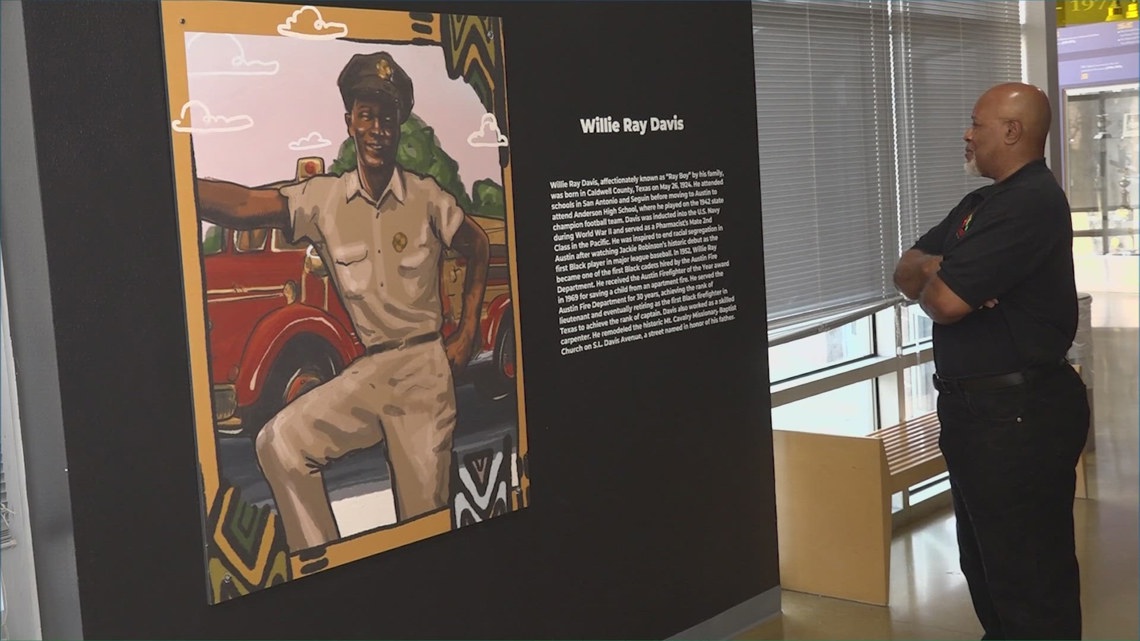
Davis points to the legacy of Austin’s first Black firefighters — including Billy Ray Davis, Roy Green and Nathaniel Kendrick — who joined the department in 1952 under civil service law. Their presence, he said, created an ignition point for future generations.
The association works to carry that legacy forward through school visits, participation in events such as Martin Luther King Jr. marches and Juneteenth parades, and partnerships with national organizations like the International Association of Black Professional Firefighters.
Beyond recruitment, members say representation also strengthens trust during emergencies, when firefighters often meet residents on the worst days of their lives.
“It’s very important for the community to see people they identify with,” Davis said.
Both men emphasized that the association’s mission is not about division, but about expanding opportunity and strengthening the department as a whole.
“I look at a firefighter as a firefighter,” Davis said. “It doesn’t matter what color you are. It’s a brotherhood and sisterhood. We all come together to help each other out.”
Still, he believes visibility can change lives. Davis was introduced to the profession by a fire captain who encouraged him to consider the career at a job fair — a moment he describes as the spark that set his path in motion.
“That’s what we try to be,” he said. “That match that starts the fire in someone else to at least look into the profession.”
As recruitment numbers fluctuate and younger generations weigh different career paths, Hyson said organizations like the AAAFFA are more important than ever.