
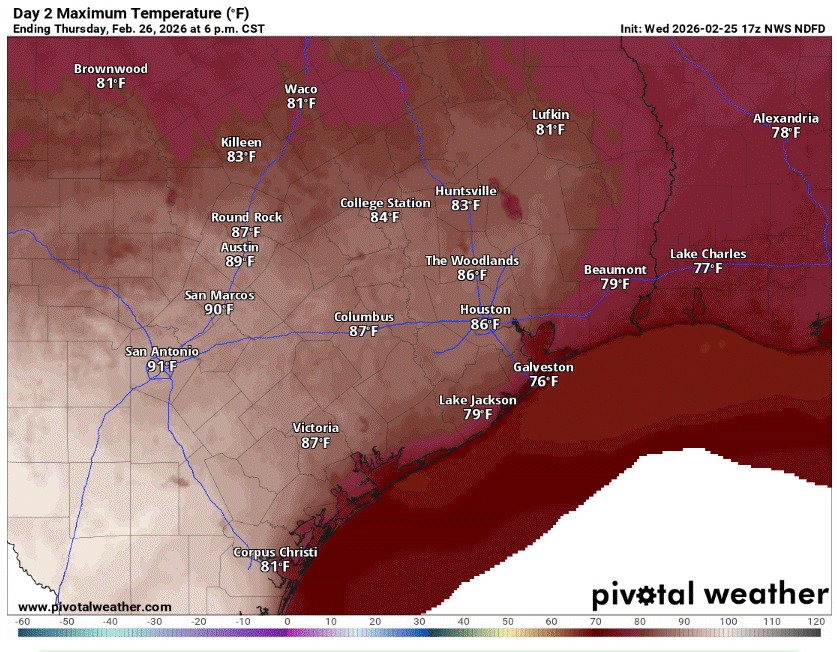
Even with a cold front moving through on Thursday, the cooling will be minimal. Friday and Saturday’s peak temperatures are expected to slip by only a few degrees, with afternoons still in the 80s.
We’ll start Thursday with some cloudiness, light south winds and temperatures near 60 degrees. A cold front is expected to reach the Hill Country by mid-morning and then sweep across the rest of Central Texas through the afternoon.
Just ahead of the front, temperatures could briefly spike because of compressional heating. This happens when air is forced downhill — in this case, off the higher elevations of the Balcones Escarpment and toward the Interstate 35 corridor and Coastal Plains — causing it to compress and warm up as it sinks. That added warming could push parts of the Austin area close to 90 degrees before the front moves through.
Although Thursday’s forecast high of 89 degrees is several degrees shy of Austin’s Feb. 26 record of 93 degrees from 1954, that would still be almost 20 degrees hotter than normal for this time of year.
Behind the cold front, winds will shift to the north and become slightly breezy, with gusts near 20 mph. The wildfire weather threat will be higher west of Austin, where the National Weather Service has issued a red flag warning from 11 a.m. to 7 p.m. Thursday. Austin is not included in the warning area, as humidity levels will be slightly higher and winds a bit lighter, but a moderate threat will still exist along the I-35 corridor.
With north winds continuing Friday, but much lighter, temperatures will be slightly cooler while still above normal. Morning temps in the 50s will climb into the lower 80s by the afternoon under plenty of sunshine.
South winds will return over the weekend with a slight increase in humidity and temperatures. While rainfall has been slim across the region for February, it looks like a pattern change is on the way next week with some small rain chances entering the picture by midweek.
Are we finally winding down cedar fever season in Texas? Typically, the season begins in mid-December and wraps up by the first week of March.
While allergy sufferers will welcome some relief, it’s likely to be short-lived. As cedar pollen fades, a new wave of allergens is ready to take its place. Several types of tree pollens are set to make their seasonal debut in the coming weeks. The ones making the list are ash, spring elm, mulberry, and oak.