

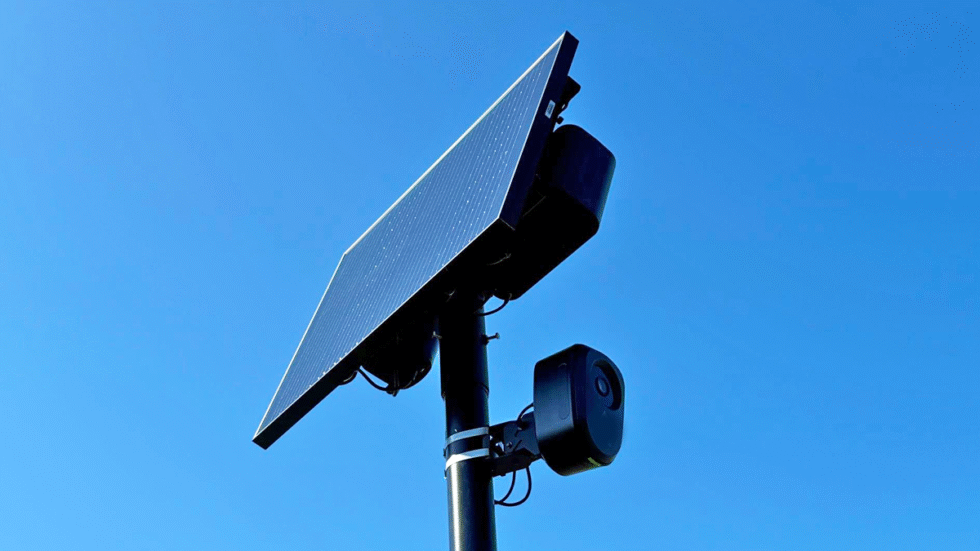
EL PASO, Tx., February 26, 2026: The El Paso City Council will be discussing not renewing the controversial Flock cameras in El Paso according to next week’s city council agenda. The item, put on the agenda by representatives Chris Canales and Lily Limón, will ask representatives vote on not renewing the contract for the Flock cameras.

Citing privacy concerns, cities across the country have been canceling their contracts with Flock Safety since November. Since May 16, 2025, El Paso has deployed 150 Flock cameras across the city. According to an August 22, 2025, memorandum from El Paso Police Chief Peter Pacillas, the cameras were funded by a grant from the Motor Vehicle Crime Prevention Authority. The grant ends on Tuesday.
Images captured by the cameras are saved to a searchable database that allows officials, usually police officers, to search for and track a specific vehicle.
Cases of Abuse
Several cases of the abusive use of the camera data have been reported across the nation over several months.
In the latest example, on Tuesday, a criminal complaint was filed against a Milwaukee police officer who used the Flock cameras to surveil an individual he was dating. On Monday, the Lynnwood Washington City Council voted to end its contract with Flock after concerns were raised about their misuse by immigration agents.
In a telephone interview yesterday, Limón told us her biggest concern over the cameras is the “potential for misuse for immigration enforcement.”
In the Lynnwood case, the Flock software used to store the images taken by the cameras was programmed to allow nationwide searches of the data captured by them. There are at least two instances of Immigration and Customs Enforcement (ICE) agents misusing the search feature in Lynnwood. In one case, someone in Florida used the Lynnwood database for immigration purposes while in the second case, an individual from Pennsylvania also used the data for immigration searches according to Lynnwood City Representative Isabel Mata.
The Coralville (Iowa) City Council also voted yesterday to cancel the Flock camera contract and immediately remove the cameras after the Iowa Attorney General ruled that contract stipulation restricting the use of the camera information could not be used for immigration enforcement had to be removed. Rather than remove the stipulation, the Coralville City Council unanimously ordered the immediate removal of the cameras.
Instead of doing away with the traffic cameras, Denver officials on Tuesday ended the Flock contract and awarded a new license plate reading camera contract to Axon.
The controversy in Denver over the Flock cameras arose last year after Denver’s 9NEWS discovered that the company behind the Flock cameras “had a secret partnership with the U.S. Border Patrol.” After Flock Safety officials first denied that they shared Colorado’s camera data with immigration officials, the company later admitted that it “had been operating a pilot program” with ICE.
Although the Flock camera software is supposed to keep the data it stores on local police servers, the company has admitted it allows Border Patrol to send invitations to police agencies to allow it to access local license plate data.
In 2025, Colorado passed a law banning police agencies from sharing personal information for immigration enforcement. Notwithstanding the Colorado law, ICE approached individual Colorado agencies directly asking to be allowed access to the data. After Flock officials denied to city officials and news reporters that the company had federal contracts, it later confirmed that in May 2025 it had entered into a memorandum of understanding with the Border Patrol that gave the agency an account allowing it to send invitations to individual agencies directly. According to 9NEWS’ investigation, 25 Colorado departments agreed to give immigration officials access to their data in an apparent violation of the Colorado law prohibiting the use of personal information for immigration purposes.
The problem arose when police agencies received invitations in batches from several agencies across the nation which they approved without realizing one account was used by the Border Patrol. Flock Safety never informed the police agencies it works with that it had granted the Border Patrol an account giving them access to local police license plate data.
Open records requests have started to raise new privacy issues for the use of license plate camera data after a Washington Superior Court ruled on November 6, 2025, that Flock camera data is subject to open records requests. If the court’s ruling holds and other open records proponents start asking for license plate camera data, it can lead to further privacy concerns and other abuse.
The Flock software allows searches for a specific license plate the shows results for that vehicle in chronological order as it traverses across each camera’s field of view. Using the search results allows anyone to build a map of a person’s travel habits across El Paso.
The concern over privacy issues posed by the Flock cameras has reached the point that a movement to vandalize the cameras across the nation has been gaining momentum in recent months.
It is unclear when El Paso conducted its last audit over the use of the police department’s camera data or whether city officials have looked at whether the software switch that allows access to the city’s stored data by outside agencies is turned on. It is also unknown if access to the El Paso Police license data has been batched approved for use by ICE for immigration enforcement purposes.
Like Us and Follow Us On Our Social Media!
Visited 23 times, 23 visit(s) today