
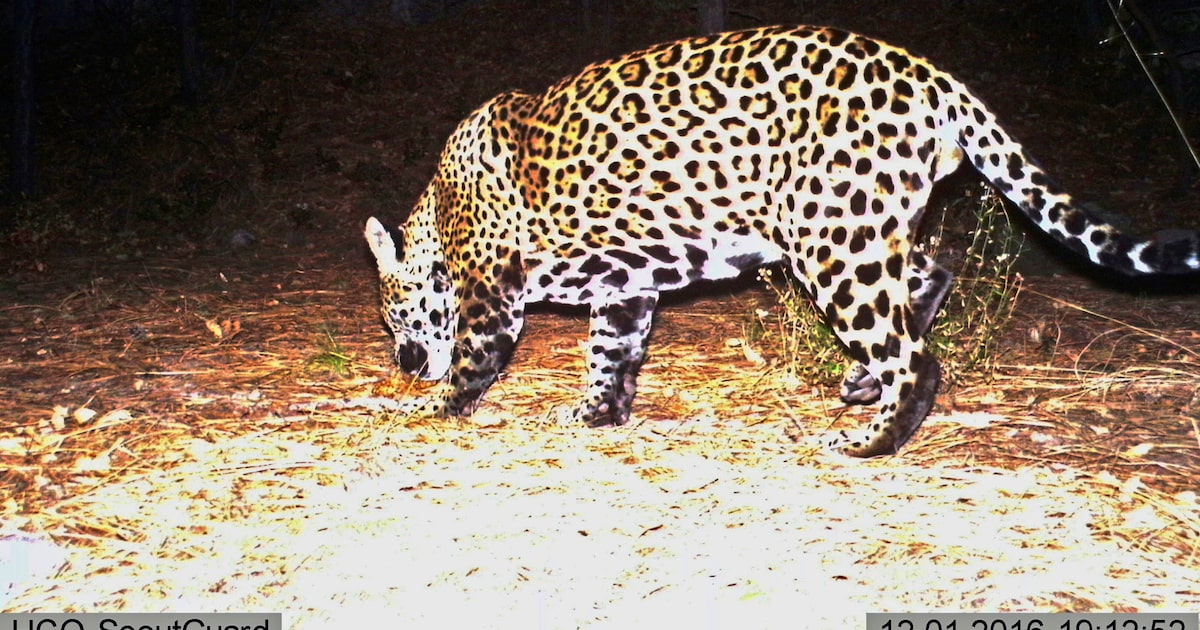
Jaguars? In Texas?
Once native to the state, jaguars haven’t been spotted in Texas in almost 80 years. But the species is still prevalent in Mexico, and some Texans hope for their return.
A reader recently asked Curious Texas, “When did jaguars disappear from Texas?”
Here’s what to know about the history of the big cat in the Lone Star State:
Curious Texas
South Texas predators
Although documented in most regions of the state, jaguar sightings occurred most often in South Texas, according to conservation nonprofit Grow Jungles. The region’s mix of prairie and dense brush made the habitat a jaguar’s paradise.
One of the earliest killings occurred in 1825 in modern-day Nueces County. Considered a threat to livestock, many jaguars faced hunters and habitat loss due to farm and urban development during the next century.
The last confirmed jaguar kill in Texas happened near Kingsville in 1948, according to Texas Parks and Wildlife Magazine. The cat reportedly weighed 121 pounds.
Despite their disappearance from Texas, biologists estimate over 5,000 jaguars live in Mexico and have been repeatedly spotted on cameras in Arizona.
Bringing the big cats back
Urban development and the construction of the border wall made migrating back to Texas difficult for jaguars. According to Grow Jungles, jaguar sightings near the Texas border encouraged discussions around reintroducing the animal to wildlife refuges.
Jaguars aren’t the only feline species native to Texas. Bobcats, mountain lions, margays, jaguarundi, ocelots and feral domestic cats have all called the state home at one point, according to the Texas Parks and Wildlife Department.
Jaguarundi, similar to domestic cats in size but with longer tails, also disappeared from Texas. However, according to San Antonio news site MySA, residents have reported spotting the cat multiple times.
To restore the habitat for jaguarundis and ocelots, Texans plant native shrubs in the Lower Rio Grande Valley, the Parks and Wildlife service said.
A 2024 peer-reviewed study from Texas A&M discusses how reintroduction of ocelots and other animals could benefit the state. However, available land remains a top challenge: “In Texas alone, there are several federally endangered wildlife species beyond ocelots whose recovery requires reintroductions that will likely occur on privately owned lands given the land ownership makeup of Texas.”