
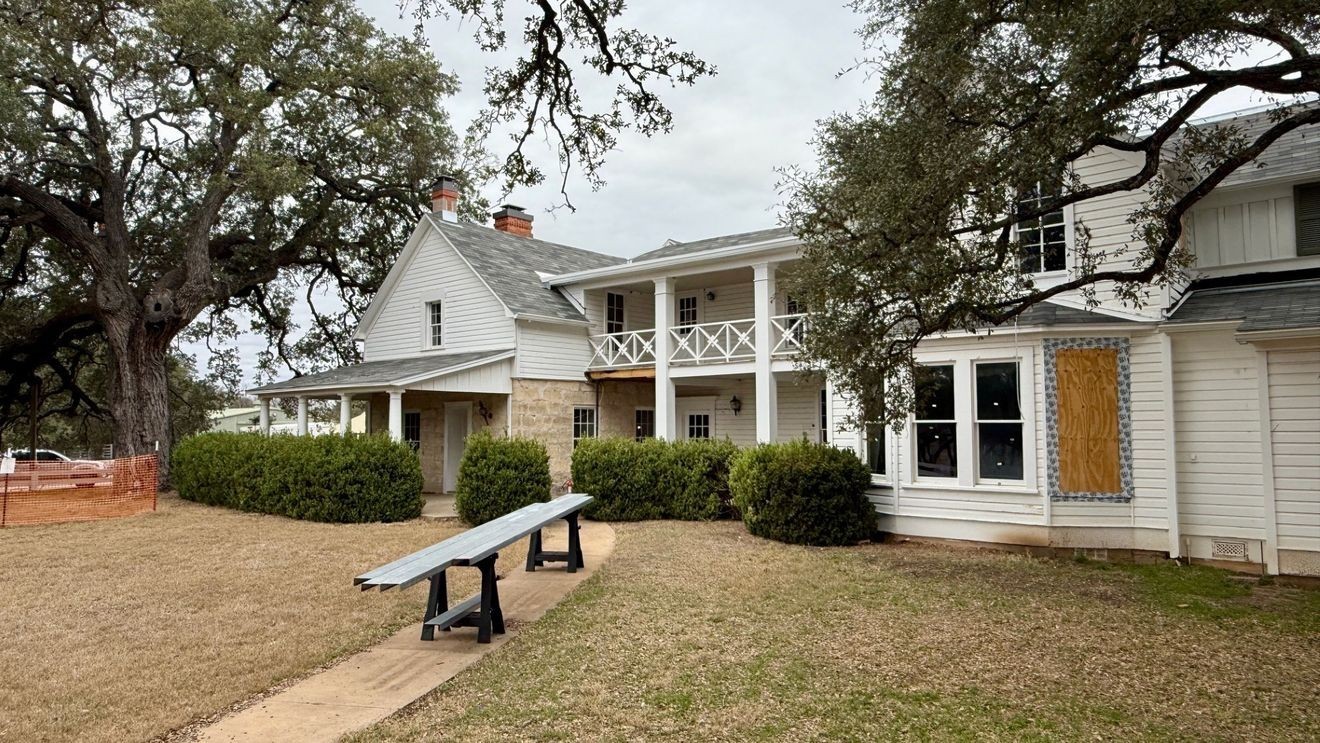
AUSTIN, Texas — A $14 million rehabilitation project is underway to preserve the legacy of President Lyndon Baines Johnson. The focus of the restoration is the Texas White House where LBJ spent a quarter of his time while president in the 1960’s.
Lyndon Johnson has deep roots in a stretch of land along the Pedernales River. The small patch of the Texas Hill Country reveals the full circle of life for the 36th President of the United States.
“It was a place that he loved and any chance he had to come here, he took it,” said Cynthia Dorminey, a ranger at the LBJ National Historical Park near Johnson City.
The president’s home is now a hard hat construction zone while work is done to preserve the history of the Johnson presidency.
“He spent 25% of his presidency here at the at the Texas White House,” said Dorminey.
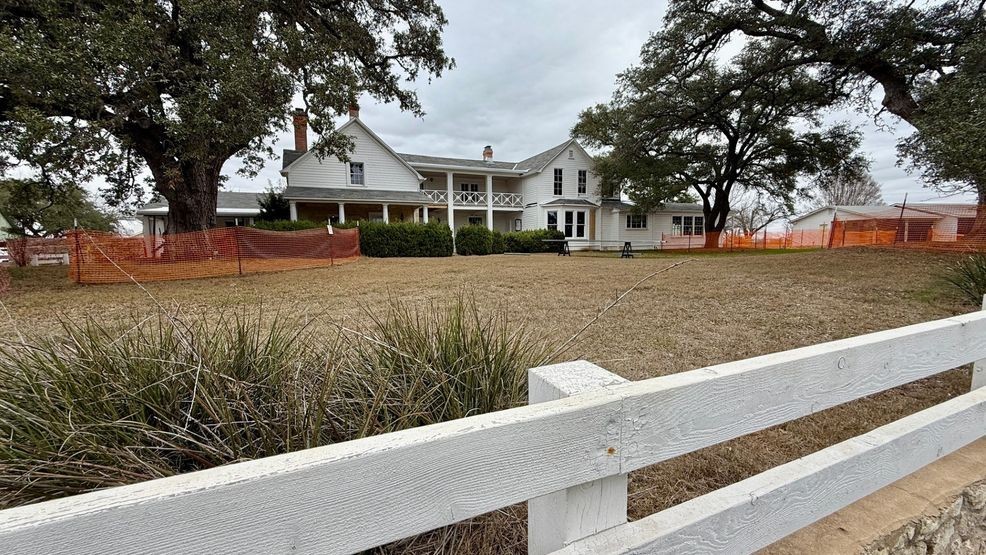 A $14 million rehabilitation project is underway to preserve the legacy of President Lyndon Baines Johnson. The focus of the restoration is the Texas White House where LBJ spent a quarter of his time while president in the 1960’s. (Photo: Bettie Cross)
LBJ did not call it the Texas White House, but back in the 1960’s the press did.
“It was literally a working remote White House and so the press started referring to it as that,” said Dorminey. “He was really the first president who could be this far away from Washington and still be running the country thanks to advances in technology.”
What started as a small stone house built in1895 grew to 8,400 square feet with 28 rooms, 8 bedrooms, and 9 bathrooms. Those many additions, along with the pool and sprawling yard allowed LBJ’s home to become a command center to work on civil rights and anti-poverty programs.
“There are photos of him literally standing in the pool reading papers or on the phone,” said Dorminey. “He would hold cabinet meetings in the front yard of the house.”
The LBJ Ranch is more than just home to the Texas White House. It also continues to be a working cattle ranch. The herd of Hereford cattle preserves the agricultural legacy of the 36th president.
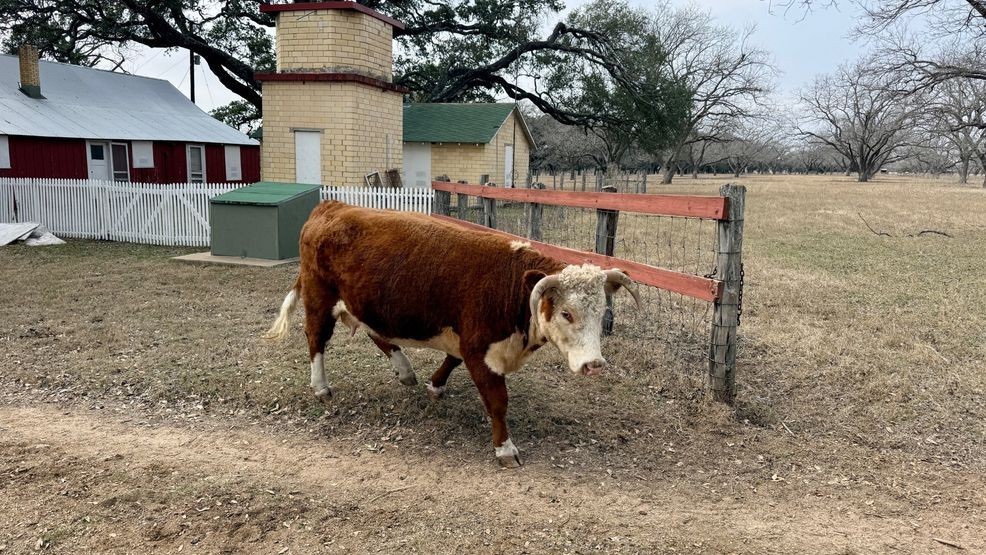 A $14 million rehabilitation project is underway to preserve the legacy of President Lyndon Baines Johnson. The focus of the restoration is the Texas White House where LBJ spent a quarter of his time while president in the 1960’s. (Photo: Bettie Cross)
“The herd that was in place when LBJ was alive is the same legacy herd that’s here on the ranch now,” said Matthew Carroll, Superintendent of the LBJ National Historical Park.
Carroll is overseeing the $14 million restoration project that is being funded by the Great American Outdoors Act. Most of the federal funds are being used to stabilize the foundation, repair sagging floors and cracked walls, and replace outdated electrical, mechanical, and HVAC systems at the Texas White House.
“The period of significance of this house is during the Johnson presidency and immediate post presidency. We want the house to look in the same condition as it was when LBJ and Lady Bird were alive,” said Carroll. “We want to maintain the character of the home as it was back in the day. If we can do that, we are showing not just the state of Texas but also the American people what life was like back on the ranch in the 60s and early 70s.”
In addition to the home improvements, upgrades are being made to the nearby airplane hangar which is the main visitor center.
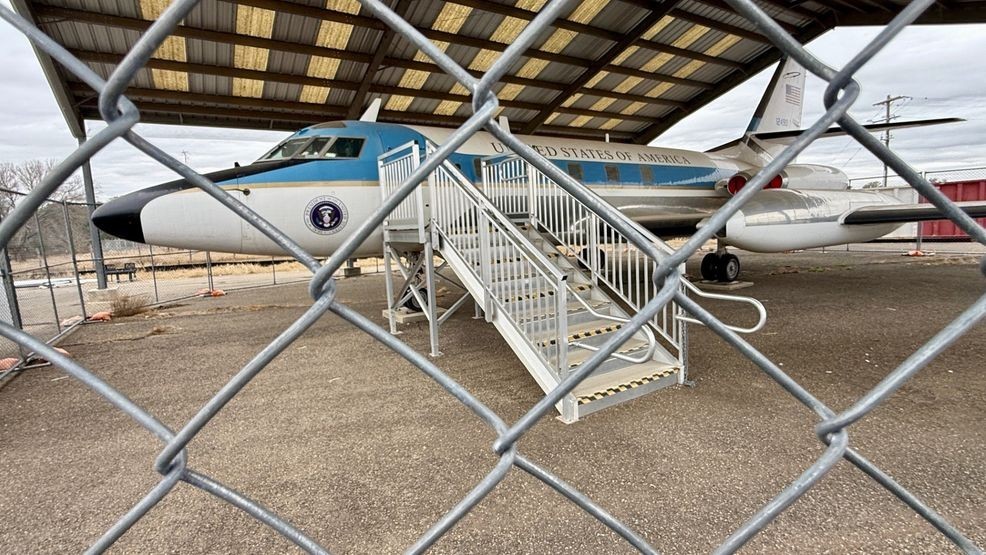 A $14 million rehabilitation project is underway to preserve the legacy of President Lyndon Baines Johnson. The focus of the restoration is the Texas White House where LBJ spent a quarter of his time while president in the 1960’s. (Photo: Bettie Cross)
“We really owe it to the state of Texas and the American people because this is a very historic home. A lot of important events have happened here. We want to do it right and make sure it is going to be structurally sound for the next 100 years,” said Carroll.
The national park provides the most complete picture of any American president. Visitors can explore where LBJ was born, attended his first school, raised his family, and then in1973 was laid to rest.
“We need to tell his story in a way that is meaningful to people and not just trying to read it in a history book. They can see it and experience it by coming here to the LBJ Ranch,” said Carroll.
The Texas White House is expected to reopen to tours in 2027.