
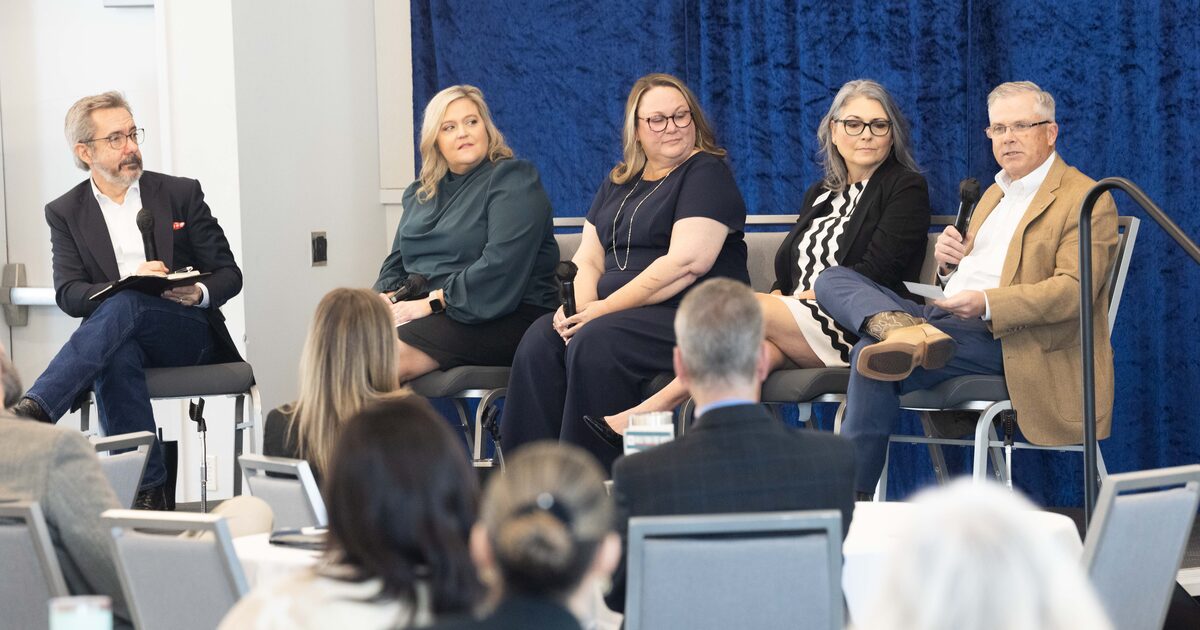
The most sought-after skills in Tarrant County’s job market might not be taught in a college classroom.
Employers across the Fort Worth region say it’s harder to come by new hires today that can problem-solve or manage other people’s emotions, according to a recent survey of local employers by the Fort Worth Chamber of Commerce.
As the labor market tightens and artificial intelligence reshapes roles, soft skills have increasingly provided a competitive advantage for job seekers. The chamber’s survey of more than 100 local organizations found that interpersonal traits — communication, critical thinking, adaptability, emotional intelligence and reliability — trumped job-specific technical skills or credentials in overall importance to employers.
Fort Worth, like other cities across the state, is trying to find and retain skilled workers as the region grows rapidly. One strategy leaders have embraced is expanding higher education access and increasing the number of postsecondary credentials earned by residents.
The Education Lab
But the chamber’s recent findings suggest the region’s workforce challenge is not a credential deficit. The primary shortage is in “soft skills” in new hires and job-seekers, according to the report.
Related
Mike Coffey, chair of the chamber’s Talent Committee, which oversaw the report, said he initially hoped the survey would identify in-demand industry-specific knowledge that education and business leaders could quickly create certifications for to “plug people into the workforce quickly.”
Instead he found most employers needed workers with better “people skills, not hard skills you can train in a classroom,” Coffey said at a Fort Worth Chamber workforce summit with business and education leaders Wednesday.
“How do I go back in time to second grade or first grade and start teaching kids these people skills? How do we develop those up with the current workforce? It’s going to be a bigger challenge than we anticipated,” he said.
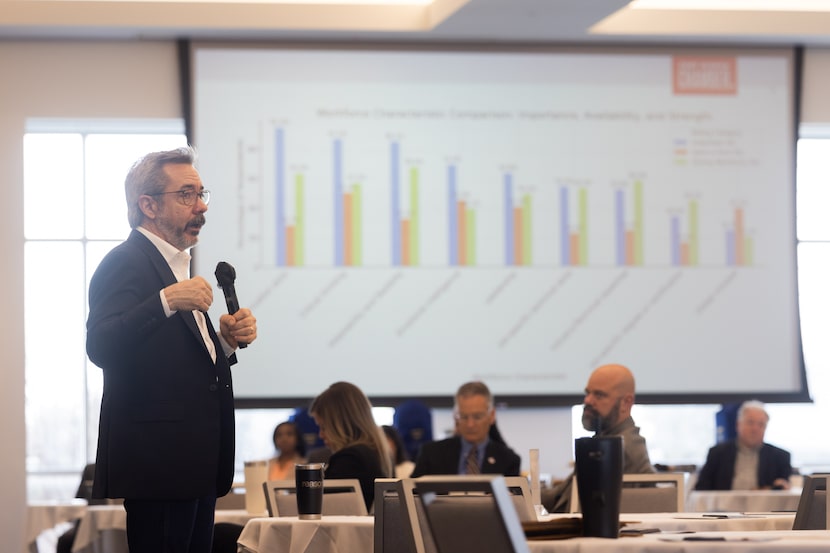
A slide presented titled “Workforce Characteristic Comparison: Importance, Availability and Strength” is displayed as Mike Coffey, Talent Committee Chair for the Fort Worth Chamber, speaks during the “Build Your Fort Worth Workforce Summit” at Texas Wesleyan University on Wednesday, Feb. 25, 2026, in Fort Worth.
Juan Figueroa / Staff Photographer
The survey found about 87% of respondents said critical thinking skills, such as the ability to make tough decisions, were important in a hire. But over half said it was difficult to find candidates with that attribute.
In comparison, 35% of respondents said a job-specific degree or certification was important. Most employers did not indicate it was hard to find qualified candidates with the appropriate credential.
Such people skills have always appealed to employers, but non-technical traits and interpersonal skills are shrinking in supply, particularly as a new generation enters the job market, workforce advocates and employers said Wednesday.
“We’ve got to bring these young people and the emerging workforce up. And it’s a real challenge,” Coffey said. “A lot is going to be on us to change our approach to how we communicate. Maybe our systems are in place for a certain reason, or maybe that’s just how we’ve always done it and we have to be willing to answer those questions.”
Renee Parker, business services director for Workforce Solutions for Tarrant County, said employers have told her that it’s difficult for young professionals to adapt to situations, whether it’s working with different generations or embracing failure.
“We see success in a training provider that’s providing technical training and … embedding an aspect of a failure so they understand how to resolve issues and conflicts,” she said.
David Campbell, a senior vice president at Huitt-Zollars, a full-service architectural and engineering firm headquartered in Dallas, regularly gives a soft skills presentation to his colleagues where he outlines the “10 things that require zero talent.”
Related

On the list include having good body language, being on time and being passionate. He urges colleagues to watch inspirational speaker Simon Sinek’s TED Talk titled “Start with why” quarterly to help vocalize their purpose and beliefs.
“These are things that I’m looking for in anyone I bring in. I’ll teach them the rest of it,” said Campbell. “But if I don’t get those, I won’t even start.”
Larger employers are turning to internal leadership programs and communication workshops to teach new hires these soft skills, according to the chamber’s report. Smaller businesses are implementing coaching and targeted feedback practices.
Still, the report identified the need for “widespread, structured implementation” of a process to develop “soft skills” in Fort Worth residents.
“We have a lot of training providers out there that are great and well capable for technical skills, but I don’t think one training provider can just do power skills or soft skills,” Parker said. “I think it’s our responsibility and employers’.”
The DMN Education Lab deepens the coverage and conversation about urgent education issues critical to the future of North Texas.
The DMN Education Lab is a community-funded journalism initiative, with support from Bobby and Lottye Lyle, Communities Foundation of Texas, The Dallas Foundation, Dallas Regional Chamber, Deedie Rose, Garrett and Cecilia Boone, Judy and Jim Gibbs, The Meadows Foundation, The Murrell Foundation, Ron and Phyllis Steinhart, Solutions Journalism Network, Southern Methodist University, Sydney Smith Hicks, and the University of Texas at Dallas. The Dallas Morning News retains full editorial control of the Education Lab’s journalism.