
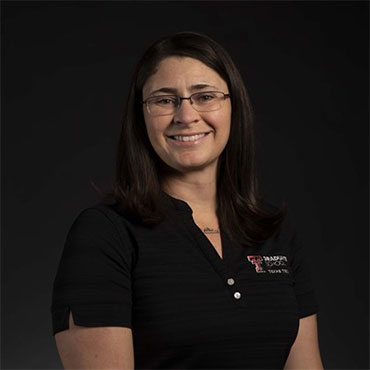
As Pantex’s first-ever researcher in residence, Wendy Galvan is growing into her own
as a scientist while sharing her professional experience with students.
CREATORS
Before starting her chemistry doctorate at Texas Tech University’s Graduate School, Wendy Galvan found herself at a bit of a crossroads.
Galvan began working as a cooperative development scientist at the Pantex Plant after
graduating with her bachelor’s degree. Pantex is the U.S.’s primary facility for the
assembly and disassembly of nuclear weapons, located just outside Amarillo, Texas.
She loved the work and being in the lab. There was something about precisely following
the necessary steps to complete an experiment that just captured Galvan’s attention.
She enjoyed working with her team at Pantex, too. She worked in a supportive and familial
environment. She knew her colleagues wanted to see her succeed as much as she wanted
to see it for herself.
Still, Galvan felt incomplete. She could run the experiments, but she wanted a deeper
understanding of the synthesis and analysis processes and the materials used.
Galvan talked with her manager and expressed a desire to return to school and earn
her doctorate. She thought she might have to put work on hold. Her manager had another
idea.
She could be the plant’s first-ever researcher in residence, working full-time at
the plant while pursuing her doctorate degree.
“I thought that sounded like a lot of work,” Galvan said, laughing. “It was scary.
I spent at least two or three months debating whether I should take this opportunity.”
Not even two semesters into her doctoral program, Galvan cannot imagine being anywhere
else, broadening her understanding of synthesizing and analyzing polymeric materials
while serving as a point of connection between Pantex and Texas Tech students.
Lab Rat
Galvan grew up in Booker, Texas, a small town at the top right corner of the panhandle.
She opted to attend West Texas A&M University for her undergraduate degree, which
allowed her to stay close to her mother and three older siblings.
“I had a really great professor, and he’s actually my coworker at Pantex now,” she
said. “I loved the way he taught and just his energy about organic chemistry. I know
everyone says that’s the hardest class, but I ended up falling in love with it.”
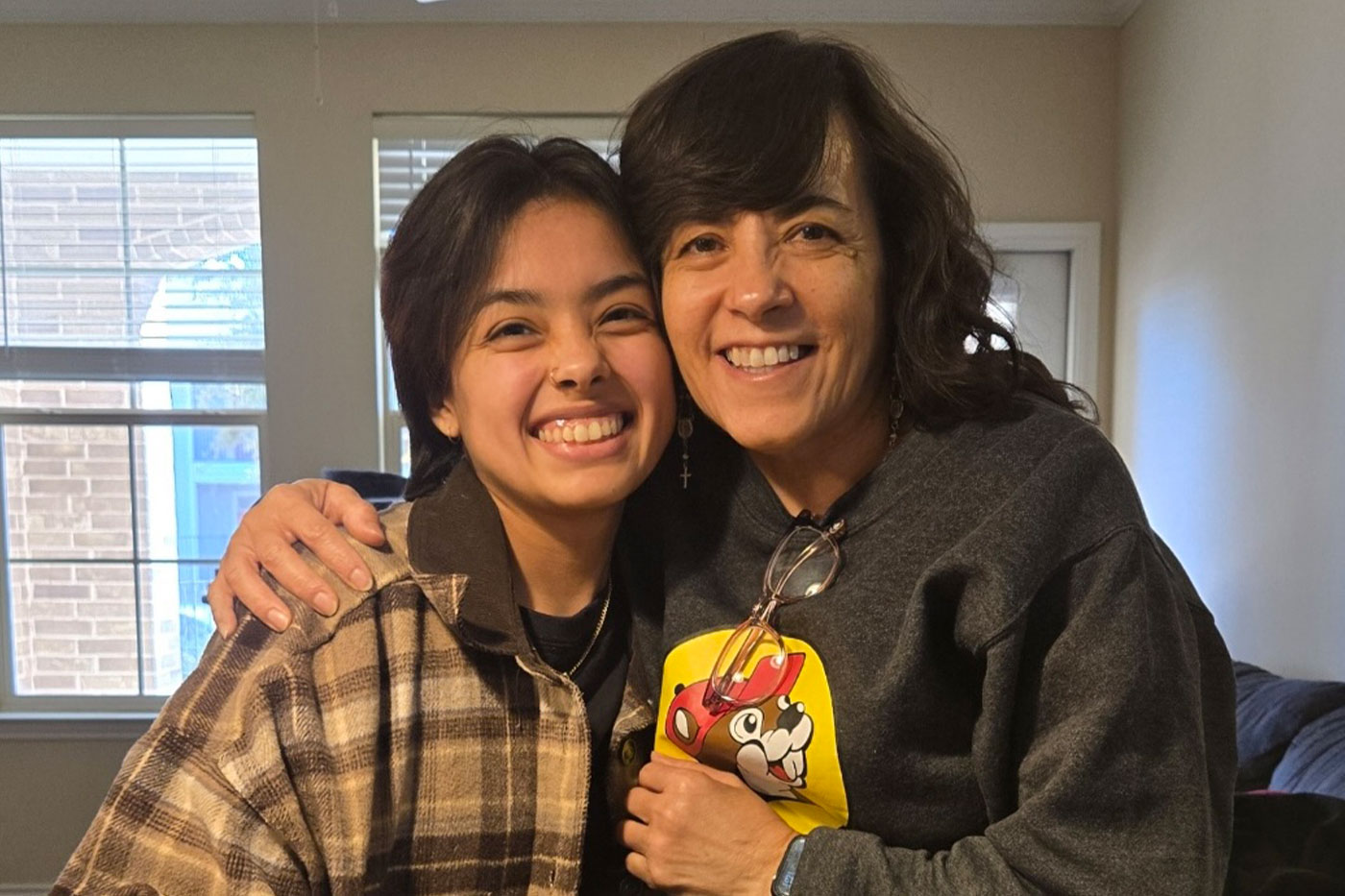 Wendy Galvan, left, poses with her mother.
Galvan shifted her major from biology to biochemistry after taking an organic chemistry course her second year. There may not be a course
more infamous to science majors across the country than the first organic chemistry
course. The challenging material introduces students to the study of structure, properties,
compositions, reactions and syntheses of carbon-containing compounds.
“I had a really great professor, and he’s actually my coworker at Pantex now,” she
said. “I loved the way he taught and just his energy about organic chemistry. I was
like, ‘You know, this stuff is really cool.’ I know everyone says that’s the hardest
class, but I ended up falling in love with it.”
She was later accepted into the McNair Scholars Program that prepares first-generation and low-income students for doctoral studies through
research opportunities and other scholarly activities.
It was through the McNair Scholars Program that Galvan realized how much she enjoyed
conducting and communicating research. She experienced hands-on laboratory research,
writing reports and presenting her findings at symposiums and conferences.
“My mentor had me doing a simple synthetic protocol, which is what I typically do
now, but it was on a smaller scale,” she said. “I really fell in love with being in
the lab and presenting the work I’d done.”
For those who have never been in a lab, Galvan likens the work to cooking in the kitchen.
“When you say synthesizing, you’re basically just cooking, whether it’s a polymer
or other materials of interest,” Galvan explained. “To me, you’re just following a
recipe. Sometimes it works, but unfortunately there are a lot of reactions that don’t.
But the fun part is getting together as a team and answering questions like, ‘What
are we doing wrong or what can we change? How do we troubleshoot this?’”
Galvan eventually secured the cooperative development scientist position at Pantex
and turned that into a full-time job in August 2025; though, she admits she was unsure
what work she could do with a bachelor’s degree focused on organic chemistry.
It did not take her long to see the vast role that organic chemistry plays at a place
like Pantex. Concepts from her textbooks that she had a familiarity with began to
take on new life with each passing experiment. Whereas her lab work during the McNair
Scholars Program featured a one-step protocol, now she was completing more complex
experiments that often had four or five steps and required more instrumentation for
a complete analysis.
Galvan was not just satisfied with more complex experiments, though. She needed to
have a deeper understanding about chemical synthesis and analysis. She needed to know
why certain materials were desired for experiments.
She did not want to be a cook just following a recipe; she needed to understand why
ingredients, equipment or techniques were required.
These needs led her to the conversation about graduate school with her manager and
eventually attending Texas Tech.
Researcher in Residence
Galvan talks about her work as Pantex’s first researcher in residence with an inspiring
energy. She gains total fulfillment from her role: as a professional, as a researcher
and as an individual trying to connect with students.
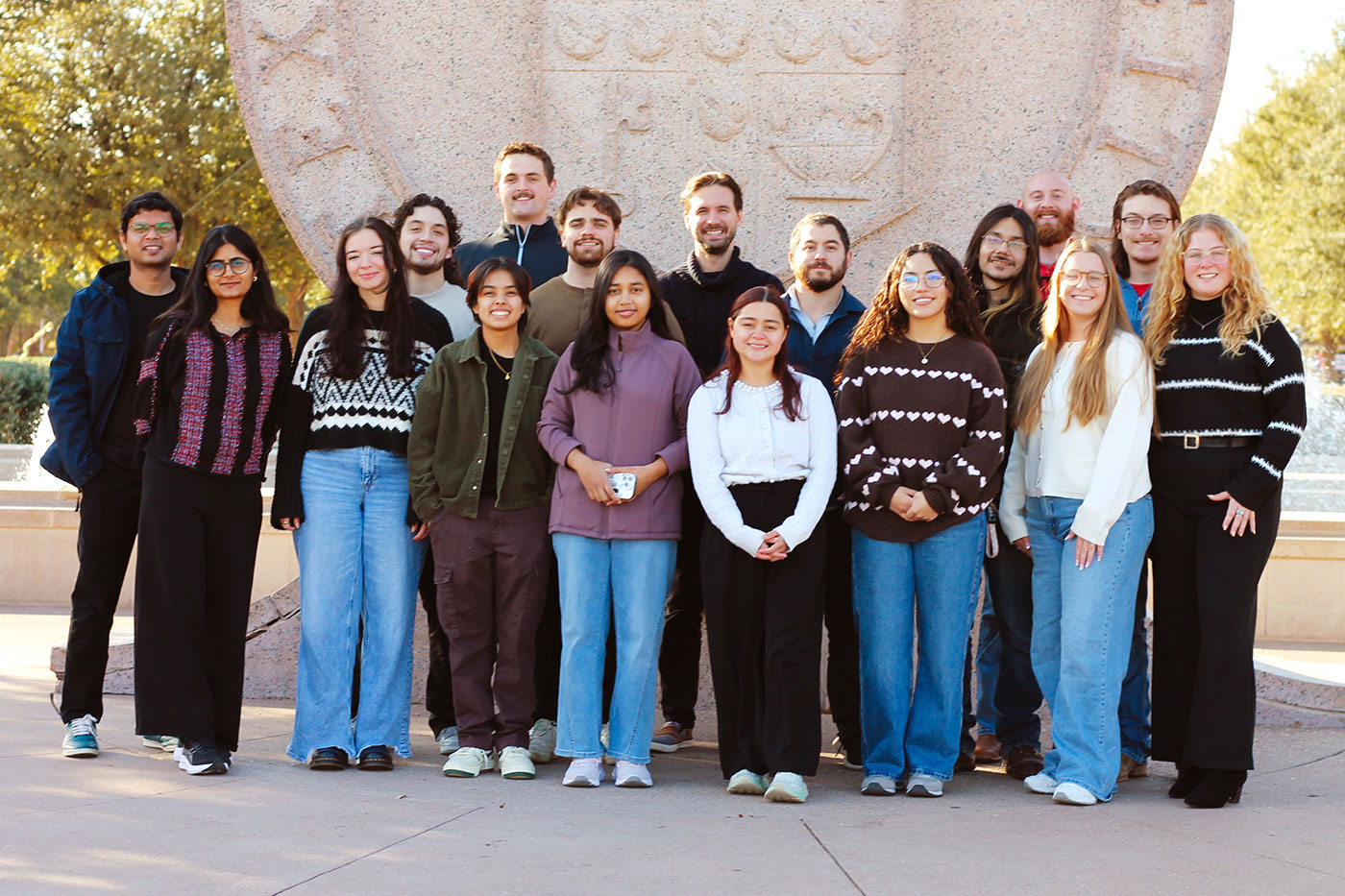 Wendy Galvan, front left in a green button-up shirt and back top, stands with the
rest of the research group in Joshua Tropp’s lab.
That intense level of fulfillment is often what sustains her through busy, 10- to
12-hour days. She often starts around 7 a.m., completing work for Pantex that includes
checking emails, responding to messages and attending virtual meetings. On lab-heavy
days, she may work from around 8 a.m. to 4 or 8 p.m., synthesizing materials, working
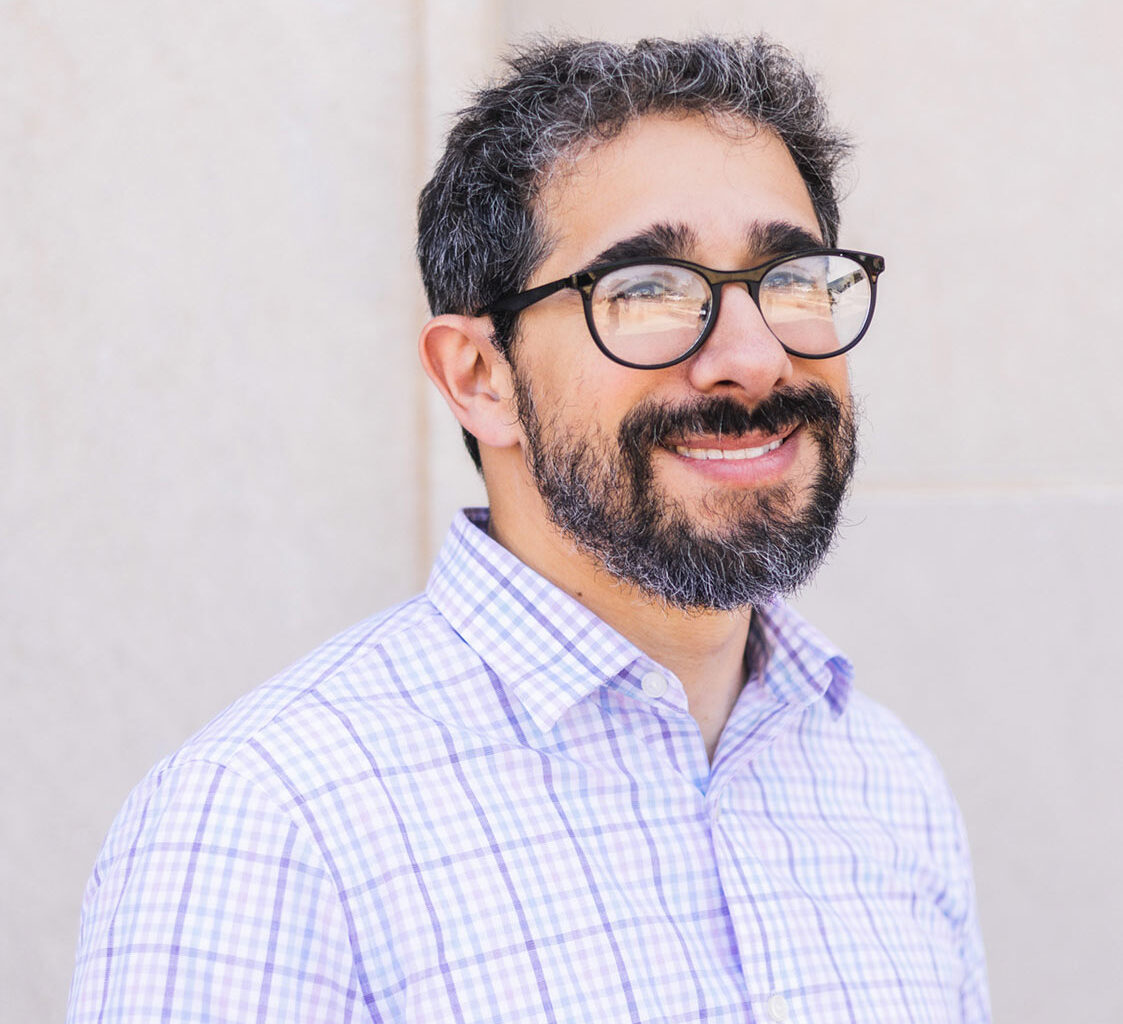
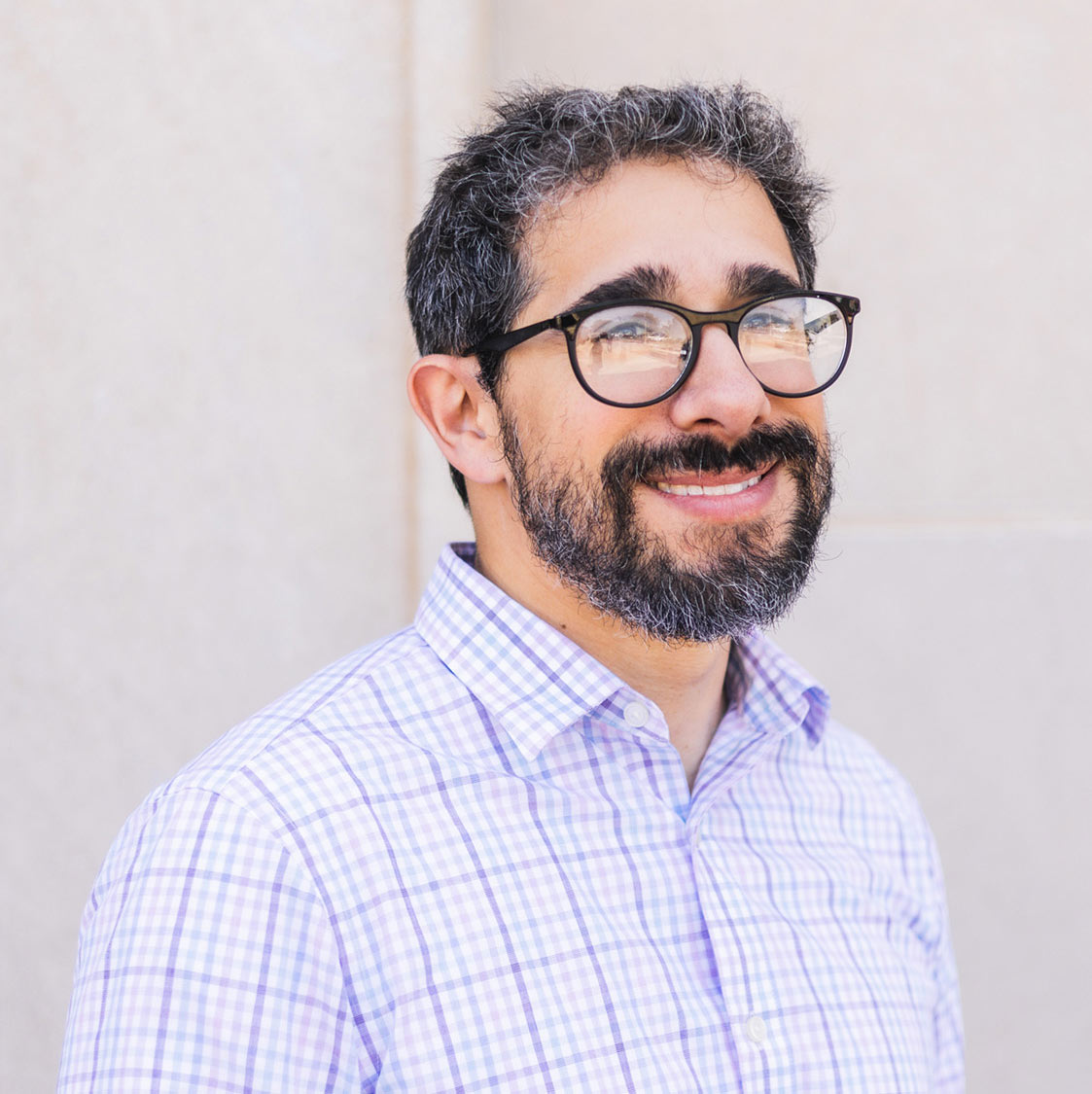
on tasks for Joshua Tropp – assistant professor and her faculty mentor and principal investigator – or reading
an array of research publications. She also attends graduate courses and completes
any necessary projects. On top of all that, she meets monthly with her Pantex manager.
“It really differs from day to day,” she said. “I’m in the lab every day and most
of the time on the weekends as well. I absolutely love it.”
Galvan is careful when describing her research given the national security implications
at Pantex. What she can say is that her research is in energetic materials, a technical
term for chemical substances that contain high amounts of stored chemical energy such
as explosives and propellants.
She has two subcontracts for Pantex that she is working on at Texas Tech. The first
is looking at recovering and recycling a binder that is important for Pantex’s high-explosives
mission. The second project investigates a new way to synthesize materials that incorporate
microwave heating and continuous flow to improve throughput, safety and quality.
Galvan wanted to work under Tropp’s tutelage because of his specific research background
in polymer synthesis and analysis. Both skills are enabling her subcontracts for Pantex.
Tropp also has research projects related to conjugated polymers, a unique class of
polymeric material. These polymers are long chain-like molecules where electrons flow
freely along its length, giving it electrical and light-emitting properties. Conjugated
polymers can operate more like a metal or semiconductor than typical polymers. One of his current research projects is developing testing strips to detect perfluoroalkyl and polyfluoroalkyl substances
(PFAS) in Lubbock drinking water.
“The reason I came to Texas Tech was to learn more about polymeric materials,” Galvan
said. “I’m learning from Dr. Tropp to take relevant skills back to Pantex whenever
I graduate.”
Tropp also empowers Galvan to develop as a researcher rooted in ceaseless, self-sustaining
curiosity.
“He doesn’t just want us to ask ‘Why?’ He wants us to find the why in the literature,”
Galvan said. “I think that’s really important for a Ph.D. student because not everyone
is going to have the answer you need. You need to find it on your own. I think that’s
really fueled my knowledge in polymers, that I have to go find the answers.
“His energy is so contagious. When you’re around him, you just get so excited about
what he’s talking about. Since I’ve been here, I feel like I want to learn everything.
Tropp’s curiosity in science really fuels all of us graduate students here.”
For her part, Galvan is trying to fuel the curiosity of other Texas Tech students
through outreach events, assisting Pantex’s recruiters at info sessions and career
fairs. She also meets with students in a one-on-one setting to answer any questions
she can and share her professional experience.
Galvan encourages students to make as many connections as possible, whether that is
through a career fair or info session, a research conference or even digital means.
She wants students to feel emboldened to talk about their goals and dreams in those
interactions. She brings up the conversation she had with her Pantex manager about
her initial desire to attend graduate school.
“One day, you’re going to find that person who will give you the opportunity to fulfill
your dreams,” she said. “I’m very grateful to have met my manager at the plant. He
gave me the opportunity to begin as a co-op and that turned into this researcher in
residence position.”
Galvan sees her role as a researcher in residence as one that connects Texas Tech
students to Pantex and vice-versa.
“I’m here at Texas Tech for my research, but I’m also here for those who are interested
in Pantex,” she said. “You can see that these students are engaged, and I love seeing
how enthusiastic they are. I love being able to help them and having the ability to
direct them to people they can talk to.”