
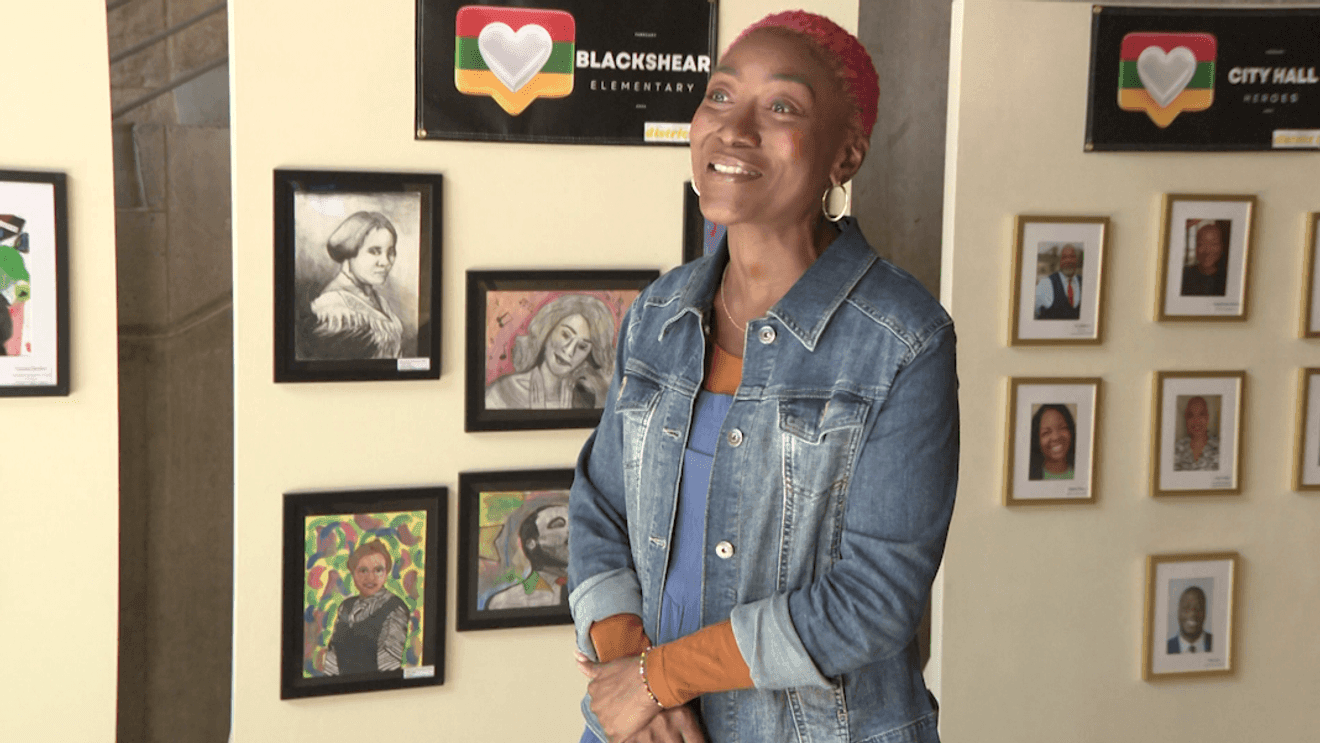
Black History Month is a time for reflection and forward-looking celebration for Austin City Council member Natasha Harper-Madison, an East Austin native who says the annual observance takes on new meaning as time goes on.
“Black History Month means a lot to me. You know, it’s one of those things, as human evolution happens, it means something different,” Harper-Madison said. This year, she said, it represents “opportunity to truly celebrate our culture, our people, our origins, and our future.”
Harper-Madison represents District 1 on the Austin City Council, which includes the East Austin area where she grew up. “What it means to me is home, you know,” she said.
Her East Austin community elected her to the council in 2018. In 2020, Harper-Madison became the second-ever Black woman on Austin’s City Council to be elected as mayor pro-tem.
“Representing East Austin is a source of pride for my family, for myself, in that we all recognize that representation matters,” Harper-Madison said.
ALSO | The story of Bethany Cemetery, Austin’s first Black burial ground
The district includes some of Austin’s most historically significant sites, from Huston-Tillotson University, the city’s only Historically Black College and University, to the Overton House, Calhoun House, and others. One community leader has raised concerns about preserving that history as the area changes.
“East Austin is slowly disappearing, you know, the history. And it’s just important that we preserve these stories for future generations because it was once a thriving community,” said Sue Spears, who grew up in Austin, and is now the president of the Bethany Cemetery Association.
During her time in office, Harper-Madison has spoken publicly in support of East Austin and its legacy, pointing to earlier generations who shaped the community through service and organizing.
“Folks in the community who committed their life to community service, them having done so in a way that future generations, they built the future generation, they did the capacity building,” Harper-Madison said.
She highlighted families such as the Calhouns, who housed traveling African-Americans during a period of segregation in the United States. The Calhoun family home still stands in her district and has recently been designated a historical landmark. Pat Calhoun, who lives in the Calhoun House, described “the significance of the community and the contributions that black citizens have made to this city.”
Harper-Madison is serving the final year of her second and final term on the council. “My lived experience as a black human in Austin, Texas, is absolutely appropriate to have represented on our Austin City Council,” she said.
Harper-Madison currently serves as Chair of the Housing and Planning Committee, and is a member of the Mobility Committee, as well as the Capital Area Metropolitan Organization.