
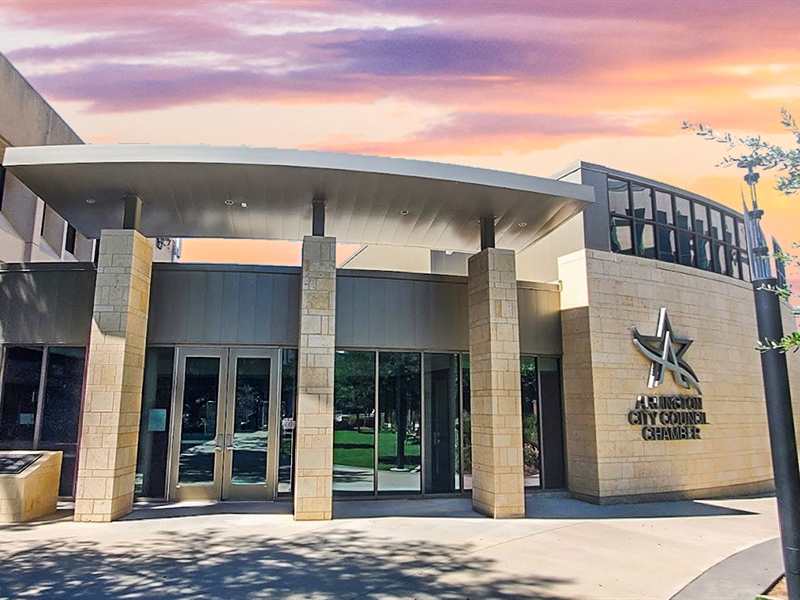
The Human Rights Campaign on Thursday, Feb. 26, issued a statement condemning the Arlington City Council’s vote this to city council vote to replace the city’s anti-discrimination ordinance with a new policy “generic policy framework that not only rolls back protections on the basis of sexual orientation, gender identity, and race, but goes so far as to preclude the city from even investigating discrimination complaints.”
Williams warned that the vote will almost definitely lower the city’s score in HRC’s annual MEI report.
Williams said the Arlington Council’s vote should “alarm anyone who values civil rights and responsible governance.
“My own work is focused on ensuring cities across the country enact municipal laws, policies and services that are inclusive of LGBTQ+ people who live and work there,” Williams added. “Each year, I help put together Human Rights Campaign‘s Municipal Equality Index (MEI), which, for 14 years, has rated cities on these metrics from across the country. Having worked extensively in this space I can say that far from just an update to the code, this news out of Arlington is a substantive rollback of legal protections and an egregious step in the wrong direction.”
Williams’ statement continued, “Civil rights protections matter — not only in principle, but in practice. Explicit and comprehensive non-discrimination ordinances provide guidance for employers, businesses, landlords, and residents. They establish enforceable standards and send a clear message: discrimination will not be tolerated.”
The city of Arlington’s vote to remove protections not only weakens accountability, “it creates uncertainty, signals retreat and puts historically marginalized groups at risk of further harm, exacerbating the effects of discrimination in employment, housing, and public accommodations,” Williams said.
He noted that HRC Foundation released the 2026 State of the Workplace Report, which said that more than half of workers whose employers had reduced, rebranded or eliminated DEI practices reported experiencing discriminatory behavior in that workplace.
“Moreover, a generic policy that merely states nondiscrimination objectives but does nothing to meet those objectives — like refusing to investigate complaints or provide for any mechanism of enforcement — quite literally fails at its core mission of furthering civil rights,” he wrote.
“Beyond the civil rights implications, this is also an economic and governance issue. Inclusive, nondiscriminatory environments correlate with stronger workforce attraction and retention,” Williams continued. “Major employers increasingly evaluate local civil rights frameworks as part of site selection and talent strategy. In competitive regional markets, civil rights infrastructure is how cities distinguish themselves as a part of larger risk management and economic competitiveness strategies.
“At a moment when federal and state actions are actively targeting hard-won advances and limiting efforts at diversity, equity, and inclusion, local governments should be strengthening local protections, not dismantling them. Cities often serve as the last meaningful line of defense for safe, healthy, and inclusive communities.”
Williams pointed out that in HRC’s 2025 MEI report,published last fall, Arlington earned a 100-point rating, which included credit for the now-rescinded ordinance. He said that it is likely that rescinding the comprehensive nondiscrimination ordinance will affect city policies and practices impacting LGBTQ+ equality.
“Without a doubt, this will result in a significantly lower score when the 2026 MEI is published this fall,” Williams said. “But this is about more than just a number. It’s about real people who will feel less safe, less welcome, and less protected in their community.
“Progress in 2026 requires expanding access, prioritizing inclusion, and protecting the most vulnerable among us. And, at the very least, that can’t include the regressive action of undoing civil rights laws already in place.”
— Tammye Nash
Related