
TEXAS — At Fort Worth’s drop-off station in Haslet, there’s never a slow day.
“Fort Worth is just growing exponentially every year,” said Mario Jacobo, the site manager.
The city hit a milestone last year, surpassing 1 million people. Northern Fort Worth, where the drop-off site is located, is one of those areas growing fast.
“We see people from out-of-state moving into Texas every day,” said Jacobo.
On average, Texans throw away seven pounds of trash a day. That’s two more pounds than the rest of the country.
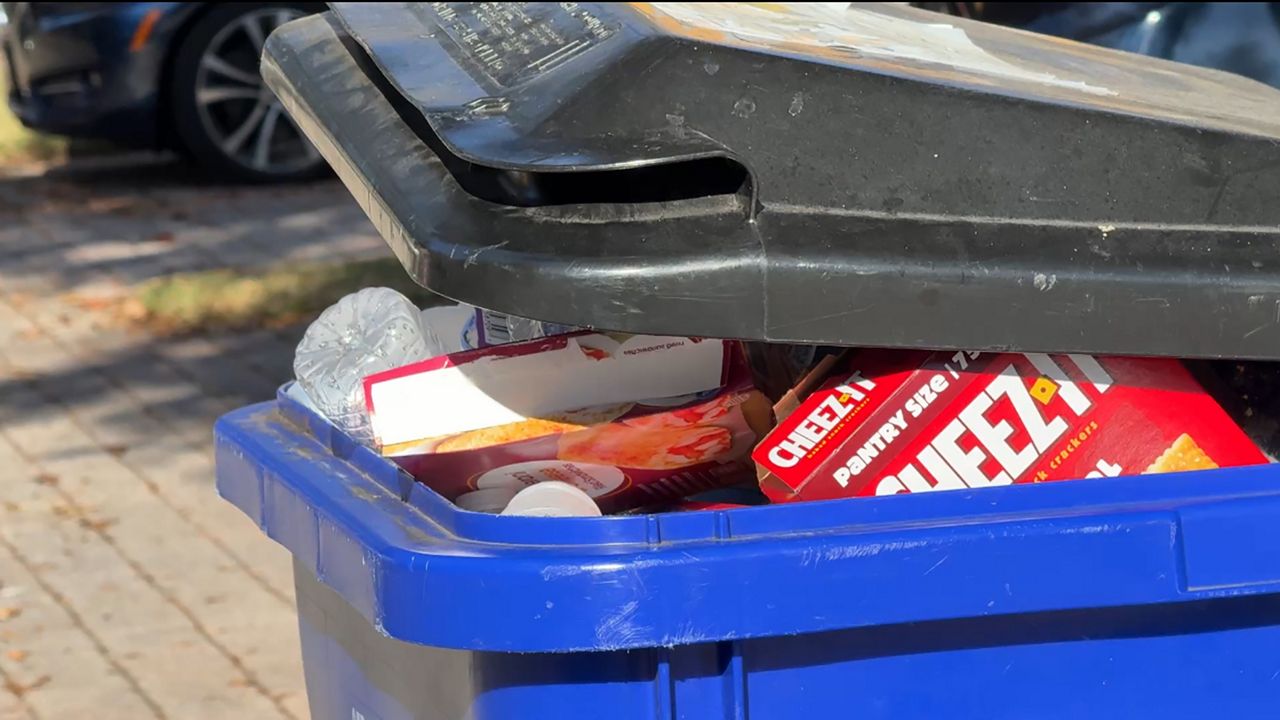
The drop-off site in Haslet helps take in that trash and gives people other options to recycle or reuse. People can bring everything from cardboard boxes to construction materials for new homes and more.
“We recycle everything and anything to divert as much material from landfills as possible,” said Jacobo.
Keeping these materials out of landfills is critical, especially as the Texas Commission on Environmental Quality (TCEQ) estimates the Fort Worth Southeast Landfill has about a decade or less left before it’s full.
“There’s a significant amount of pressure coming from all angles that can cause landfills to close earlier,” said Cassidy Campbell with the North Central Texas Council of Governments (NCTCOG).
Among population growth, she also points to natural disasters as a major reason for expedited landfill closures. But Fort Worth isn’t the only city facing upcoming landfill closures.
According to data released in 2025 by the TCEQ, Bexar County’s Tessman Road Landfill has about 32 years left.
Texas Disposal Systems’ landfill in Travis County has six years left, and Austin’s community recycling and disposal site has 2.5 years.
If nothing changes with the current rate of disposal and no more landfills are created, NCTCOG said the state has roughly 50 years of remaining landfill capacity.
However, capacity is not distributed evenly among regions of the state. In North Texas, NCTCOG said the region has 37 years of landfill capacity left.
“It will affect everybody’s daily lives if we don’t take measures to address these challenges,” said Campbell.
Trash services could cost more as trucks will have to haul waste further to other disposal sites. That could also mean more damage to roads and poorer air quality.
“This is something that is going to take a regional effort,” said Campbell. “There really is no silver bullet. This is a battle we’re going to have to fight on multiple fronts.”
That’s why recycling at drop-off sites like the one in Haslet is so important. Fort Worth even recently received a more than $4 million grant from the Environmental Protection Agency to launch a reuse program.
“We have appliances that are dropped off to our drop-off stations that have the opportunity for a second life,” said Jordan Balusek, environmental supervisor for the City of Fort Worth.
The money will also be used to improve recycling infrastructure and education.
“This gives us such an amazing opportunity to educate our public and to do that physical diversion from the landfill using our drop-off stations. Using what we already have,” said Balusek.
One reason experts say discussing this issue now is so important is that it can take 10 to 15 years to open a new landfill. It’s a process Fort Worth said it’s doing now for when its Southeast Landfill inevitably closes.
In 2024, developers looked at building a new landfill in Tarrant County near the Silver Creek neighborhood but ultimately withdrew the application after opposition from the community.
In the meantime, NCTCOG said Texans should look at not just recycling and reducing the amount of trash thrown out but also composting waste.