
Student Government does not exist in a vacuum. The 2026 elections take place against the backdrop of threats to academic freedom and student expression. While small-scale change is admirable, it falls short in the face of countless attempts to enact a political agenda on students.
These changes shape University policies and influence proceedings. In the past year, Student Government has taken strides to remove diverse student perspectives from SG operations. In August, they disbanded SG agencies, which halted projects that benefited the student body, such as voter registration drives, providing no-cost groceries and advocating for students with disabilities. In February, they approved funding for Turning Point USA, a conservative political organization, despite SG’s limits of institutional neutrality and precedent of not endorsing political stances.
The actions of Student Government last year compromised the representation of the student body for the sake of efficiency and politicization.
This election is more important than ever, as the winners will play an integral part in SG reform and accountability. Students need an executive alliance willing to undo these changes and advocate for the student body in the face of overreach from state and University leaders.
This year, seven executive alliances campaigned: Kiera Dixon and Jaden Watt, Cate Kratovil and Bailey Inglish, Jaylen Waithe and Nina Raich, Kelsey Green and Nicholas Smith, Sarah Sheriff and Siyona Nayampally, Camille Kilday and Connor Guess, and Armando Parrish and Ben Guerriero.
As the Daily Texan editorial board conducted its annual endorsement this year, we found it more difficult than in years past. While every alliance has built a wide support network and admirable policies, we found only two with strong, implementable goals. In the end, we spent hours debating the strengths and weaknesses of two alliances: Kiera Dixon and Jaden Watt, and Cate Kratovil and Bailey Inglish.
Here is why we made our decision.
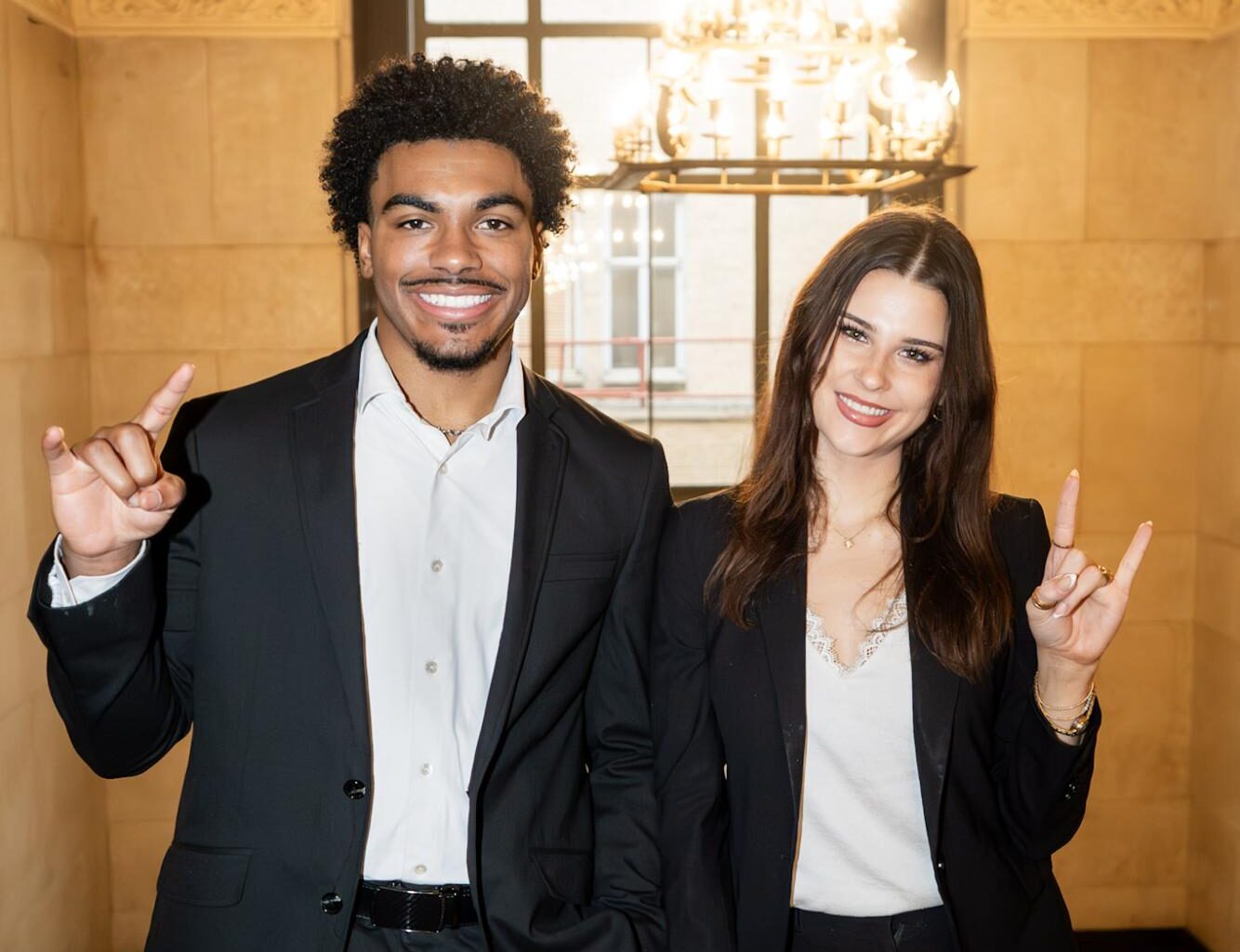
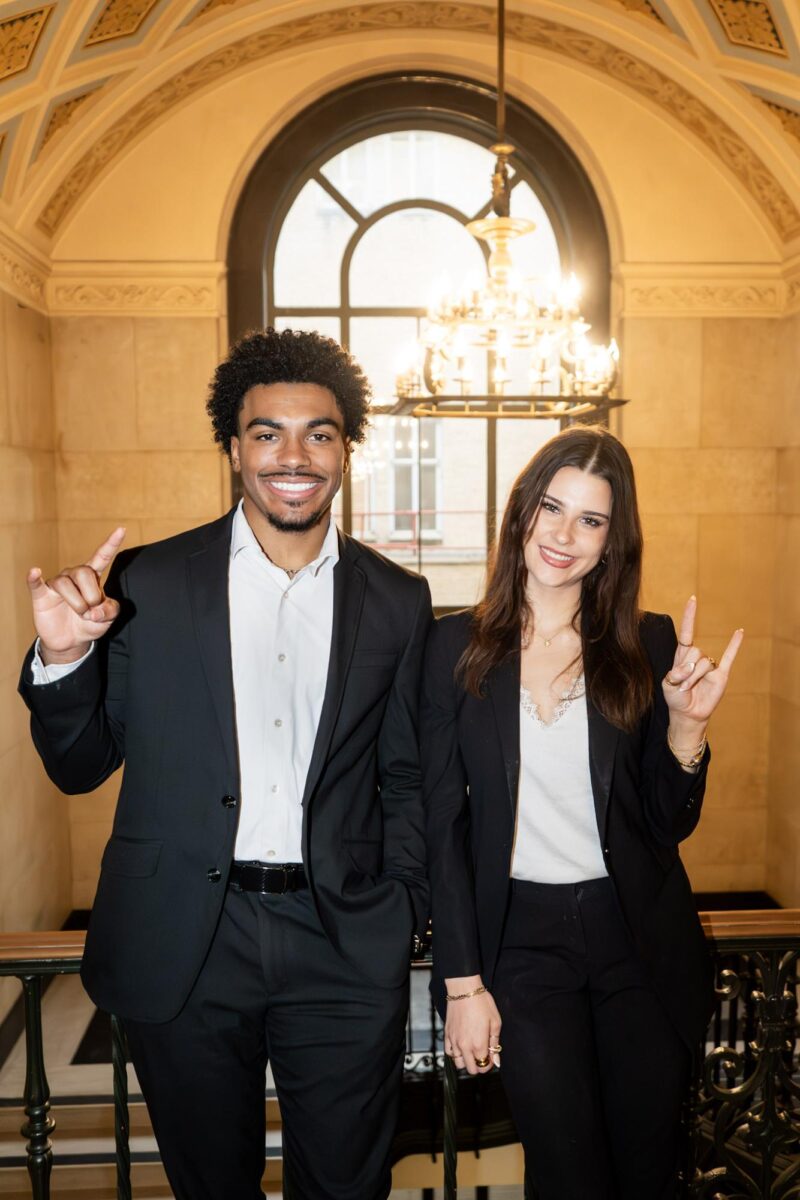
The Editorial Board endorses Kiera Dixon and Jaden Watt
Kiera and Jaden are the most qualified to champion the fight for student representation.
As a former co-director of the First Year Leadership Organization, which was disbanded this year, Kiera combines SG experience with the desire to restore diverse voices to the executive board. Jaden’s involvement with the national Black panhellenic community and experience with the Multicultural Engagement Center, which was shuttered after Senate Bill 17, gives him the perspective of those disillusioned with SG.
Their campaign centers around amplifying student voices when University policies no longer serve them. Their proposal to offer dining hall takeout meals after hours and expand access to free meals through a surplus program builds off of existing UT policies to create food flexibility at a school where one in three students experience food insecurity. Their Lease Education and Tenant Rights Initiative equips students with the legal knowledge necessary to navigate the competitive, corporation-dominated leasing market in West Campus.
Their most important campaign pledge, Forward for Every Voice, seeks to expand representation and accountability within SG. Their plans to unite the governing bodies under shared advocacy, restore the initiatives lost with the elimination of agencies and create a progress dashboard tracking their campaign promises in real-time will help restore student trust and emphasize transparency, ensuring SG is held accountable in serving the UT community.
Cate Kratovil and Bailey Inglish
Cate and Bailey have the right mindset about Student Government — if we weren’t going through an unprecedented administrative upheaval.
Their campaign is focused on making SG simple, functioning like local government by tackling feasible quality-of-life issues. Their goal to provide tangible change is admirable.
However, in a time when students fear their degrees being made obsolete and their colleges dissolved, microwaves just aren’t a priority.
Their campaign is contingent on “putting the fries in the bag,” which is tone deaf in the face of uncertainty and instability.
Their lack of previous SG involvement is evident in some of their unrealistic policies. Making the Life Sciences Library, Jester and Kinsolving Markets and University Union 24/7 requires staffing and funding that SG doesn’t have. In 2012, SG made the PCL 24/7, but that cost $40,000 per year funded by the Student Services Budget Committee, University Libraries and Provost’s Office. If keeping just one building open requires excessive funding, it is not realistic for the University to fund extended hours for four others.
Jaylen and Nina
Nina’s extensive SG background provides a strong foundation for working with administration and knowledge on the inner workings of SG. Policies like registration transparency and budget auditing prove promising.
However, Jaylen’s few months of experience is evident with their frivolous campaign promises. He prioritizes a focus on tradition, which is not only unimportant but does not acknowledge the harmful history of some of our traditions, like “The Eyes of Texas.” Moreover, policies like OU exam exemptions and a 24/7 crisis hotline are infeasible, and headshot programs already exist.
Although their campaign includes well-researched policy, it simply doesn’t stand out relative to the other alliances.
Kelsey Green and Nicholas Smith
Amid the rising questions after the consolidation of academic departments and curriculum reforms, Kelsey and Nicholas’ mission toward greater transparency is noble. Unfortunately, their goals and evident passion to serve the University are not enough — their campaign ultimately falls short in comparison to their opponents’.
The candidates’ lack of SG experience and absence of a working relationship, having only known each other for a mere four weeks, indicates their low degree of expertise and reveals a lack of stability — which their positions require.
Many of their campaign policies have either already been established or have previously failed to. Their planned reforms, such as increased food access partnerships and Big Ticket refunds for those who didn’t attend any home games, are infeasible and signal their lack of understanding of SG’s reach and budget. The pair’s most compelling pitch, a “promise tracker” that would inform students of the status of the candidates’ intended promises and administrative decisions affecting the student body, is also present in the Dixon-Watt platform.
Sarah Sheriff and Siyona Nayampally
Sarah and Siyona’s slogan, “Y’all means all,” is a gesture of inclusion and representation, but the alliance’s policy plans fail to demonstrate how the sentiment will be actualized.
Key components of their plan include increased transparency through regular town halls, incorporation of student feedback in SG initiatives and an “open door policy,” provisions that are the expected minimum of any executive alliance this year. We’re left unsure how Sarah and Siyona would increase diversity and inclusion while maintaining the pattern of promises we have heard time and time again in SG elections.
Sarah and Siyona’s platform is well-intentioned but fails to realize the scope of reform needed to follow a controversial and difficult year of SG leadership. UT needs an executive alliance with strong values, yes, but also the logistical knowledge and foresight to turn those values into tangible change.
Camille Kilday and Connor Guess
What Texas Travesty editors Camille and Connor’s satirical campaign platform lacks in feasibility, it makes up for in humor. Notably, their commitment to “transparency,” through a 24/7 livestream where Connor dons transparent clothing, is more likely to succeed than the accountability efforts of previous executive alliances.
In all seriousness, Camille and Connor’s campaign, while rooted in satire, has the capacity to increase voter participation and critique the University using a platform that cannot be ignored.
Their plans for the $115,000 SG budget, with $114,999 allocated to Turning Point USA and $1 toward bubble gum, and their mantra for working with President Davis (“Daddy says jump, we say how high”), provide a funny yet powerful critique of the politicization of SG and overreach of University leadership.
While we cannot recommend students vote for Camille and Connor, we hope they continue using humor to speak truth to power.
They may not have our endorsement, but we presume Timothée Chalamet’s suffices.
Armando Parrish and Ben Guerriero
Don’t let an Arch Manning endorsement fool you. While Armando and Ben embody a dynamic best friend duo, they fall short in representing quality electoral candidates.
Their lack of SG experience is reflected in their ill-researched policies, such as monthly town hall meetings that already occur weekly, and infeasible promises, like personal 24/7 Speedway tabling. They can pledge as much as they want to contact and host forums for all 1,200 student organization leaders, but their empty campaign promises lack a realistic path to success. Their implementation plans, to meet with Jim Davis and other members of University leadership, lack realism and thoughtfulness.
Their platform, which includes a previously proposed and failed Big Ticket loyalty program and an academic “True Dead Week,” is not only built on their love of Texas — it’s built on unachievable promises. Even with a victory, the scope of their platform far exceeds what is structurally possible within SG.
Campaign rhetoric is easy. Implementation is not.
Join us in voting for Kiera Dixon and Jaden Watt from 8 a.m. Monday, March 2 to 5 p.m. Tuesday, March 3.
The Editorial Board is composed of associate editors Tenley Jackson, Tiffany Lam, Maria Vazquez, Belle Xu and editor-in-chief Ava Saunders.