
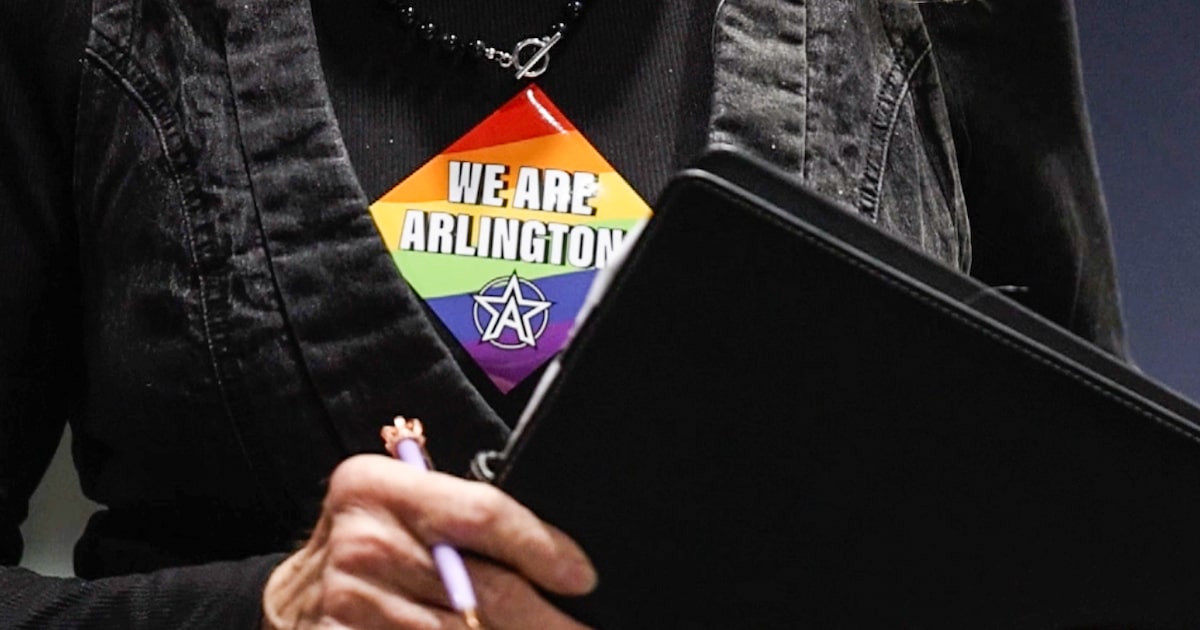
On Tuesday evening, Arlington didn’t just vote on final passage of an anti-discrimination ordinance. It voted on final passage of what can only be described as an anti-responsibility ordinance.
In a single action, the City Council removed local protections for every protected class — not some, not a few, but all – women and men, people of every faith, Black, white, Hispanic, Asian, immigrant, native-born — everyone. The message is unmistakable: Discrimination may be wrong, but Arlington will no longer address it locally. Under the new ordinance, discrimination will no longer be illegal under city code.
Council members have repeatedly stated that they oppose discrimination. But opposition without action is hollow. By eliminating local enforcement, investigation and accountability, the city has rendered its assurances largely symbolic. If government declines to act when discrimination occurs, statements of concern become little more than rhetorical political cover.
The previous ordinance was straightforward: Discrimination had consequences under local law. If an employer fired someone because of their religion, if a landlord refused to rent to a family because of their skin color, or if a business denied service based on sexual orientation or identity, the city could investigate and respond. Nothing extreme — simply basic fairness backed by local enforcement. Yet that standard has now been deemed unnecessary.
Opinion
Supporters note that state and federal laws remain in place. But local protections are not redundant. They provide faster resolution and a clear statement of community values.
There are also economic implications. Arlington relies heavily on tourism, conventions, major events and corporate partnerships. Reputation matters in that competition. The city was already among the last large municipalities to adopt comprehensive local protections. It is now one of the first to abandon them.
When individuals and businesses decide where to live, work, hold events or invest, they often choose places that demonstrate commitment, not indifference. Meeting planners and corporate partners increasingly consider civil rights policies when selecting destinations. They have professional ethical standards and duty of care to inform clients if a location lacks basic protections, especially if those protections were recently removed.
Eliminating the city’s ability to protect its residents is not anti-discrimination policy. It is not pro-business. It is not neutral. There are many ways to describe what happened Tuesday night. “Anti-discrimination” is not one of them. “Anti-responsibility” is closer to the truth.
Arlington residents deserved more than expressions of concern without meaningful action. If discrimination is truly wrong, then addressing it should also be a local responsibility.
DeeJay Johannessen is CEO of the HELP Center for LGBTQ+ Health.
We welcome your thoughts in a letter to the editor. See the guidelines and submit your letter here.
If you have problems with the form, you can submit via email at letters@dallasnews.com