
Negotiations for the San Antonio Police Department union contract have entered a slower, more technical phase after the city delivered its first counteroffer to the San Antonio Police Officers’ Association on Friday.
The second bargaining session ended with the city and union negotiators tentatively agreeing to three proposals and moving unresolved issues — including health care, tuition reimbursement and working hours — into small working groups, setting the stage for more detailed discussions ahead of the next full bargaining session on March 26.
While the meeting produced movement on procedural items, it also clarified the central divide shaping the talks: how competitive pay is defined and how much the city is willing to commit to officer pay and benefits over the next three years.
City counteroffer on compensation
A key principle of SAPOA’s initial proposal focuses on increasing officer compensation, which the union said would close a growing pay gap between San Antonio and other Texas cities.
SAPOA’s initial request called for a 9% across-the-board raise for all officers, paired with additional hourly wage increases and changes to benefits. When the proposal is taken as a whole — including hourly wage increases, incentive pay and expanded health care contributions — city staff estimated the cost of the total wage proposal at roughly $155 million over three years, according to figures presented during negotiations.
City officials last Friday countered with 8.5%, which reflects only across-the-board wage increases and does not address the hourly pay structure proposed by SAPOA, which the city said requires further analysis.
The city argued that while SAPOA’s initial proposal compared base salaries across similar markets, total compensation should be used as the metric for comparison instead.
At the same time, the city presented a newly commissioned compensation study conducted by PFM Consulting Group at the bargaining meeting, which compares San Antonio police pay to other large Texas cities. The study shows that San Antonio officers trail peers in base pay alone, but rank higher when benefits like incentive pay, longevity, health care and pension contributions are included.
Assistant City Manager Maria Villagómez, who is leading negotiations for the city, said negotiators are amenable to a three-year contract in principle, but would keep the topic open for discussion until an agreement on wages is reached.
“We want to have a better understanding of their position and this hourly increase that they requested and the increases to incentive pay. So we can better understand their interests and where they want to land,” Villagómez said. ”It’s important to us and I think it’s important to the association to increase base pay.”
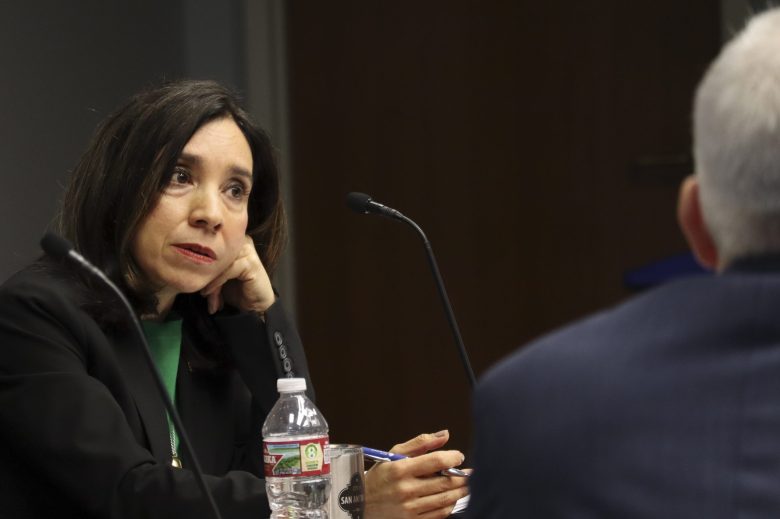 Assistant City Manager Maria Villagómez, is leading contract negotiations for the city of San Antonio. Credit: Miranda Liguez for the San Antonio Report
The union’s request for an increase to Health Savings Accounts that would raise the current city contribution of $1,500 annually to half of the IRS maximum contribution limit of $4,375 will also continue to be discussed alongside compensation in working groups.
Villagómez said the counter reflects both the scale of the union’s proposal and the city’s broader financial picture. She said the city’s approach is rooted in balancing competitiveness with long-term sustainability since San Antonio is still early in its financial forecasting process for the next budget cycle.
“We want to stay competitive with the other cities but we have to balance it with the realities of our budget,” Villagómez said. “We have to keep in mind that whatever we land at the end of the negotiations has to be affordable for purposes of the budget.”
Base pay remains central
SAPOA President Danny Diaz said the union understands the city’s total compensation framing — but does not believe it resolves officer’s concerns about base pay.
“It’s a core issue, we want to stay comparable to what other major cities are getting paid,” Diaz said. “As the city admitted on Friday we’re not up to par with other cities and that’s what we’re trying to do.”
Diaz acknowledged the total compensation study but said SAPOA was taking the city’s counteroffer with a grain of salt and moving forward to see what they can work out in the next round of negotiations.
“You have to be patient with stuff like this. We have our experts, they have theirs and then we combine and talk things over,” he said. ”I don’t have a reaction yet. We go back and forth in bargaining until we come to a finalized agreement.”
Diaz added that he hopes at the end of negotiations, the city will understand the proposal SAPOA has brought addresses a slew of issues the department is currently facing.
“At that point, hopefully, the city realizes that what was given to them is a proposal that fixes a lot of the issues that we have,” he said. “We’re looking at retention, seniority, keeping people interested in coming to work here and being comparable to other departments.”
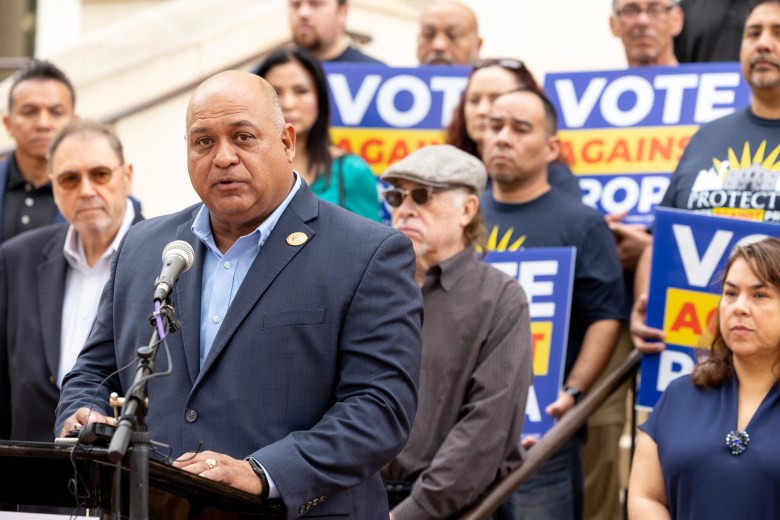 Danny Diaz, president of the San Antonio Police Officers’ Association, reiterated the importance of addressing base pay for union members after the latest round of negotiations. Credit: Brenda Bazán / San Antonio Report
When asked about the city’s concerns over budgetary constraints, Diaz pointed to terms negotiated by other departments and doing right by his membership and SAPD officers.
“It’s a total package. For me it’s, ‘What’s the best that we can get for our members and future officers?’” he said. “But we also look at what the city is trying to accomplish and we know what’s been given to other departments, to civilians and firefighters. We’re looking to be comparable.”
Early agreements, next steps
Negotiators reached tentative agreements on Articles 18, 21 and 22, which were signed during the session.
Those provisions largely address procedural and administrative issues.
Both sides agreed to move several unresolved areas into working groups, including: pay and health care, hours of work and scheduling and tuition reimbursement and certifications.
Diaz called the working groups a productive step for change where SAPOA can show the value their proposals bring to the police force and the community.
“There [are] things that need to be fixed in the department and this is a way to do it,” he said. “We have to sit and talk and get it taken care of. We have to show that these proposals are in the best interest of not only our officers but the community itself.”
Between now and the next formal bargaining session on March 26 — five days before the 60-day negotiation window required under state law is set to expire — much of the substantive work will take place outside the bargaining room, as working groups meet and both sides prepare revised language and cost estimates.
No decisions will be made at the working groups, but they set the stage for the upcoming March meeting.
Diaz said he would not be surprised if talks extend beyond that date, noting the possibility of a 15-day extension, if needed — but said he does not expect negotiations to drag out the way past police contracts have.
“It would be perfect if we could get it done, but unfortunately, we don’t live in a perfect world and I wouldn’t hold my breath on it,” he said. “We’re in a good place, where we’re talking and talks have not bogged down like they have in previous years, so, we’ll see.”