
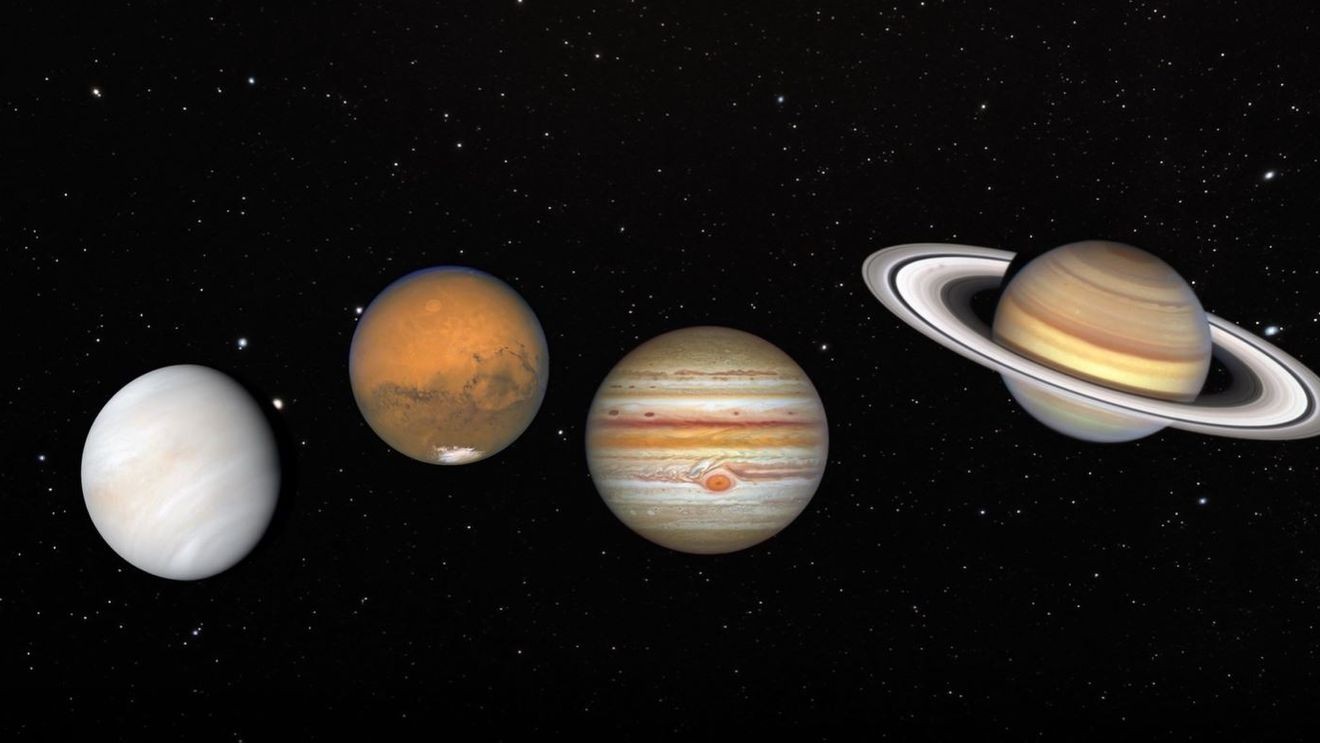
EL PASO, Texas (KFOX14) — If you’ve been looking for an excuse to step outside and look up, late February 2026 is providing the perfect celestial show, according to MSN.
A “planetary parade”—a rare event where multiple planets appear in the same general arc of the sky—is gracing our evenings, offering a unique opportunity to view six of our solar system’s neighbors at once.
While the term “planet parade” sounds like a neat, uniform line, the reality is a bit more nuanced. Here is what you need to know to catch the spectacle.
What Is a Planetary Parade?
Despite the dramatic name, a planetary parade isn’t an actual alignment in deep space. Because all planets in our solar system orbit the sun on roughly the same flat plane (the ecliptic), they often appear to be lined up from our perspective here on Earth. Think of it like standing in the middle of a racetrack; even if the other runners are in different lanes, they often appear to form a line from your specific vantage point.
On February 28, 2026, this geometric coincidence will allow observers to spot Mercury, Venus, Jupiter, Saturn, Neptune, and Uranus in a loose, sweeping arc across the sky.
How to See It
To get the best view, you’ll need a bit of patience, clear weather, and a little bit of equipment.
Timing is everything: Your best window is shortly after sunset. You don’t need to stay up all night; in fact, the planets will be visible in the twilight glow before they dip below the horizon.
Find your horizon: Because many of these planets will be low to the west, you need an unobstructed view. Avoid city buildings, tall trees, or dense forests if possible.
Know your limits: This is a “choose your own adventure” style of stargazing.
The Naked-Eye Planets: Venus and Jupiter will be your shining stars. They are bright and relatively easy to spot.
The Challenging Trio: Mercury, Saturn, and the ice giants (Uranus and Neptune) are significantly dimmer. Mercury will be hugging the horizon, while Neptune and Uranus are faint enough that you will almost certainly need a pair of stargazing binoculars or a small telescope to distinguish them from the background stars.
Use an app: If you aren’t sure which dot is which, download a stargazing app like Star Walk 2, SkySafari, or Stellarium. These tools can overlay the names of the planets on your phone screen, helping you identify exactly what you’re looking at in real-time.
Why It’s Worth It
Planetary parades aren’t “once-in-a-lifetime” events, but they are special. They offer a rare chance to visualize the sheer scale and shared geometry of our solar system. When you look up, you aren’t just seeing lights in the sky—you’re seeing worlds that are millions, and in some cases, billions of miles away, all dancing together in our cosmic neighborhood.
So, grab your binoculars, find a comfortable spot with a clear western view, and take a few minutes to appreciate the view. Just remember: if the clouds roll in, don’t fret—planetary alignments are a recurring feature of the celestial calendar, and there will be more opportunities to look up later this year.
Happy stargazing!