
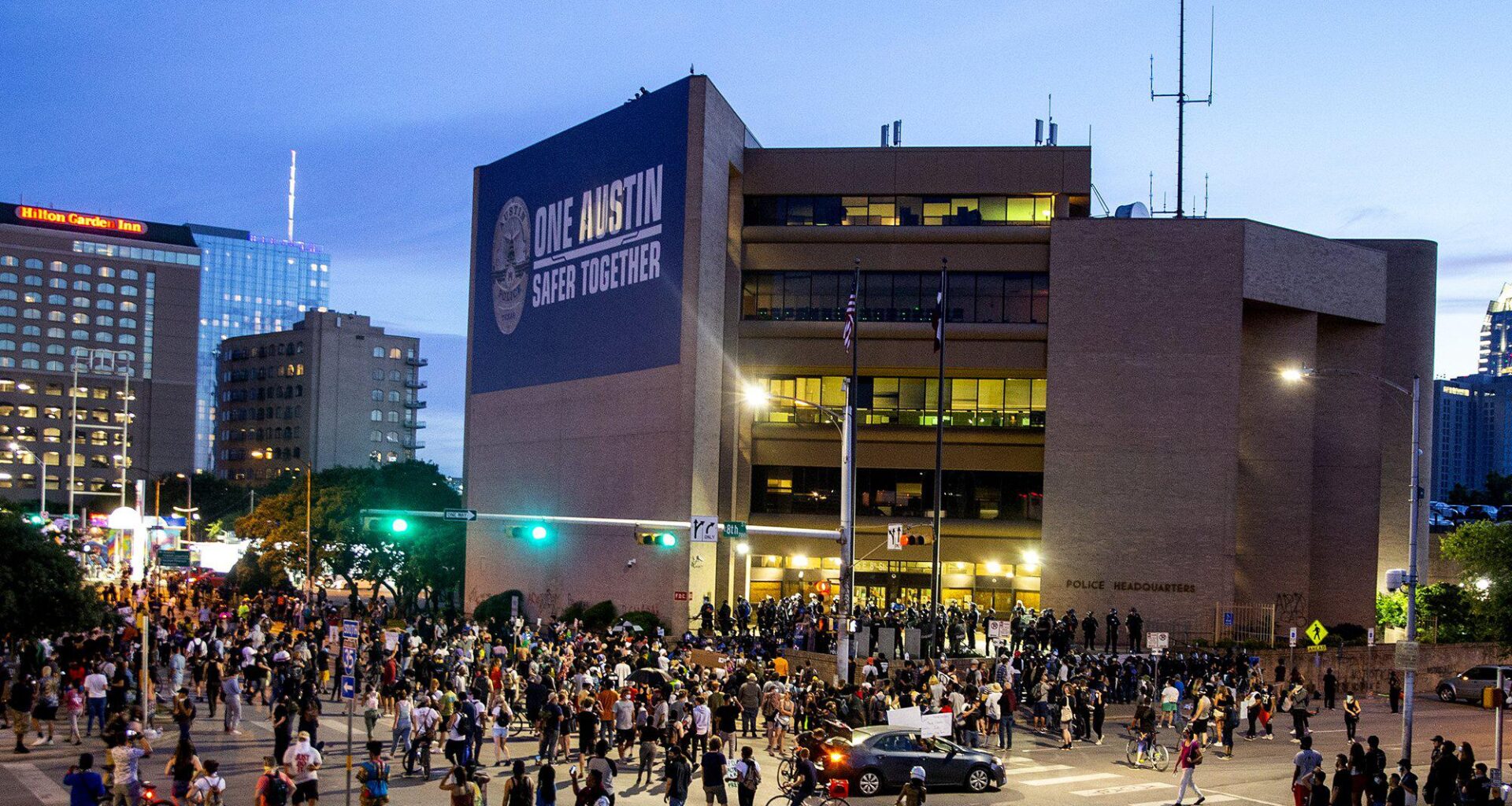
File photo, protestors arrive to the Austin Police Department headquarters from the Texas State Capitol in Austin, Texas May 31, 2020
Ricardo B. Brazziell/Austin American-Statesman
If you recently paid your property tax bill, you may be wondering: Where does all that money actually go?

In Austin, most of it goes to public safety.
Article continues below this ad
Police, fire and emergency medical services consume about 60% of the city’s tax-supported budget — the part of the budget funded by property and sales taxes that pays for services not covered by user fees (like utilities or trash collection).
In the current budget, adopted in November:
Article continues below this ad
The Austin Police Department receives more than $500 million.
The Austin Fire Department receives $264 million.
Emergency Medical Services receives $155 million.
Together, those three departments account for roughly three out of every five tax-funded dollars the city spends.
And that share is likely to grow.
Article continues below this ad
Why public safety dominates the budget
There are three primary reasons police, fire and EMS take up such a large portion of Austin’s tax dollars.
The Austin Fire Department honors 9/11 firefighters with a memorial stair climb at the Public Safety Wellness Center in Austin, Thursday, Sept. 11, 2025. Firefighters in full gear climb the training tower nine times, over 1,000 stairs, to climb the equivalent of the World Trade Center’s height.
Mikala Compton/Austin American-Statesman
They employ the most people.
Article continues below this ad
Police officers, firefighters and paramedics make up the largest share of employees paid out of the city’s general fund. More personnel means higher payroll costs.
2. They have union contracts that guarantee raises.
Unlike most city employees, police officers, firefighters and medics are represented by unions that can negotiate binding labor contracts under state law. Those contracts guarantee annual wage increases.
Police signed their first contract in 1998. Firefighters signed theirs in 1997. EMS followed in 2008.
Article continues below this ad
For more than two decades, the city has been legally required to provide raises to these employees. Civilian city staff often receive raises as well — but the city is not obligated to provide them. In tighter budget years, those raises can be reduced or skipped.
3. Public safety is politically protected.
City leaders, like most residents, consistently rank police, fire and EMS as core government functions. As a result, elected officials have historically been reluctant to cut those budgets.
How state laws tightened the squeeze
Two recent state laws significantly reduced Austin’s budget flexibility.
Article continues below this ad
In 2019, the Texas Legislature passed Senate Bill 2, which limits how much cities can increase property tax revenue each year without voter approval. The cap is 3.5% growth over the previous year.
Between 2002 and 2020, Austin leaders increased taxes by at least 5% in all but five years, allowing the city to expand other services alongside rising public safety costs.
Austin-Travis County Emergency Medical Services paramedics check on a woman lying on the ground in East, Austin Thursday, July 27, 2023. Paramedics gave her water and assessed her symptoms. The temperature was a high of 101 degrees.
Mikala Compton, Mikala Compton/American-Statesman, Austin American-Statesman
In 2021, lawmakers passed another law making it illegal for cities to reduce their police department budgets.
Article continues below this ad
Together, those laws restrict the city’s ability to either raise additional revenue or shift money away from policing.
Last year, city leaders asked voters to approve a higher tax rate. Voters rejected it. That left officials making smaller cuts across departments instead of expanding services.
Read More: After voter tax revolt, Austin City Hall orders audit of itself
Early projections show that next year’s budget will be even tighter — and public safety’s share is expected to grow again.
Article continues below this ad
Why that share is unlikely to shrink
Recent labor contracts will further increase public safety spending.
In 2024, the Austin Police Association signed a five-year, $220 million contract that will raise officer pay by 28% by the end of the agreement.
In December, the firefighters union signed a four-year, $63 million deal. The contract may also require the city to hire additional firefighters to accommodate a new shift schedule.
Article continues below this ad
The EMS union’s contract expires in September 2027, and negotiations for a new agreement begin next year.
Both the police and fire contracts contain provisions that allow the city to reduce raises if voters reject a property tax increase. The city chose not to use that option last year.
As a result, police officers, firefighters and medics are likely to receive raises next year — which means their departments’ budgets will increase again.
What it means for the rest of the budget
Because public safety spending is contractually locked in and politically difficult to cut — and because state law limits new tax revenue — other services face increasing pressure. That includes parks, libraries, housing assistance and other community programs funded by the general fund.
Article continues below this ad
Readers couldn’t visit Austin Public Library branches for most of 2020, but the system’s Libby app saw an explosion in books borrowed.
AMERICAN-STATESMAN FILE
Unless voters approve higher taxes or lawmakers loosen restrictions on cities, public safety will continue to consume a growing share of Austin’s tax-supported budget.
Read More: Amid ongoing budget crunch, Austin orders rubric for $17M social service cuts
Article continues below this ad
For homeowners paying their annual tax bill, that means a larger portion of their money is steadily flowing to police, fire and EMS — and a smaller portion to nearly everything else.