
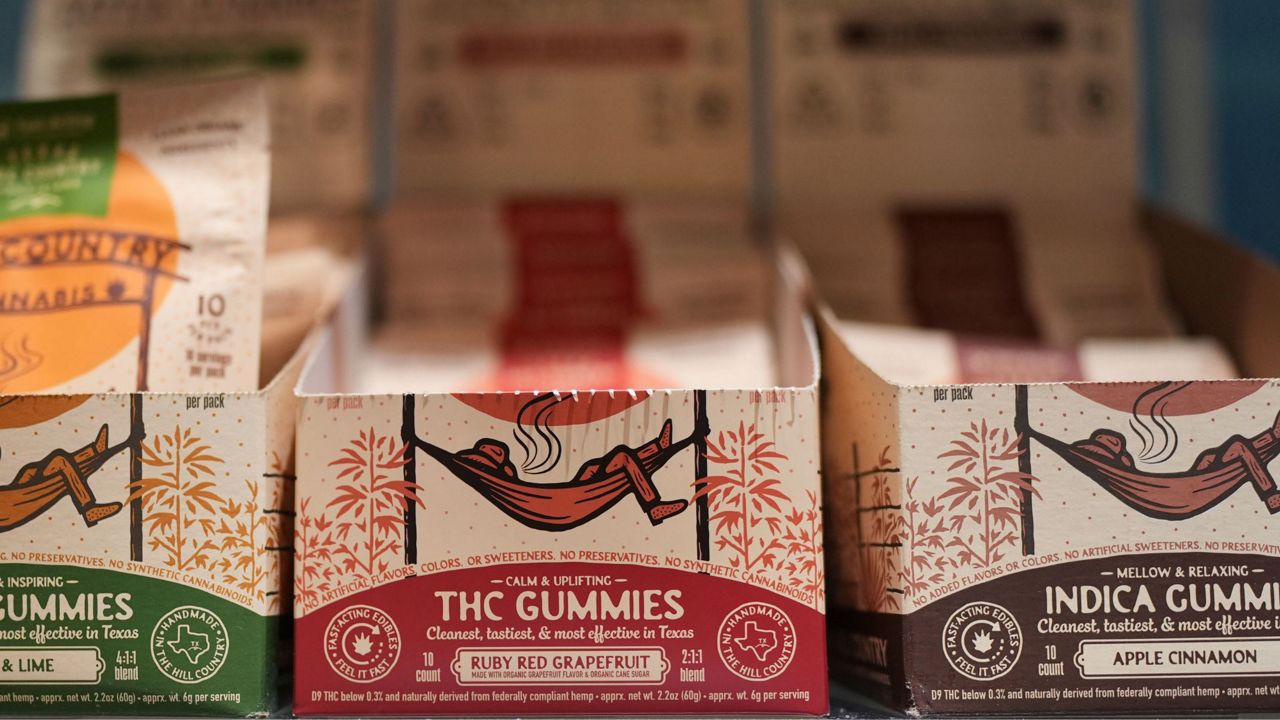
TEXAS — A topic on some voters’ minds when heading to the polls to cast their March primary ballot: THC.
The policy area has been thrown back and forth since the legislative session last year, one of the major laws being a ban on hemp-based THC—Senate Bill 3—which was ultimately passed by the Legislature but vetoed by the governor.
This election cycle, for people voting on the Democratic ballot, cannabis appeared on the ticket through a non-binding survey question: “Texas should legalize cannabis for adults and automatically expunge criminal records for past low-level cannabis offenses.”
Ahead of the results, candidates from several races, ranging from congressional races to the race for lieutenant governor, gathered at Leaf and Legends in Austin to share their approach to THC policy.
Gigs Hodges, a Democrat running for Texas House District 49, is leaving it to the experts to guide her votes if elected.
“I have people a part of my campaign that are from the hemp industry and advocates from the hemp industry, and that is something I want to carry into the Legislature,” she said.
Others, like Justin Early, touched on the reclassification of cannabis from a Schedule I to a Schedule III substance by President Donald Trump, a process that began back in 2023. Early is running as a Democrat for the 31st Congressional District.
“Cannabis is removed from Schedule I — that needs to happen immediately,” he said. “Secondly, what that can do is open up [the] Small Business Administration [and] other funds other things to help small businesses create their business around hemp and manufacture of other products within hemp.”
Some candidates running for Congress touched on the state’s potential move to increase licensing fees for hemp businesses in Texas. The Texas Department of State Health Services is considering increasing annual licensing fees for a business from a couple hundred dollars to at least $20,000, depending on whether a business is a retailer or a manufacturer.
“If you want small business to expand, don’t start making them pay more money for a piece of paper,” said Dawn Marshall, a Democratic candidate for the 10th Congressional District.
One of her Republican counterparts running for the same seat, Brandon Hawbaker, also shared the same concern.
“One of the potential solutions for that is to create not a federal law, but a federal standard,” he said.
Running for Texas House District 37 is Democrat Stephany Bauer, who says her approach to THC policy involves making voters aware of what is and isn’t true when it comes to cannabis.
“It’s about the stigma that this is something that is tainted or something that is dirty,” she said. “We need to move forward. We need to try to find the science behind it and say, ‘hey, this is what it’s good for; it helps our elderly, it helps our veterans.’”
The last candidate at the forum was Republican candidate Timothy Mabry, who is running for lieutenant governor.
One of his biggest points was similar to the survey question on the Democratic ballot, asking whether voters think cannabis should be legalized and criminal records relating to cannabis violations should be expunged.
He’s all for the proposal.
“You deserve a better shot,” Mabry said. “Especially for the veterans, the first responders, the people who want to use these products besides pharmaceuticals.”