
LUBBOCK, Texas (KCBD) – Americans have felt the pain of inflation and supply shortages in their everyday lives, whether it was bare shelves during COVID or paying more every month for groceries.
For 250 years, Americans have learned to tighten their belts and teach their children why. During the Second World War, it was for an entirely different reason.
The Japanese surprise attack on Pearl Harbor launched the United States into World War II. Only weeks later, in January of 1942, the government began rationing supplies across America.
Tires were the first product to get restricted, then cars, gasoline, silk, cotton, and food. Rationing was a part of life during and after the war. Families were given “ration books” which had coupons and stamps in them that could be redeemed for restricted items — on top of how much money it would cost to purchase the goods.
The rationing extended far beyond what people might expect. Even items that seemed unrelated to the war effort were restricted.
Paint would go on the list eventually, too, preventing families from adding oclor to their homes, businesses, cars, boats, or other possessions. It was needed for camouflage on tanks, weathering on battleships, and putting olive drab on everything else.
The scope of rationing was comprehensive, affecting daily life in ways that seem foreign today.
“It seems like something foreign to us,” Sharon McCullar, the curator at the Silent Wings Museum in Lubbock, said, “to have to pay attention to the bag your commodity comes in — your seed, flour, sugar — is going to feed being able to make clothing because that’s not something you can just go down and purchase ten yards of something.”
While parents and spouses knew why rationing was necessary, it was up to them to teach their children about the sacrifices being made.
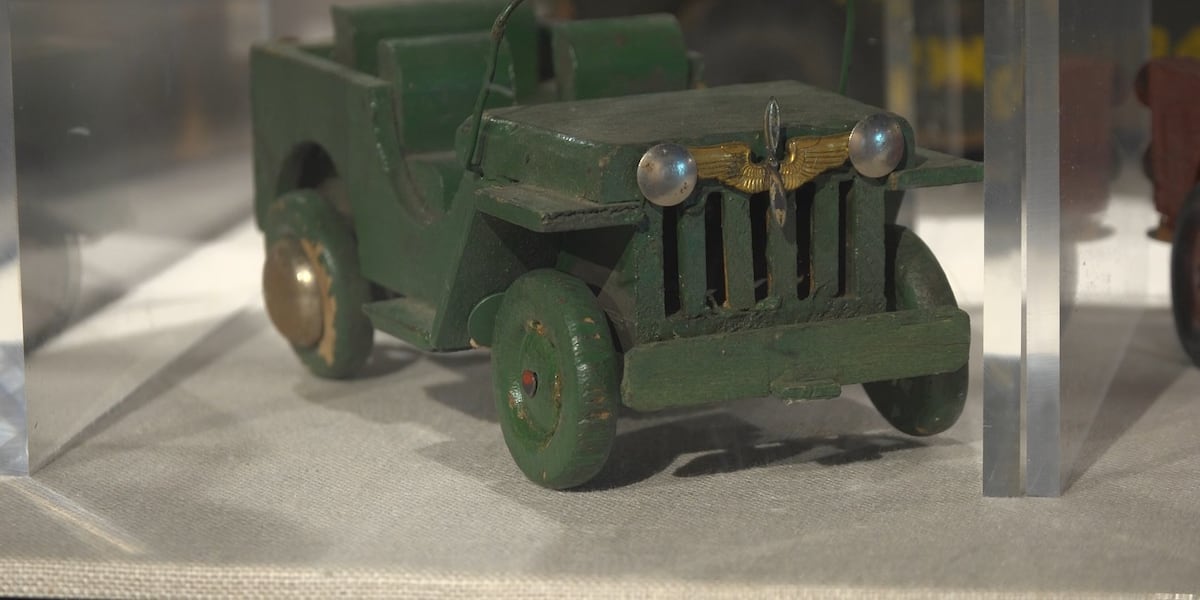
That’s the topic of this year’s featured exhibit at the Silent Wings Museum: how families used toys and games to teach responsibility and sacrifice for the greater good.
“…sacrificing that so your glider pilot, who was about to fly to Sicily over the Mediterranean, could have a life preserver on,” McCullar said.
Little children may not have understood why their breakfast didn’t have any sugar in it or why they had to walk everywhere instead of taking a car. That’s where toys and games came in to help explain the war effort.
McCullar assembled this exhibit by hand, showing how families used creative methods to help children understand their role in supporting the war.
“It’s like Yahtzee, but it’s called ‘Winnit,’” she said, laughing as she indicated a game inside a display case. “Talk about an overt way of telling your kids what you’re up to.”
The museum tells the story of how glider pilots delivered men and munitions across Italy, France, Germany, and Southeast Asia while their families cut back on sweets and played with wooden toys.
“There are people who are manufacturing wooden toys during World War II, but your ingenuity comes into play, so if you want a little wooden toy to play with, you’ll make it,” McCullar said.
Even the pilots were playing games with a message. Playing cards had silhouettes of allied and enemy aircraft on the back instead of traditional designs.
Some special gifts were made in West Texas. In the early days of the glider program in Lubbock, the building that now houses the Silent Wings Museum served as the South Plains Army Flying School, one stop along a pilot’s path to service.
“A student glider pilot bought this at the PX,” she explained, gesturing to a red stuffed animal with ‘SPAFS’ and ‘Lubbock, Texas’ sewn into it, “and sent it home to somebody and made a connection with them even from far away.
“That little kid didn’t know exactly what SPAFS meant,” she continued, “but ‘Uncle Joe sent this home to me, and I know that he’s still thinking about me, so I’ll keep thinking about him,’”
The United States’ rationing programs lasted after the war, allowing the Allies to rebuild Europe and Asia through 1947. Those five years of sacrifice on the battlefield and at home showed the determination, ingenuity, and grit that laid the foundation for today.
“We all stand on the shoulders of others and we stand on the accomplishments of others,” McCullar said. “The ability to understand and have a bit of empathy for the things that happened during World War II and the things the glider pilots were fighting for has an impact on what our mindset is today and what we think of ourselves as a nation.”
While the soldiers ultimately won the war, it was these toys and games that helped their families understand how and why they volunteered to go fight it.
The Silent Wings Museum’s featured exhibit is open to the public through the end of April.
Copyright 2026 KCBD. All rights reserved.