
A look at the global natural gas and LNG markets by the numbers
Expand
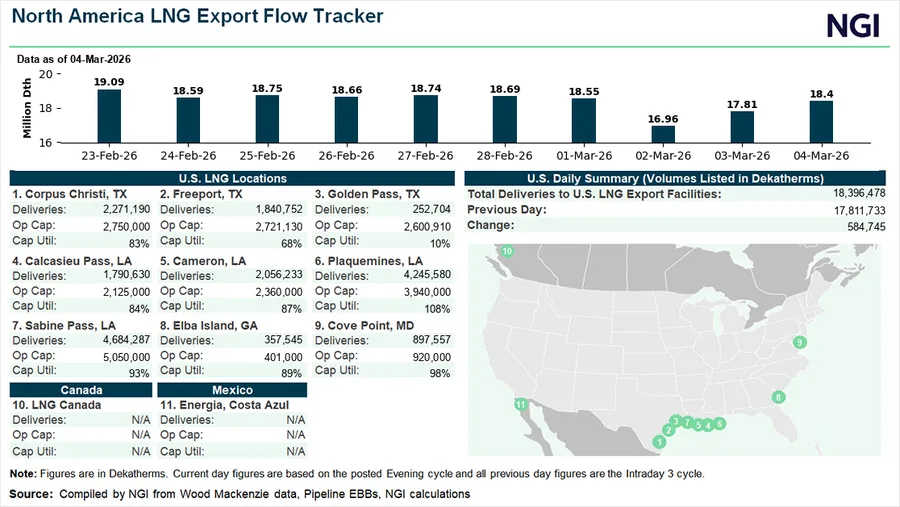
80,000 MMBtu/d: Feed gas nominations to Corpus Christi LNG could be limited through the end of the week during maintenance at a critical compressor station, according to Wood Mackenzie pipeline data. Activities at the Sinton Compressor Station on the Corpus Christi Pipeline (CCPL) are expected to limit deliveries by about 80,000 MMBtu/d at the height of restrictions. Nominations to the terminal have been falling since Sunday (March 1), reflecting past maintenance events at the facility.19.2 Bcf/d: U.S. feed gas nominations to Gulf Coast terminals have pulled back slightly over the week as disruptions at Cameron LNG and an end of elevated nominations to Golden Pass in Texas cut into overall demand. However, Wood Mackenzie estimated nominations to average 19.2 Bcf/d over the next seven days, about 4 Bcf/d above the year ago period. Roughly 2 Bcf/d has been nominated to Golden Pass since late February during operational test, but flows have reduced to near 0% capacity as of the Tuesday evening cycle, according to pipeline data.2.55 Mt: Despite a global call on LNG spot cargoes during QatarEnergy’s force majeure, U.S. LNG exports could be heading to a week/week decline. U.S. facilities are expected to ship 2.55 million tons (Mt) the week of March 2, according to predictive Kpler data. The week could post a 0.27 Mt week/week decline as maintenance events and shipping disruptions ripple through the market. Waning demand for U.S. LNG is driven by Asia, which is expected to see more than five additional cargoes from within the Pacific Basin during the week.$278,250/day: Demand for more shipping capacity and spot cargoes to Europe is triggering a shock in LNG vessel prices, especially for ships available to load U.S. LNG. The prompt average spot rate for vessels to Europe jumped $116,500 Wednesday to $278,250/day, according to Spark Commodities data. Rates for Asian shipping also rose by almost the same rate to $207,500/day. The U.S. arbitrage margin swung wildly Wednesday by around $3, briefly closing out from Asia before narrowing again to favor buyers in the Pacific, according to Spark Commodities data lead Qasim Afghan.