
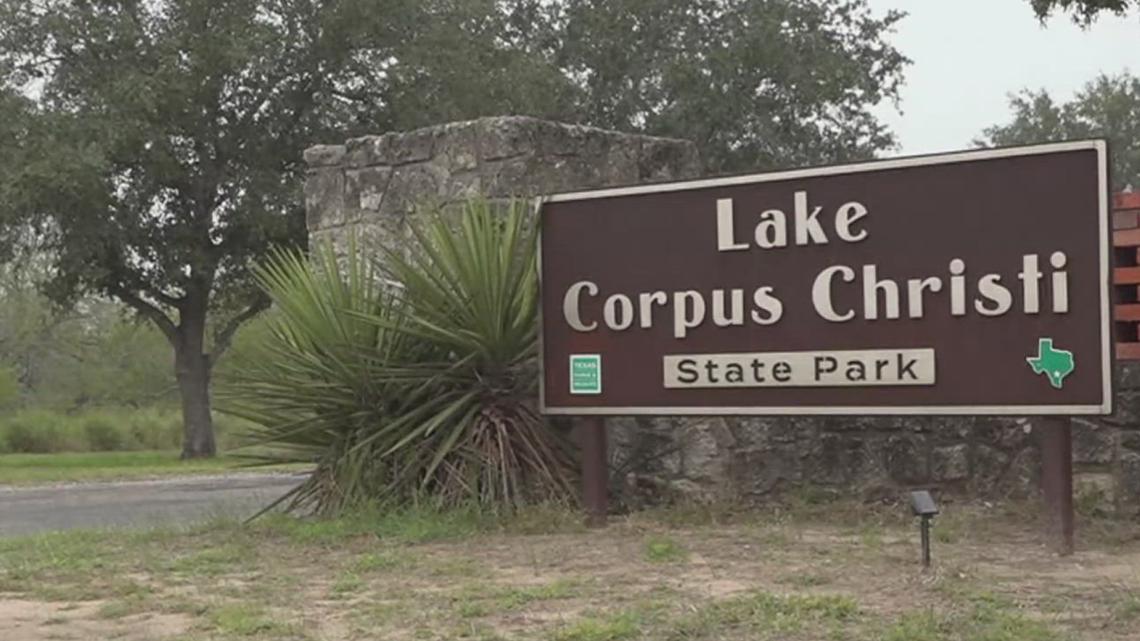
Lake Corpus Christi has dropped below 10% capacity, according to the Texas Water Development Board, as drought continues to choke the Coastal Bend.
CORPUS CHRISTI, Texas — Lake Corpus Christi has officially fallen below the 10% capacity mark as drought conditions continue to strain the Coastal Bend’s primary water supply.
According to the Texas Water Development Board’s Water Data for Texas dashboard, the reservoir was sitting at 9.9% full on Wednesday, holding about 25,296 acre-feet of water out of a conservation capacity of 256,062 acre-feet.
The drop below 10% marks a critical milestone for the man-made lake completed in 1958, which serves as a key part of the regional water supply system alongside Choke Canyon Reservoir.
City leaders in Corpus Christi have been closely monitoring reservoir levels as the region continues to face persistent drought conditions. The City has warned that if water levels continue to decline, mandatory water curtailment for industrial users could be triggered later this year.
City Manager Peter Zanoni is expected to address the drop below 10% on Thursday morning.
In response to the ongoing drought, the Corpus Christi City Council has recently approved hundreds of millions of dollars in water supply projects aimed at stabilizing the region’s water future.
Among those efforts is a planned reverse osmosis treatment facility at the O.N. Stevens Water Treatment Plant, designed to help stretch the existing water supply by treating more saline water sources. The City is also advancing the Evangeline Aquifer groundwater project in San Patricio County, which would add a new long-term water source if approved by state regulators.
Other communities that rely on Lake Corpus Christi are also moving quickly to secure additional supply. In Mathis, city officials have begun drilling new groundwater wells near the local water plant in an effort to supplement the lake as water levels continue to drop.
Corpus Christi City Manager Peter Zanoni warned in February that without additional water supplies or significant rainfall, the City could face industrial water curtailment as early as November.