
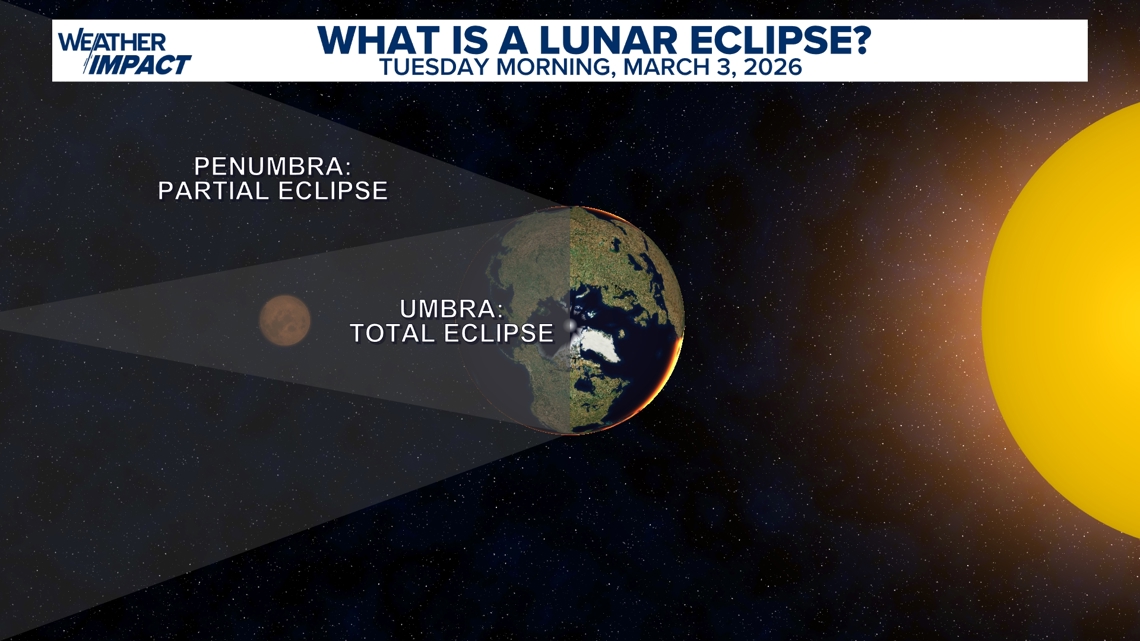
Before dawn breaks on March 3, the moon will transform into a glowing red orb as a total lunar eclipse unfolds across the U.S. Here’s when you might see it:
Early on the morning of Tuesday, March 3, skywatchers across the United States will be treated to a rare and dramatic total lunar eclipse, often called a “blood moon.”
This celestial event occurs when Earth moves directly between the sun and the moon, casting the moon into Earth’s shadow and filtering sunlight through our atmosphere. During the peak of the eclipse—approximately 6:04 a.m. to 7:02 a.m. Eastern Time—the moon will take on a striking reddish-orange hue as only the longer (red) wavelengths of light are bent toward its surface.
The overall eclipse sequence spans roughly 5 hours and 39 minutes, and unlike solar eclipses, this lunar event can be enjoyed safely with the naked eye, though binoculars or a small telescope can enrich the experience.

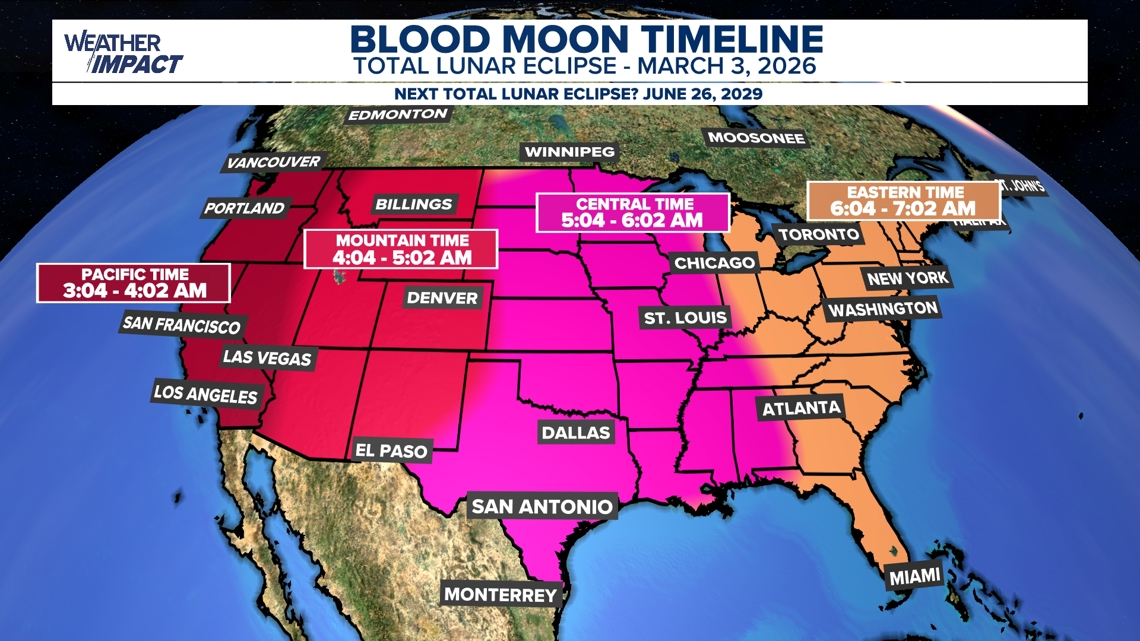
The 2026 blood moon is the only total lunar eclipse of the year and will be visible across much of North America, with the best views in the western United States, where totality will occur higher in the predawn sky. Observers in the eastern U.S. may see the moon set during totality against the backdrop of sunrise—a rare sight that can occasionally produce a selenelion, where both the eclipsed moon and rising sun are visible at once due to atmospheric refraction.

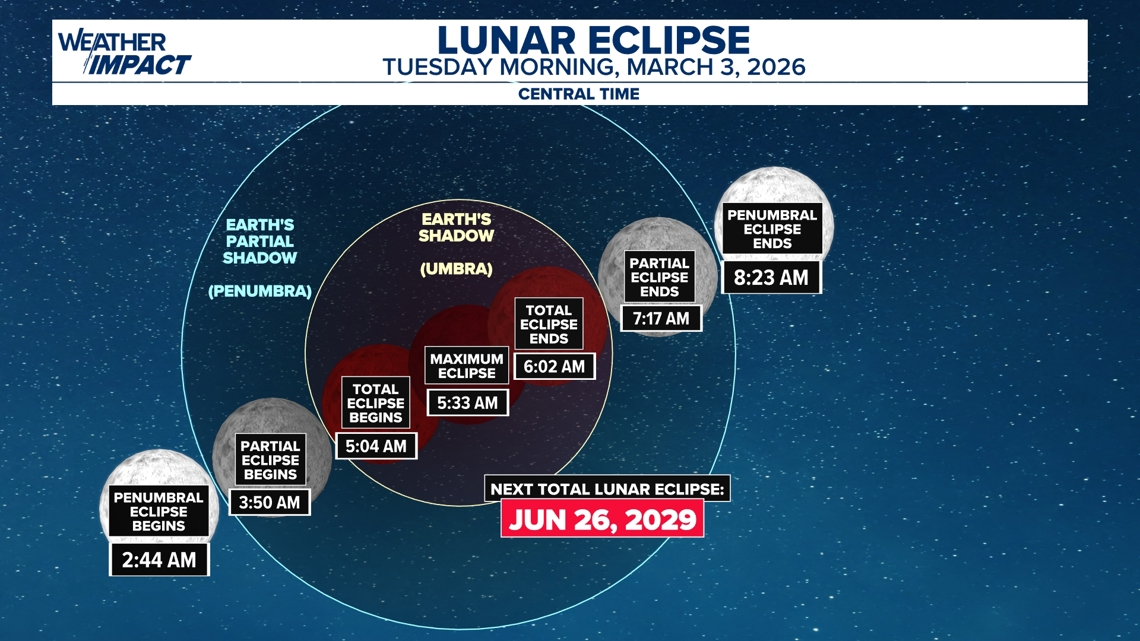
Whether you’re an avid astronomer or a casual stargazer, stepping outside before dawn on March 3 will offer a memorable cosmic spectacle before the next North American total lunar eclipse in June 2029.