
Following a close-door briefing from agency officials Wednesday, senators from both parties criticized the Pentagon, Federal Aviation Administration and U.S. Customs and Border Protection for inadequately coordinating the employment of counter-drone systems after back-to-back incidents in Texas last month.
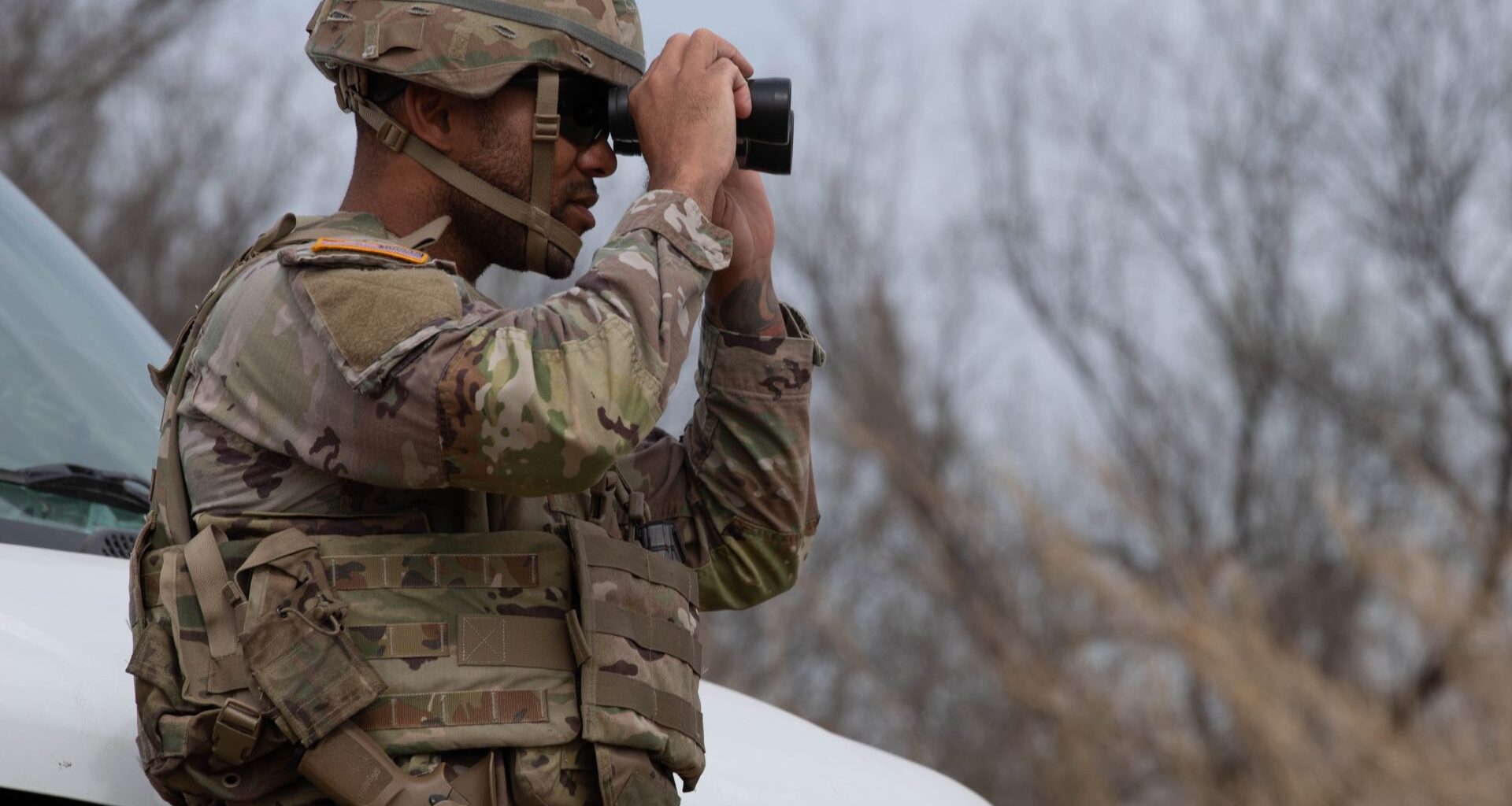
In mid-February, CBP used a military laser on-loan from the Pentagon to shoot down an object near El Paso, later reported to be Mylar balloons, leading the FAA to temporarily close airspace. Just weeks later, troops shot down a CBP drone launched without notifying the military task force assigned to the U.S.-Mexico border near Fort Hancock, a small Texas town.
The episodes revealed interagency tumult over the employment of counter-drone systems in the U.S., which — along with initial mixed-messaging from the Trump administration — led to public confusion over the airspace closures, which occurred after both incidents.
On Wednesday, officials from the agencies briefed a select group of top committee senators about the events. Two said the incidents showed a lack of coordination across the departments and highlighted the need to quickly smooth out counter-drone employment processes moving forward.
“It’s clear that there were real challenges in terms of operationalizing counter-drone technology, and I think all the senators in the briefing urged the Department of War and CBP and the FAA to significantly improve their coordination,” Sen. Ted Cruz, R-Texas, who chairs the Senate Committee on Commerce, Science and Transportation, told reporters following the briefing.
Those communication concerns largely boil down to detangling authorities between the Pentagon’s role in defending the U.S. against drones along the border and the FAA’s responsibility to ensure safe skies. For its part, CBP has worked alongside the military, especially in President Donald Trump’s second term, and the agency’s personnel are meant to hold distinct border security authorities in comparison to U.S. troops.
“Everyone wants to see hostile drones that are a threat incapacitated, but obviously we want to do so in a way that doesn’t pose a threat to civilian aircraft, and it ought to be possible to do both at the same time,” Cruz said. “It’s clear that in the early implementation of this technology, coordination fell far below what should have happened.”
Spokespeople for the Pentagon, FAA, CBP and Department of Homeland Security did not immediately respond to DefenseScoop’s request for comment on the senators’ remarks.
A senior defense official, speaking on the condition of anonymity, told DefenseScoop Wednesday that the Pentagon’s counter-drone entity — known as Joint Interagency Task Force 401 — “will conduct a high energy c-UAS laser test with the [FAA] this weekend.”
“The War Department’s priority is to improve interagency coordination and maintain flight safety by getting the latest technology into the hands of our warfighters,” the official said. They did not specify where the test would take place.
Lawmakers alluded to turmoil between the military and FAA since the midair collision between an Army helicopter and commercial airplane near Ronald Reagan Washington National Airport last year, which was caused, in part, by inadequate information-sharing and data practices across those departments.
“I think we need better answers from higher people who are responsible for day-to-day things in various aspects of DOD and CBP and FAA, and they all have their roles,” said Sen. Maria Cantwell, D-Wash., ranking member of the Commerce, Science and Transportation Committee. “But we already can see there’s a lack of coordination between the FAA and DOD with the crash in the Potomac, and we need people at a higher level,” she added, noting that she plans to send a letter to Trump or the agencies on the coordination issue.
Cruz also criticized the DOD over the ROTOR Act, a bipartisan air safety bill spurred by the mid-air collision over the Potomac, which recently failed to pass the House after the Pentagon withdrew its support for the measure.
In a statement late last month, chief Pentagon spokesperson Sean Parnell said the department would “continue to support the intent and objectives of the legislation,” but as “currently drafted, enactment would create significant unresolved budgetary burdens and operational security risks affecting national defense activities.” The statement did not specify what those concerns were.
“I will say there have been ongoing challenges with the Department of War prioritizing safety in the national airspace, and we’ve seen this most recently with the ROTOR Act that the Department of War reversed its stance and issued a press release attacking legislation they had previously supported, and a press release that was objectively false,” Cruz said. “That remains a significant ongoing issue.”
(The Trump administration has rebranded the Department of Defense as the Department of War.)
The military has attempted to proliferate its counter-unmanned aerial systems capabilities since late last summer when it established JIATF 401, an Army-led entity tasked with getting anti-drone systems to troops and liaising with other federal departments.
Since then, the Defense Department — led by the task force — has expanded authorities for base commanders to use counter-drone systems stateside, debuted a “marketplace” for units to acquire equipment and signaled for “low-collateral” UAS interceptors at all U.S. military installations, among other moves.
In a joint statement following the Fort Hancock incident, the Pentagon, FAA and CBP said “these agencies will continue to work on increased cooperation and communication to prevent such incidents in the future.”
After the briefing, the senators didn’t appear convinced when asked if they expected to see similar incidents moving forward. Cantwell referenced the upcoming World Cup, adding “we need to get it together.”
“I think the agencies are still trying to talk to each other and figure out the right way to approach this,” Cruz said. “And every senator there encouraged them to accelerate that process.”

Written by Drew F. Lawrence
Drew F. Lawrence is a Reporter at DefenseScoop, where he covers defense technology, systems, policy and personnel. A graduate of the George Washington University’s School of Media and Public Affairs, he has also been published in Military.com, CNN, The Washington Post, Task & Purpose and The War Horse. In 2022, he was named among the top ten military veteran journalists, and has earned awards in podcasting and national defense reporting. Originally from Massachusetts, he is a proud New England sports fan and an Army veteran.