
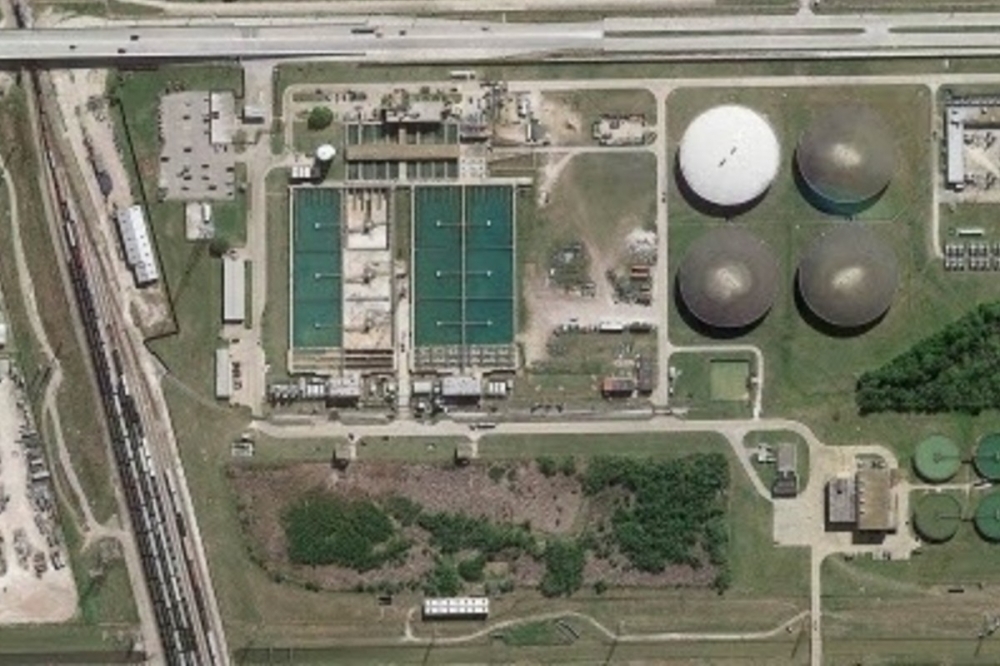
The city of Houston will not decommission the aging East Water Purification Plant in northeast Houston, despite original plans to.
During the city’s March 2 Budget and Fiscal Affairs Committee Meeting, the public works department gave an update on the EWPP enhancement project, which is expected to be reconstructed and rehabilitated.
What this means
Originally, the department had announced plans to decommission Plants 1 and 2 at the site, but after council member Mario Castillo asked if there was any way to use the facilities, HPW Director Randy Macchi announced that the department will not decommission them, but instead keep the plants for emergencies.
“We do find that there’s going to be some value as we go through the rehab efforts there to make sure that, in the event of unlikely catastrophes, there’s still some extra redundancy and resiliency,” Macchi said.
In an email, Macchi said Plants 1 and 2, which will undergo refurbishment, “will provide additional capacity and/or redundancy” for the city.
Some background
The EWPP is “the backbone of Houston’s drinking water,” HPW Deputy Director Samir Solanki said.
The first two plants were built in the 1950s, and the third was created in the 1980s. In 2021, an assessment showed that in 20 years, all three plants would be nearly inoperable. It was recommended that the majority of the assets in all three plants be replaced, according to AECOM, the engineering firm that did the assessment.
“This was based on the work in 2021, so, essentially, the facility is living on borrowed time, as assets will most likely continue to fail,” Solanki said.
The average daily production of the plant is about 239 million gallons of water, with maximum production reaching up to 292 million. The plant is supposed to produce up to 362 million gallons of water a day, according to HPW.
The current project includes making repairs to the current plants, while the new one, called Plant 4, is being built.
What’s next
Funding is expected to cost between $3 billion and $4.4 billion to build the fourth plant. The city will apply for a federal loan of $2 billion to help with project costs this fall. The entire project is expected to be completed by 2034.
“>