
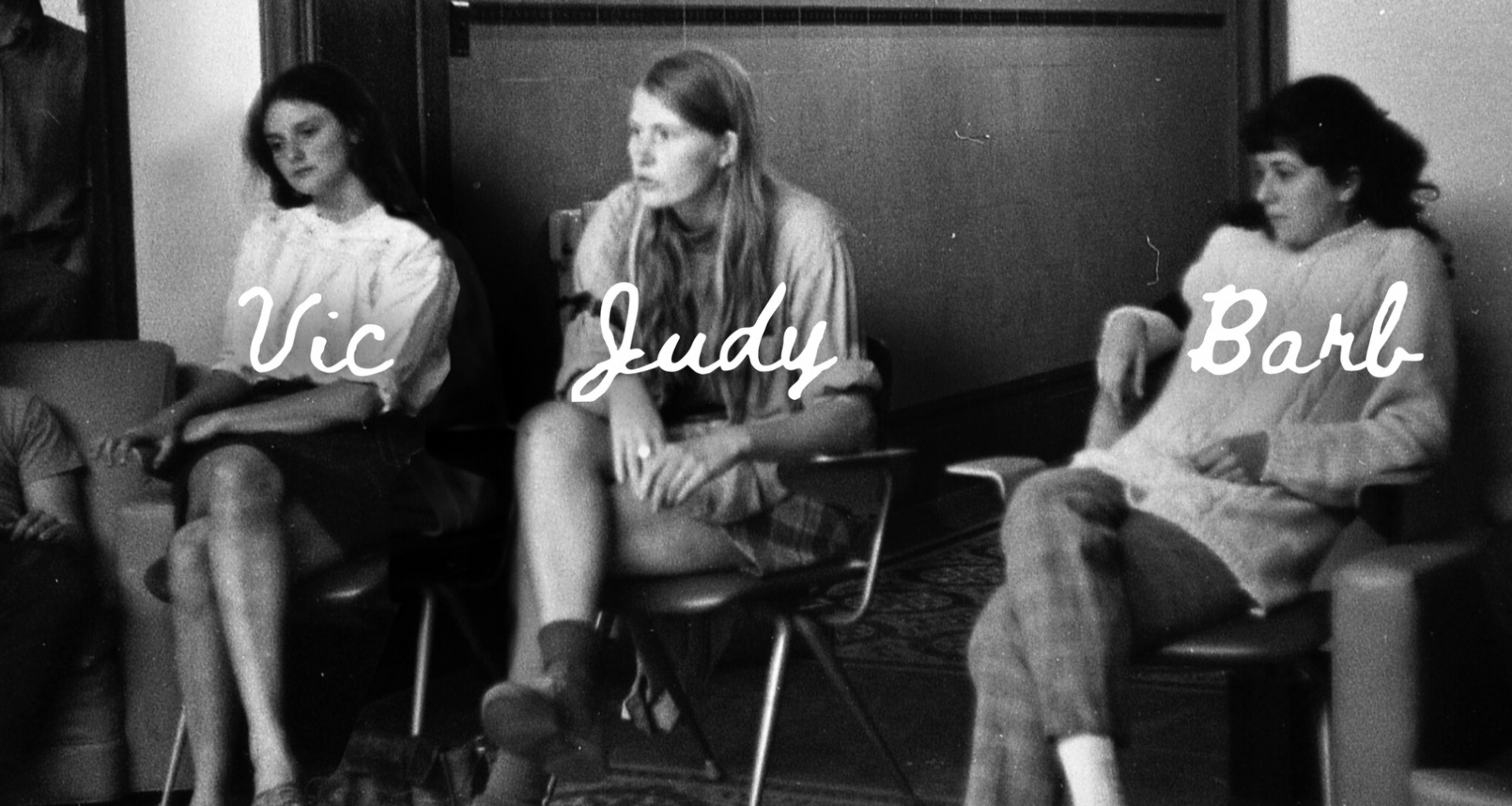
In the years before Roe v. Wade, three UT Austin students built a quiet network helping women access birth control and abortion care in Texas.
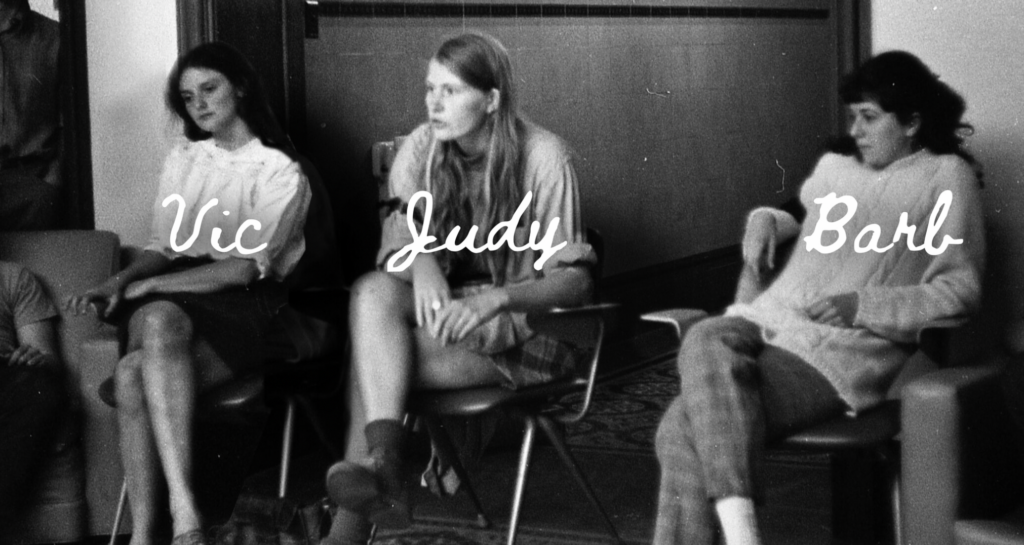 A still from Lone Star Three, directed by Karen Stirgwolt, featuring Victoria Foe, Judy Smith and Barbara Hines.
“Never doubt what a small group of thoughtful, committed citizens can do to change the world. Indeed, it is the only thing that ever does.“
—Margaret Mead, quoted by Victoria Foe
In 1969, Victoria Foe, Judy Smith and Barbara Hines were students at the University of Texas in Austin, when Smith invited Foe and Hines to attend women’s liberation meetings at her house. What began as late-night conversations quickly grew into a campus Birth Control Information Center … and eventually an underground network helping women access abortion at a time when the procedure was illegal in Texas.
Their activism would eventually extend far beyond their university campus, planting the seeds for Roe v. Wade, the landmark Supreme Court decision that would legalize abortion in the U.S. Not until 1965 did the Supreme Court recognize a constitutional right for married couples to use birth control; in 1972, it extended that right to unmarried people as well.
“It was really such a special time in history. So much was going on; so much was changing. We thought, naively, that we read the vanguard of a revolution and that we were going to change things,” said Hines, who now works as an immigration lawyer in Austin, Texas. Her desire to go to law school was born out of her abortion-rights work.
“The personal is political, so what we did among ourselves we thought was going to be reflective of the society we wanted to create. Therefore, we tried to do many things collectively.”
A new documentary, Lone Star Three, directed by Karen Stirgwolt, tells the story of the women who formed the underground networks that allowed young women to access reproductive care in Texas in the days leading up to Roe v. Wade. Ms. recently spoke with Foe and Hines (Smith passed away in 2013), and archivist Alice Embree, about their activism from the 1960s to the present moment.
“There Was No Information”: College in Texas in the 1960s
In 1964, students at UT Austin knew of only one doctor in Austin who would prescribe birth control pills to unmarried women. The student health center at the university would not, unless a woman student either was married or said the pills were for acne.
“There was no access, there was no information. And women knew an unbelievably small amount about their bodies at that time,” said Alice Embree, founder of Austin’s underground newspaper, The Rag (newly revived on Substack), who helped provide archival material for Lone Star Three.
At their meetings at Smith’s house, Foe and Hines quickly realized that having access to birth control was essential for women’s liberation. “We very, very soon hit upon the fact that a really key thing that needed to be changed was access to birth control—that that was kind of the keystone that held in place this edifice that kept women from achieving, from finishing their educations,” Foe recalls.
In the ‘60s, she says, “there was this kind of unspoken assumption that it was a waste of time to educate women in graduate school, to give them any higher education because they wouldn’t be able to get to complete it, because they would get married, or they would get pregnant and have to get married.”
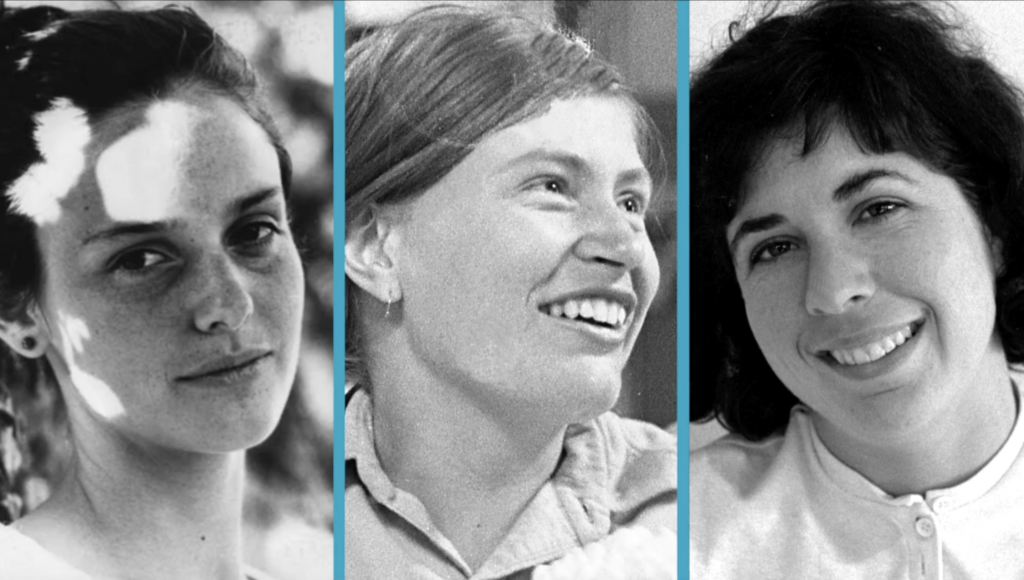 Victoria Foe, Judy Smith and Barbara Hines in Lone Star Three.
At the time, Judy Smith and Vic Foe were graduate students in biology, which helped them stay informed about birth control and pass that information along to other women who needed it. “We initially just set about making lists of what was available, what was safe, what was reliable, and we distributed that information. There was an underground newspaper. We posted it there,” Foe said.
At first, their secret network—operating out of The Rag’s office at the University of Texas YMCA—provided other women with information about how to access birth control. Later, as more and more pregnant women came to them for help, they expanded their focus to provide information about abortion as well. Together, Smith and Foe visited an abortion clinic in Mexico where they established a relationship with the doctor, who agreed to help UT Austin students able to make the long drive, and Smith, Foe and Hines later referred other students who called them asking for advice to the clinic.
Embree, meanwhile, made her way into activist spaces after being prompted by the moral issue of segregation and organizing against segregated dorms at the University of Texas. “The more I know, the more I understand how much I grew up in the Jim Crow South,” she said.
It was through her participation in the anti-war movement that she learned how small organizing has the potential to grow into big movements.
In the summer of 1969, the University of Texas Board of Regents filed a lawsuit saying The Rag, which provided information about birth control, could not be distributed on campus. Cecile Richards’ father, Dave Richards (also the husband of Ann Richards, who would go on to be the state’s first elected woman governor), who was a prominent ACLU attorney at the time, filed a countersuit in federal court. The case made its way to the Supreme Court, where Dave Richards won the right for The Rag to be distributed on campus in 1972.
“I think it was all percolating. Well, maybe we can do this. Maybe we could go to court in this way,” Embree said.
Smith, Foe and Hines also met and sought advice from Sarah Weddington, one of the few women lawyers in Texas at the time, who later argued the case of Texas resident Norma McCorvey—or “Jane Roe”—before the Supreme Court in Roe v. Wade.
Building a Community
During their pro-abortion activism, Hines, Foe and Smith cooked together twice a week. “It was where we saw each other, where we kind of debriefed,” Hines says. Splitting groceries also provided a way for them to save money as students. They drove to San Antonio every week to a produce market where you could buy all of your food for $1 a box.
“We ate together. We hung out together. … It was just a very, very, very sweet, sweet, sweet time in a hard time. the friendships made it all lovely, but the war and everything else that was going on framed it in difficulty,” said Foe. “It was really kind of one of the happiest times of my life.”
Embree agrees community was essential during that period. “You start with a small group of people and do exactly what Judy Smith was saying. ‘Well, what do we do to confront this or that?’ And then you put out a newspaper, or you take on a small project, and you build from there, and it’s exactly those ways that you build community and trust and build a movement,” she said.
“Large cases—and I’m a lawyer, so I know this—are actually built on community activism that court cases don’t, or shouldn’t come out of a vacuum. They should really come out of the needs of the community,” says Hines.
Foe, Smith and Hines’ activities, including sharing meals and going to protests together—none of which was, or is, illegal activity—eventually earned them the attention of the FBI. Hines says her FBI file has information about her driving to the co-op to buy food. Strangely enough, it has fewer details about her abortion counseling, even though that was illegal at the time.
“The fact that I went to a protest, or the fact that we ate in a co-op, if the FBI spent that much energy on our group, you can imagine what they were doing with people that they really considered threats,” said Hines.
Roe, Then Dobbs
When Roe v. Wade became the law of the land in 1973, it felt like the culmination that the group had spend years fighting for. A decade before, in 1963, birth control wasn’t legal even for married women. Now, 10 years later, not just birth control but also abortion was legal in all 50 states.
Fifty years later, even though many abortion rights activists had seen the writing on the wall, the Supreme Court’s Dobbs decision striking downRoe v. Wade was still shocking to people across the country, especially those born after 1973 who took the right to abortion for granted.
“I knew the Federalist Society was working very hard, and had been for quite a while to put justices on the Supreme Court who would overturn abortion, but I didn’t think they would dare do it. I was really surprised and shocked,” Foe recalls. “I was just getting on with my life, doing what I thought were great scientific things. The world had really changed, and, I thought, moved on.”
Hines, meanwhile, knew Roe had been threatened since 1973, but she believes its overturn came as a shock to a lot of people. “I think just like so many other things, you know, unfortunately, unless it’s affecting you personally, for many, many people, it’s just a bunch of background noise, and they’re not paying attention.”
Organizing in “Battleground” Texas
Today, the abortion landscape in Texas is looking eerily familiar to what it was when Foe, Smith and Hines began their organizing.
Texas currently bans almost all abortions, including medication abortion, with only a narrow (and frequently ineffective) medical exception and no exceptions for rape or incest. For providers, performing an abortion is a felony punishable up to life in prison. Meanwhile, Texas’ infamous “bounty law,” Senate Bill 8, not only bans abortion in the state after six weeks of pregnancy but also encourages people to turn in their fellow citizens who help others access abortion care. Any private citizen can sue anyone they suspect of helping someone else get an abortion, whether that’s driving the patient to an out-of-state clinic or even lending them gas money.
“I feel like in Texas, we’ve been living with the prequel to MAGA. We have bounty laws on where you can file a lawsuit if you hear somebody, if you know of somebody who is getting an abortion,” Embree said, referring to SB 8. Texas also has a trigger law that took effect when Roe was overturned in 2022, banning almost all abortions in the state and creating one of the most restrictive abortion regimes in the country.
Still, Foe wants people to understand that Roe and the people that fought for it came from what we consider now to be conservative parts of the country. Today, it’s still crucial that people stay active and engaged even in states where they’re seeing their rights taken away.
“Roe v. Wade came out of Heartland America and basically Texas. Barbara grew up in Brownsville. Sarah Weddington, who would at 26 carry the case to the Supreme Court, grew up in West Texas, the daughter of a preacher. Her helper in this, who was Linda Coffee, grew up around Dallas. Judy Smith came from Oklahoma, not one of your more progressive states. I grew up in Wyoming before we moved to Mexico. My helper in the Texas Legislature grew up in Montana.“
“We came from the conservative portions of the United States. That’s where Roe v. Wade came from—it was us fighting for what we needed to be able to have our educations. So I think people in these states that are really trying to push women down need to remember that we carried the torch back then.”
Victoria Foe
Today, the state’s political future remains fiercely contested. While antiabortion Republicans still dominate statewide office, recent elections have shown growing Democratic turnout and increasingly competitive campaigns—evidence that the political battles Foe, Hines and Smith helped spark decades ago are far from settled.
Embree, who still lives in Austin, is hopeful about Texas’ future.
“What’s happening right now is that Texas is more of a battleground than anybody knows. I’m really glad we aren’t fighting in a presidential year where we have to listen to the media tell us that we aren’t a battleground, because we are.”