
Expect possible delays on Interstate 30 as more of the Canyon project’s 2.3 mile stretch begins construction.
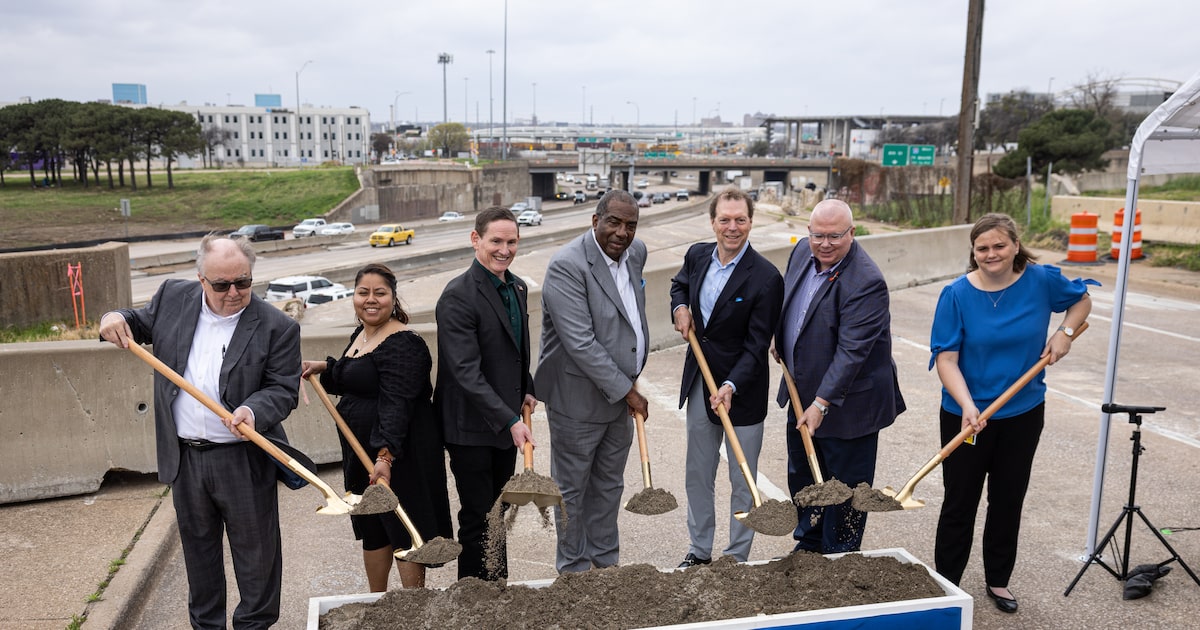
The Texas Department of Transportation broke ground on the I-30 Canyon project Thursday morning in downtown Dallas.
The $888 million project began the first week of January, but the ceremony was postponed due to severe weather delays. State officials, including County Judge Clay Jenkins and Sen. Royce West, along with several members of TxDOT marked the ongoing early stages of construction for the area between I-35 and I-45.
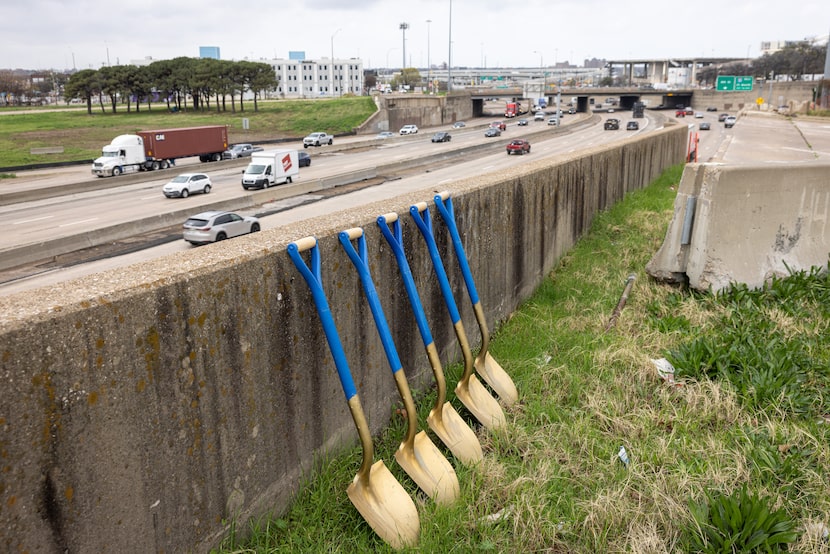
Ceremonial shovels rest on a wall overlooking Interstate 30 before a groundbreaking for the I-30 Canyon project hosted by Texas Department of Transportation on Thursday, March 5, 2026, in Dallas.
Angela Piazza / Staff Photographer
Breaking News
“The backbone of downtown Dallas is the I-30 corridor,” Michael Morris, North Central Texas Council of Governments director of transportation, said. He also called it more than just a project, but a new system that the state is building. Morris mentioned pedestrian caps possibly being built along various roads in the downtown area to encourage people to explore local businesses more easily.
Jenkins referred to the business district as “the heart of Dallas,” calling the area “a big economic driving force in North Texas.” Many speakers addressed the population boom across the state and the importance of addressing congestion chokepoints on major highways. Several cited a statement from Gov. Greg Abbott, estimating Texas gains more than 1,500 people every day, including newborn Texans and those who move to the Lone Star State.
Brian Barth, deputy executive director for TxDOT, said this project is in line with the governor’s vision to get North Texas traffic moving quickly.
“We are experiencing the evolution of highway infrastructure in Dallas,” said Robert Vaughn, member of the Texas Transportation Commission.
The project is estimated to be completed by 2031 and includes widening the interstate and improving city street connections to the highway, according to TxDOT officials. It is a part of a bigger statewide plan called Texas Clear Lanes, which is meant to address congestion across non-tolled roads in the five major metro areas: Dallas, Fort Worth, Austin, Houston and San Antonio.
After almost a decade of planning, a dozen bridges have been taken down to allow room for construction.
“We will be rebuilding bridges to connect our communities again,” West said.