
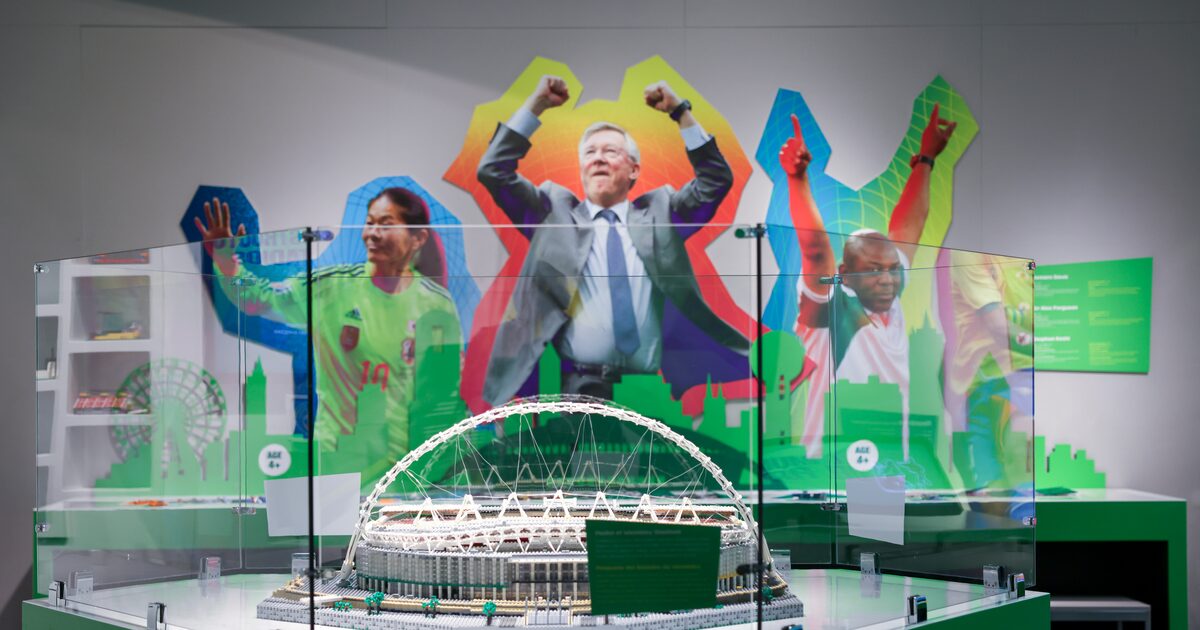
What does it take to design a mascot fans will love, engineer a jersey that keeps players cool or train the mind for the pressure of a penalty kick? A new exhibition at the Perot Museum of Nature and Science invites visitors to explore the hidden science and strategy behind soccer as Dallas heads into a World Cup summer.
From March 7 through Sept. 7, museumgoers can step into “Soccer: More Than a Game,” an immersive, hands-on experience with more than a dozen stations that let visitors test their skills, try challenges and see how the game is shaped by everything from biomechanics to mental focus.
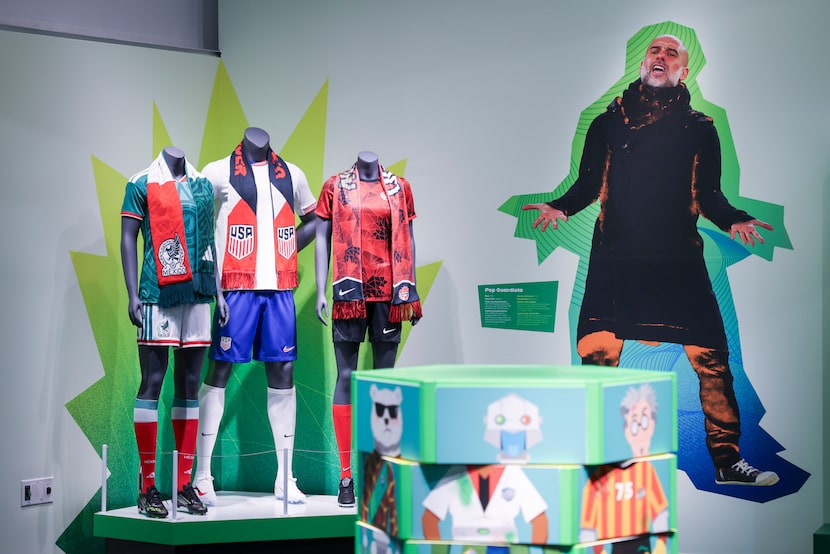
Uniforms are on display at the science of soccer exhibition, Thursday, March 5, 2026 at Perot Museum of Nature and Science in Dallas.
Shafkat Anowar / Staff Photographer
At the entrance to the 10,000-square-foot space in the museum’s lower level, visitors receive a radio-frequency identification bracelet that tracks their choices, creations and progress as they move through the exhibition, said Linda Silver, the Perot’s chief executive officer.
Breaking News
Larger-than-life images of soccer figures such as former professional player David Beckham, rising English star Lauren James and Manchester City manager Pep Guardiola line the walls, accompanied by facts about their careers. But the heart of the exhibition lies in its interactive stations.
Related
At one, visitors design their own mini soccer stadium using Lego-like blocks, which are scanned by a kiosk and transformed into a digital model. Nearby stations invite guests to their own team jerseys or create their own mascots — while learning how character design helps keep fans engaged.
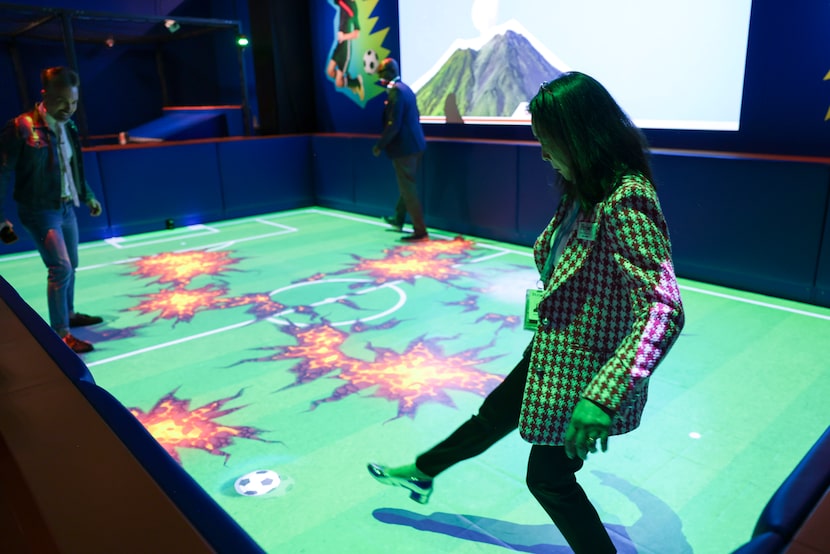
People play the field is lava interactive activity during the science of soccer exhibition, Thursday, March 5, 2026 at the Perot Museum of Nature and Science in Dallas.
Shafkat Anowar / Staff Photographer
In an area called the Coaching Lab for Excellence in Athletics, Technology and Science (or C.L.E.A.T.S.), kids and adults alike explore the science and strategy behind soccer. Two tiny humanoid robots that can play soccer stand in a glass case, one blinking and gesturing at visitors and the other partially disassembled to reveal the engineering inside. The robots were loaned to the Perot by the Southlake-based RobotLab for the exhibition, Silver said.
In the exhibition’s final area, museumgoers can play a soccer-themed version of “the floor is lava” or test whether they can jump as high as Portuguese star Cristiano Ronaldo, whose highest recorded leap reached nearly 10 feet during a match against England’s Manchester United while he was playing for Real Madrid.
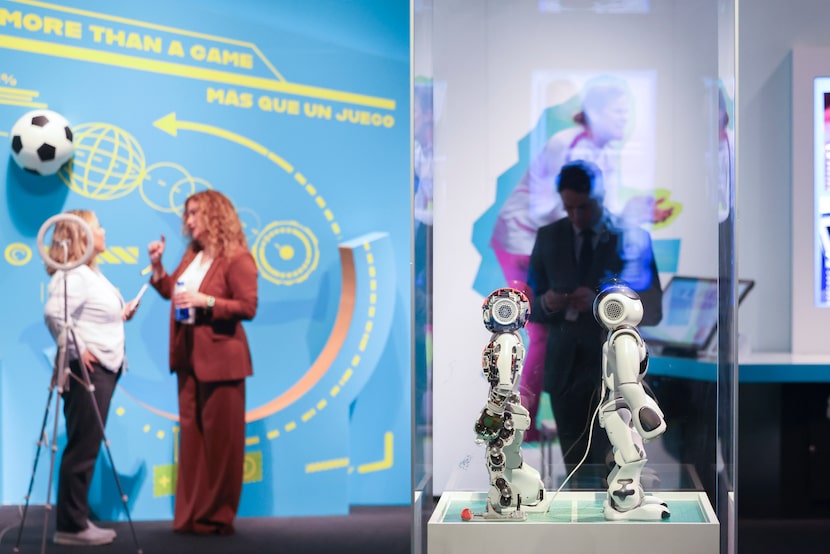
Humanoid robots capable of playing soccer from RobotLab are on display at the science of soccer exhibition, Thursday, March 5, 2026 at Perot Museum of Nature and Science in Dallas.
Shafkat Anowar / Staff Photographer
Planning for the exhibition first took shape in 2022, when Dallas was named a 2026 FIFA World Cup host city. Since then, the Perot has collaborated with Mexico City’s Museo Interactivo de Economía, which is known for its interactive takes on economics, finance and sustainability. A companion exhibition at the Mexico museum will further explore the cultural and economic impact of soccer across North America.
Alongside the new exhibition, the Perot’s Lyda Hill Gems and Minerals Hall will host “Minerals of the World Cup,” featuring gems from host countries and other nations competing in the tournament, including transparent crystals from Canada, copper-based minerals from Mexico and gold from the United States.
Miriam Fauzia is a science reporting fellow at The Dallas Morning News. Her fellowship is supported by the University of Texas at Dallas. The News makes all editorial decisions.