
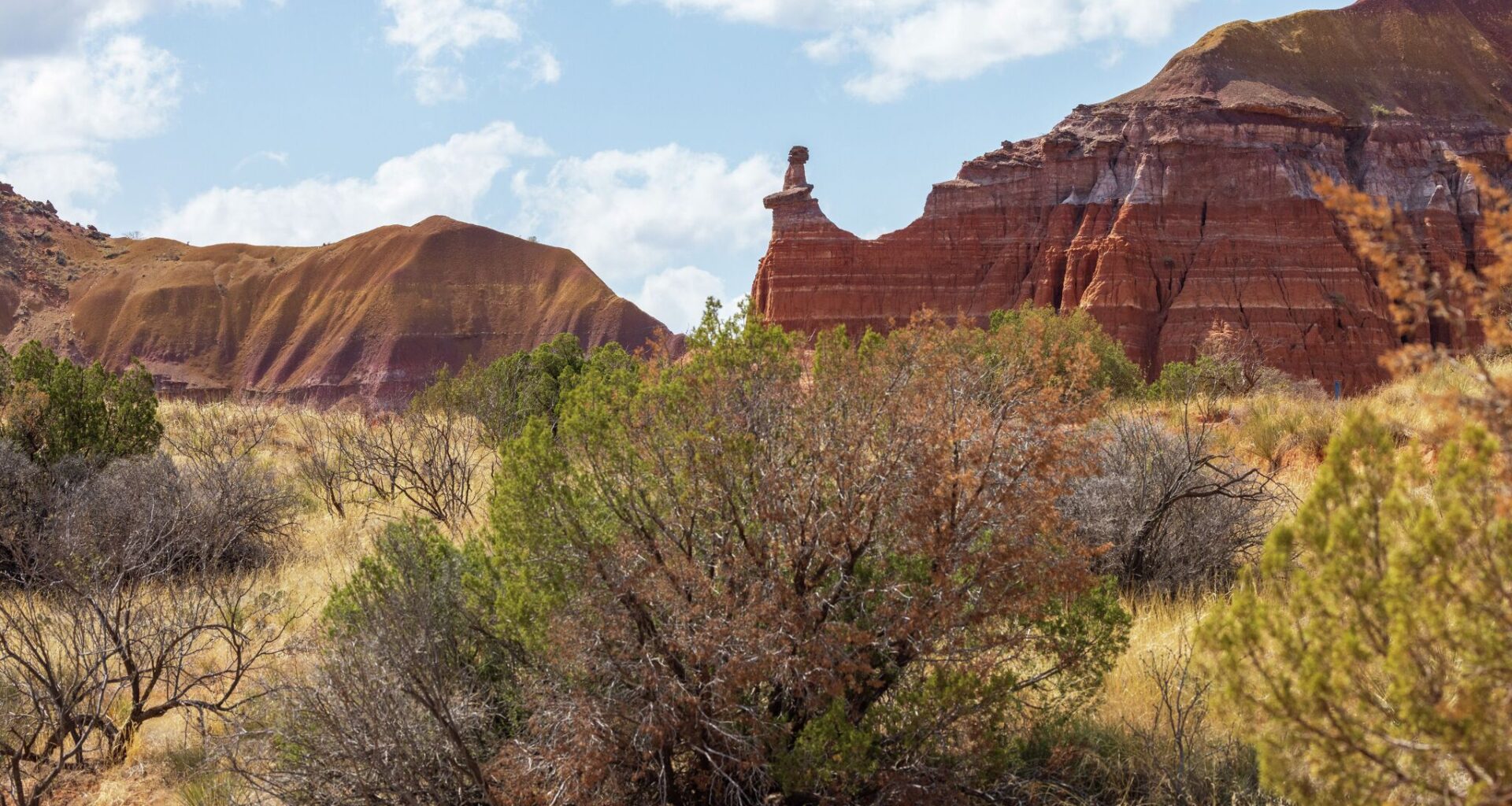
It’s official: Texas is home to one of the prettiest towns in the country.
Online educational resource WorldAtlas analyzed over 19,000 incorporated cities, towns and villages to find the areas with the most visual appeal. From the West Coast’s majestic mountains to the prairie ecoregions of the Great Plains to the white sand dunes in New Mexico, the resource zeroed in on the small towns that feature the best views of the nation’s eclectic scenery.
One Texas Panhandle town’s beauty earned it a spot among the 13 prettiest towns — and it’s not hard to see why.
WorldAtlas praised Canyon for representing “the expansive and diverse landscape of Texas better than most towns.” Located in the heart of the Texas Panhandle, it’s known as the gateway to the Palo Dura Canyon State Park — the second-largest in the country, often referred to as the “Grand Canyon of Texas.” This is one of several nature preserves that surround the town of roughly 17,000 residents, as well as Buffalo Lake National Wildlife Refuge and Ceta Canyon Retreat Center.
To take a deeper dive into Texas culture and take in the surrounding landscape, Palo Duro Riding Stables offers the only stable that rides into the Palo Duro Canyon. Equestrian trails span 1,500 acres, and combine with hiking and biking trails to exceed 30 miles total. The state park also has a range of campsites, from “glamping” to cabins to backpack camping areas. Throughout the summer, TEXAS Outdoor Musical runs from Tuesday through Sunday at the Pioneer Amphitheater. The family-friendly show focuses on the lives of early settlers and features singing, dancing, fireworks and Texas humor.
Canyon is also home to the Panhandle-Plains Historical Museum, Texas’ largest history museum, which currently spans over 285,000 square feet on the West Texas A&M University campus. The museum has unfortunately been closed since March 2025 due to safety concerns. However, West Texas A&M University President Walter Wendler recently hinted at a plan “that would reopen the Panhandle-Plains Historical Museum on the WT campus and address archival storage for [the museum’s] collection.”