

A runner’s high is often described as a brief rush of euphoria after a workout. But for some people at risk for developing psychosis or psychotic disorders, exercise may offer more than a fleeting mood boost.
In a study published in January in the Journal of Clinical Psychology, researchers at the University of Texas at Dallas found regular physical activity for three months could help ease mood symptoms in people at clinical high risk for psychosis, a condition that can progress into psychosis in about three years for about a third of people affected.
“Many people envision only getting a euphoric, endorphin-based high, but we’re finding that exercise has a lasting impact on your mood — even at only 30 minutes a day, twice a week, as in this study,” Katherine Damme, the study’s co-author and an assistant professor of psychology at UT Dallas, said in a news release.

Katherine Damme is the new study’s co-author and an assistant professor of psychology at the University of Texas at Dallas.
UT Dallas
Breaking News
Psychosis is defined as when a person experiences an alteration in their perception of reality, impacting their ability to think clearly and manage their emotions. It’s not clear how many people in the United States experience psychosis, but some studies estimate that between 15 and 100 people out of 100,000 develop the condition each year, according to the National Institute of Mental Health.
Over the last decade, a growing body of research has pointed to the benefit of exercise in people experiencing early psychosis as an add-on to traditional treatments. In schizophrenia, one type of psychotic disorder, exercise is believed to be neuroprotective, tamping down inflammation in the brain and spurring the release of chemicals that support and maintain brain cell growth.
Still, a key question is whether regular exercise can serve as a meaningful early intervention for people at clinical high risk for psychosis. General symptoms experienced by people with this condition include disrupted sleep, dysphoria (a state of unease or unhappiness) and difficulty managing stress.
“The symptoms for people at clinical high risk of psychosis are incredibly stable, almost like they are simply traits of these people, so they tend to be overlooked,” Damme said.
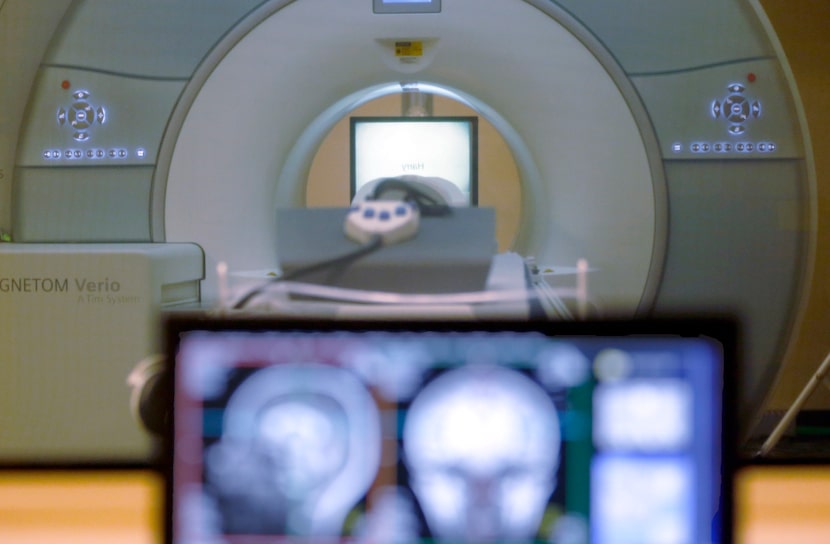
An MRI machine is seen in Pittsburgh, Nov. 26, 2014.
Keith Srakocic / AP
In the new study, Damme and researchers at Northwestern University worked with 17 people who were considered at high risk for psychosis and were not physically active. For three months, the participants did treadmill workouts twice a week, gradually building up their fitness. Most sessions were set at a pace that pushed participants to about 80% of their maximum aerobic capacity — basically, how hard their heart and lungs can work to deliver oxygen during exercise. Every 10 minutes, they added a one-minute burst at about 95% of that maximum effort, repeated three times, for a total of 30 minutes.
Brain scans suggested that connections in the hippocampus — an area involved in memory and learning — got stronger. Participants also did better on working memory, or the brain’s ability to hold information for a short time, such as remembering a phone number long enough to dial it. They also reported feeling less dysphoria.
While it’s too early to say exactly why participants’ moods improved — or whether exercise influences mood through a different neural pathway than it affects psychosis risk — Damme noted that even if someone never goes on to develop psychosis, many people in this high-risk group still struggle with other mental health conditions.
“These broad exercise approaches may have benefits beyond these defining features of psychosis to broad features of many disorders,” Damme said, “such as sustained negative mood that is a part of depression, generalized anxiety and other anxiety disorders.”
Miriam Fauzia is a science reporting fellow at The Dallas Morning News. Her fellowship is supported by the University of Texas at Dallas. The News makes all editorial decisions.