
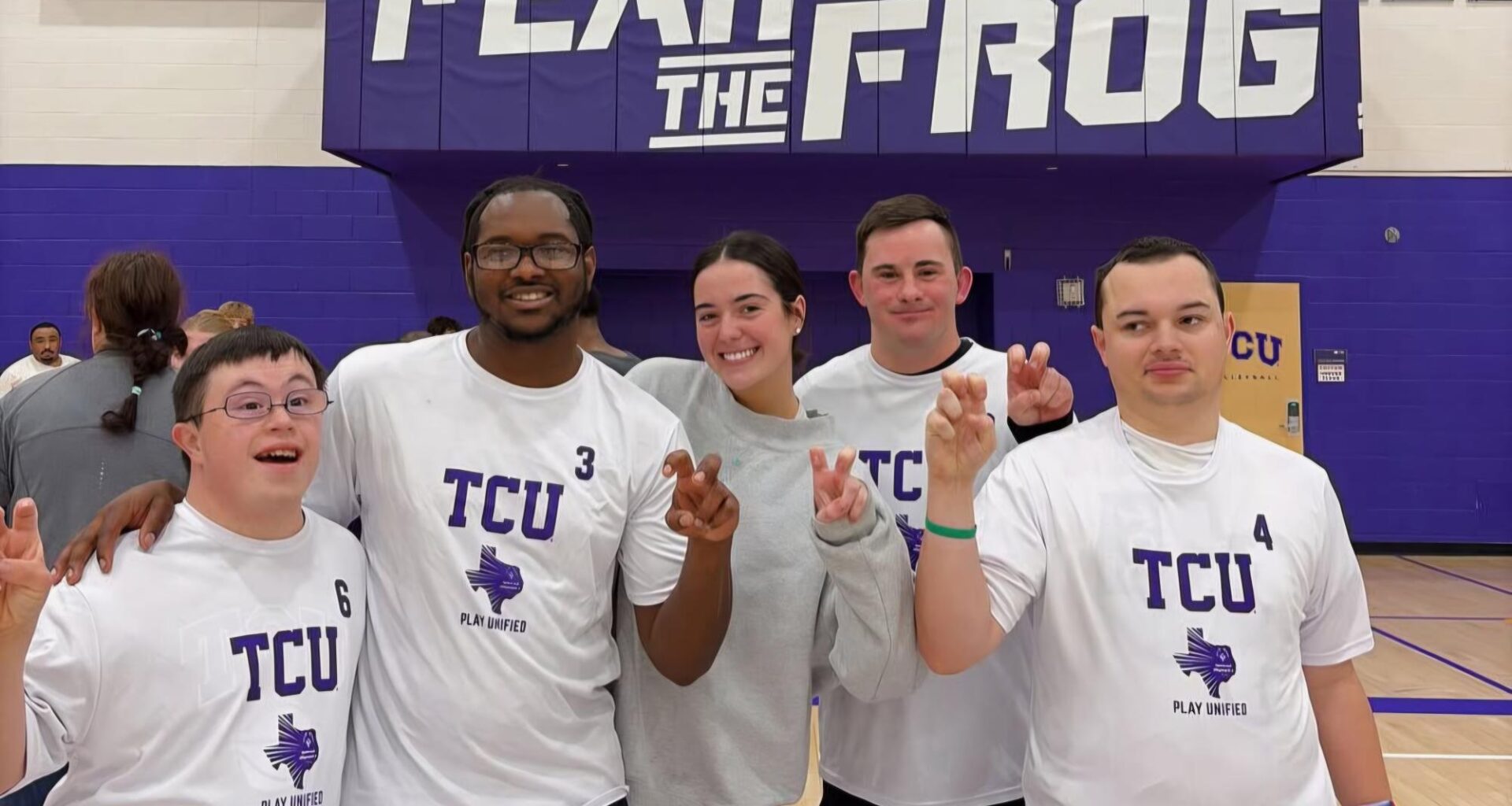
The players stop to pose for photographs and high-five everyone in sight as they dribble the ball across the court.
Their opponents, TCU students, smile, and their parents are on their feet, applauding their Special Olympics athletes, as they stop to pose for pictures and high-five everyone in sight.
More than 250 TCU students are working to help Special Olympians and their families achieve their goals.
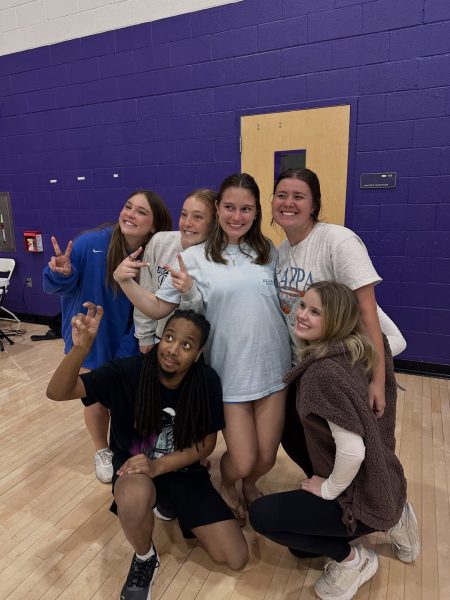 TCU Students support and develop strong relationships with Special Olympic athletes. (Photo courtesy of specialolympicstcu Instagram)
Members of Special Olympics TCU connect with athletes and their families throughout the year through seasonal sports, said Jude Cunningham, a junior finance major with a leadership minor and president of Special Olympics TCU.
“Athletes and volunteers know each other by name and see themselves as friends,” Cunningham said.
He added that the interactions help “students and the broader community begin to understand that inclusion is not just a buzzword, but something worth building and seeking out.”
Tate Wichman, a finance and accounting double major and the organization’s vice president, said many students have found a passion for the Special Olympics after growing up in a world surrounded by sports.
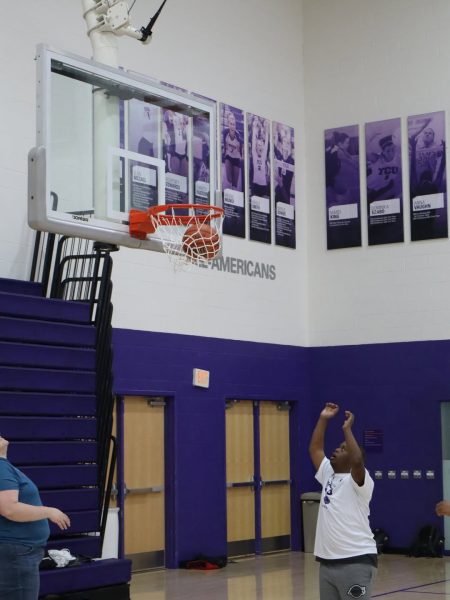 TCU Students play basketball and develop relationships with Special Olympic athletes. (Photo courtesy of specialolympicstcu Instagram)
“Special Olympics has been a passion of mine since middle school,” Wichman said. “Being the oldest brother, I was constantly playing sports with my younger brothers and teaching them new skills, and through Special Olympics, I have been able to share the mutual joy of sports with others, which, in turn, makes me feel fulfilled.”
Every fall, a four-game flag football season is organized and takes place at the Campus Recreation Fields. During the spring, a four-game basketball season also takes place at the SEC gym inside the campus rec center.
Special Olympics TCU also plays an annual mini basketball game during halftime at one of the men’s or women’s basketball games, allowing for a unique experience which brings out the athletes’ emotions on a massive stage, Wichman said.
Behind the scenes, Cunningham said there is a long list of individuals at TCU working to plan and organize events with athletes, including Special Olympics and TCU’s executive team.
Cunningham said organizing an event takes planning, coordination and above all else, teamwork. During the planning process, the university and its staff assist with facility logistics, making promotion efforts easier for the organization.
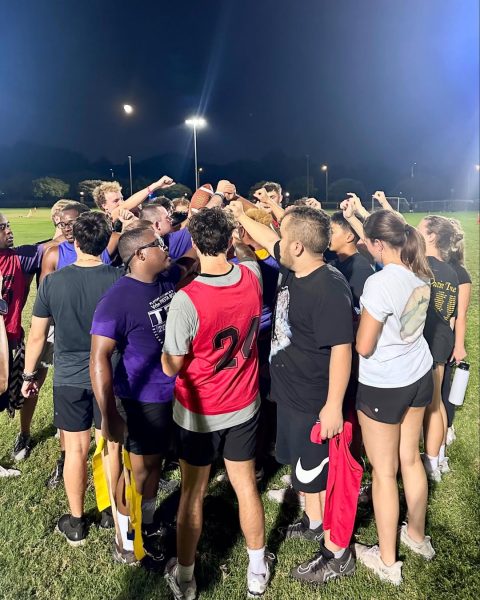 During a Fall 2025 flag football game, players huddle and cheer each other on. (Photo courtesy of specialolympicstcu Instagram)
“One of the biggest reasons we have been able to sustain success is the mentorship passed down from previous leadership teams,” Cunningham said. “This continuity is what keeps the organization strong long-term.”
Special Olympics TCU has continued to grow in support. Every year, students experience their impact first-hand, as they develop close friendships with volunteers, athletes and their families.
“When an athlete asks about your week, shoots a text message about a Mavs game or simply shares a laugh with you, it serves as a reminder that Special Olympics is, at its core, about relationships,” Cunningham said. “Those moments have influenced how I think about leadership, service, and even my career.”