
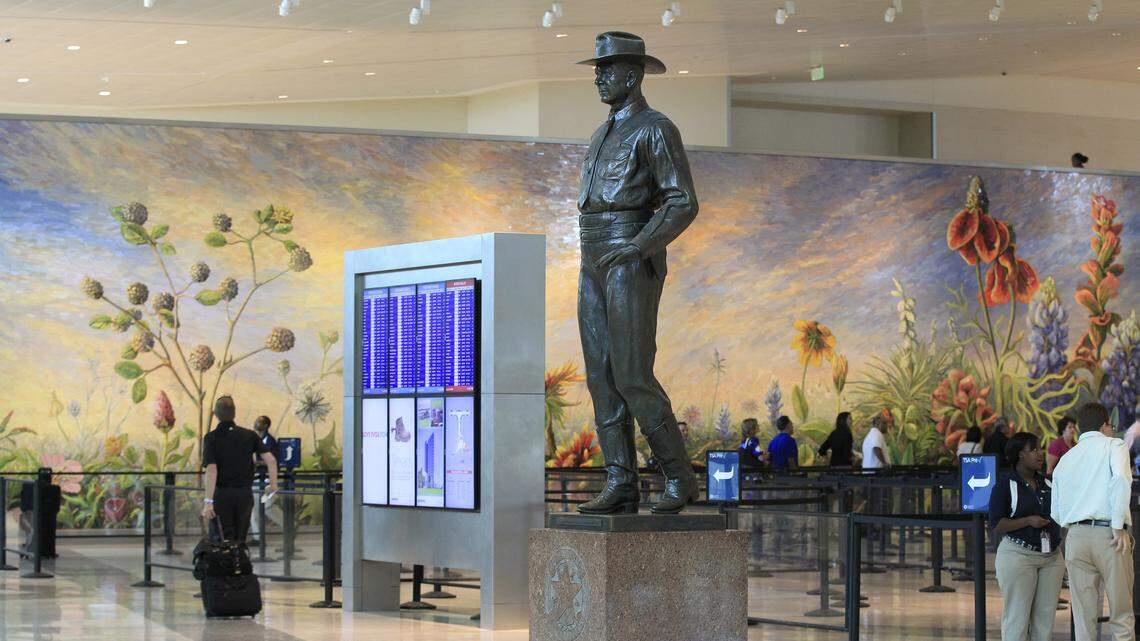
The Texas Rangers recently unveiled the “One Riot, One Ranger” statue at their ballpark, and the Arlington chapter of the NAACP has put out a statement expressing “deep disappointment.”
The 12-foot bronze sculpture, which was modeled after Jay Banks of the Texas Rangers law enforcement agency, had been stationed at Love Field dating back to the 1960s. However, the statue was removed from the airport in the summer of 2020 amid protests about Banks’ actions.
According to the book “Cult of Glory: The Bold and Brutal History of the Texas Rangers,” Banks was the commanding officer when former Gov. Allan Shivers sent the Texas Rangers to Mansfield to stop the desegregation of a high school, despite a court order. Banks was seen relaxing while an effigy of a Black person was hung from a tree.
Banks later wrote in defense of the racist mob assembled at the school, according to the book.
“They were just ‘salt of the earth’ citizens,” Banks wrote. “They were concerned because they were convinced that someone was trying to interfere with their way of life.”
The Arlington NAACP said in a statement that it wrote to the Rangers baseball team before the statue was installed at Globe Life Field, but its comments went unheeded:
“Prior to the installation of the statue, the Arlington NAACP reached out to representatives of the Texas Rangers organization to express our concerns about honoring a historical figure connected to events that undermined civil rights and educational progress in our region. Despite those concerns being raised, the organization ultimately chose to move forward with the statue’s installation.”
When the statue was unveiled, the Rangers released a statement about what it meant to the franchise, sidestepping Banks’ history.
“The Texas Rangers have long occupied a revered place in Texas history dating to the creation of the organization over 200 years ago, before the days of the Republic of Texas,” they said. “While the ‘One Riot, One Ranger’ statue commemorates the legend surrounding the agency’s involvement in the stoppage of an unsanctioned Dallas prize fight in 1896, it also stands as a tribute to all who have served the organization over its storied history.”
Related Stories from Fort Worth Star-Telegram

Fort Worth Star-Telegram
Lawrence Dow is a digital sports reporter from Philadelphia. He graduated with a master’s degree in journalism from USC. He’s passionate about movies and is always looking for a great book. He covers the Texas Rangers and other sports.