

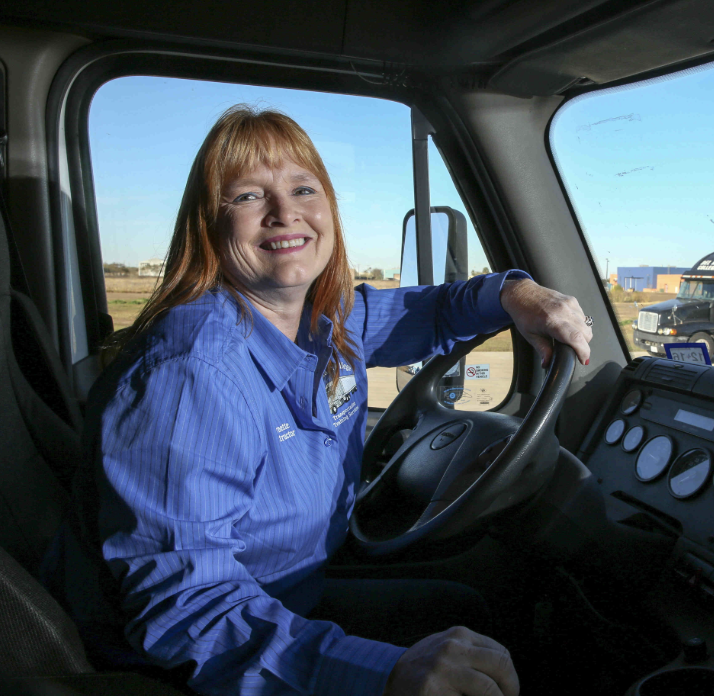
Lynette Cervantes_Director_Del Mar College Transportation Training Servic es
PROGRAM REPRESENTATIVE: LYNETTE CERVANTES
Transportation Training Services Director
Workforce Programs & Corporate Services Division
Q: How are advancements in technology and platforms changing how your area delivers services or instruction?
A: Transportation Training Services is using AI to help with lectures and prepare students for the necessary state tests they must take. We’re also working on an AI Orientation to assist office staff with introductions the first day of class. Additionally, the program implements state-of-the-art simulators to teach students how to shift gears, learn braking maneuvers and perform virtual vehicle inspections before they even climb into a rig; and we use body and dash cams in all our commercial motor vehicles to promote a safe environment as well as protect instructors and students from potential incidents.
Q: What is the most impactful innovation you’ve implemented, and what problem did it solve?
A: The Truck Driving Program’s grade card is completely digital. Instructors now carry an iPad instead of stacks of grade cards. The program also has the certifications needed for vehicle inspection, including all seven Federal Motor Carrier Safety Administration (FMCS) certifications, and those required for backing maneuvers, road certification and maneuvers included on the state’s test. Dash cameras are both forward and rear facing to prevent incidents during training in the trucking yard and while students and instructors are on the road.
Q: How has this innovation improved student success?
A: Regarding digital grade cards, instructor spend less time writing, and colleagues have real-time access to students’ progress or improvement needs. AI software instructors use helps students pass the state tests more quickly while also gaining insightful knowledge. The program now requires a full week of simulator training, which is part of the prerequisite class. This change from a few days to the full week has improved students’ confidence and aptitude when they progress to the training yard.
Q: How has technology helped you build or strengthen partnerships with employers, schools, or other organizations, and how do these connections support the region’s workforce and economic growth?
A: Some of the technology the program uses has provided quicker access to employers through TEAMS and an app called TenStreet that helps carriers connect and employ our students. Many employers prefer Del Mar College’s Truck Driving graduates compared to other training programs because they are aware that DMC goes above and beyond to not only produce Entry Level I truck drivers but also to ensure they receive extensive training focused on safety and the standards set by the industry.
Q: Looking ahead, what advancements do you foresee impacting your area, and what new skills will DMC graduates need?
A: While there is still talk about driverless trucks, I doubt that we will see that change during our lifetime. A truck cannot complete the first and last mile by itself, so a driver is still needed to open the trailer doors and maneuver backward to the dock. Drivers will need new skills now that more advanced trucks require more advanced training. Mirrorless trucks are being produced, so instead of having those mirrors, cameras are now on the side door and add to the abilities needed to maneuver those vehicles. With both these foreseeable changes, our concern is the potential for hacking or possible delay in real-time visibility.
Q: If talking to a prospective student, what are the top benefits or opportunities you’d highlight about your program or service?
A: The trucking industry is one of the few careers where an individual can attend classes in as few as five weeks, get a professional driver’s license and begin working immediately. The average salary for entry level drivers is $38,000 to $58,000, depending on the type of trucking employment an individual pursues and the endorsements they obtain. Some graduates prefer to stay local while others choose to drive regional or even go over-the-road to drive across the country. There are driver positions available for all students, and trucking is one of the few career choices where compensation is equal … no matter a person’s age or gender.
‘;