
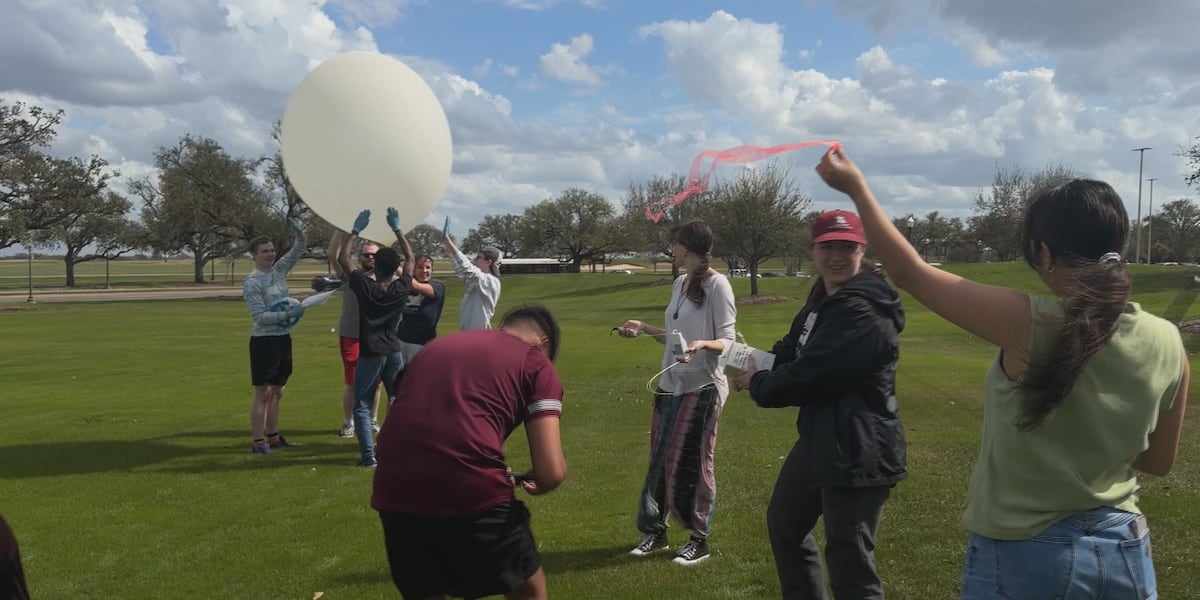
COLLEGE STATION, Texas (KBTX) – As forecasters watch the potential for severe weather moving toward the Brazos Valley this weekend, students and staff at Texas A&M University launched a weather balloon Friday afternoon, sending instruments thousands of feet into the atmosphere to collect real-time data that could help meteorologists better understand what’s ahead.
Members of the university’s atmospheric sciences program launched the balloon from campus, gathering a vertical profile of temperature, humidity, and wind speed and direction as it rose through the atmosphere.
Texas A&M is one of only a handful of locations in the region where balloon launches help fill gaps between National Weather Service observation sites. The nearest launch locations are typically in Dallas, Corpus Christi and Lake Charles — leaving Bryan-College Station in the middle of an observational gap.
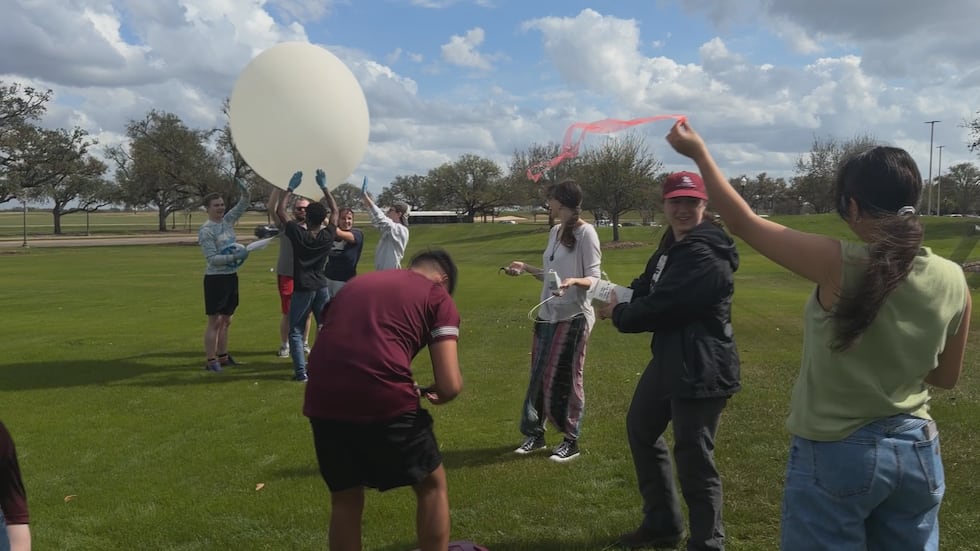 Ahead of a stormy weekend, Texas A&M students launch a balloon to sharpen local forecasts(KBTX)
Erik Nielsen, an instructional associate professor in the Department of Atmospheric Sciences, said the data collected during Friday’s launch feeds directly into the forecasting models meteorologists rely on nationwide.
“We live on the ground, but the atmosphere is three-dimensional,” Nielsen said. “What a weather balloon does, very basically, is get a vertical profile of temperature, humidity, and wind speed and direction.”
Nielsen said that snapshot of current atmospheric conditions is essential to predicting what comes next.
“You need this kind of initial snapshot of the atmosphere,” Nielsen said. “Then we take that snapshot and use the numerics to get a future state.”
With storms possible this weekend, Nielsen said the local launch carries added urgency.
“Launching this balloon can help nail down where that severe weather risk is going to be,” Nielsen said. “Launching that balloon helps fill the gap where there isn’t observed radiosonde data — so we can help provide information on what decisions need to be made for any potentially severe weather later today.”
The data is shared with the National Weather Service and other organizations that rely on weather modeling.
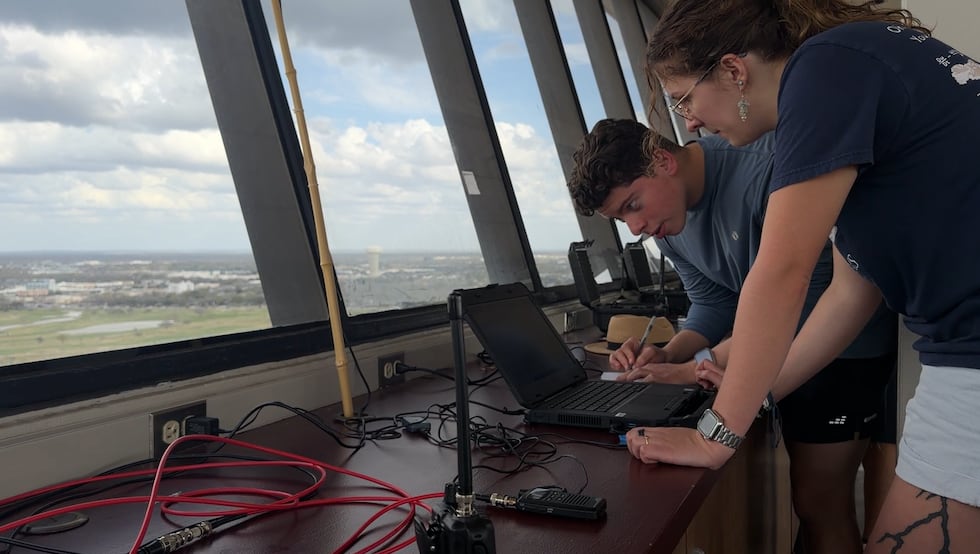 Real-time data from Friday’s balloon launch could shape weekend severe weather forecasts(KBTX)
For students involved in the launch, the opportunity provides real-world experience with tools used by meteorologists around the world.
Camryn Ellis, a senior studying meteorology at Texas A&M, helped launch the balloon Friday. She said the experience gives students direct exposure to how atmospheric data is collected and applied.
“These balloons get launched all over the country and all over the world,” Ellis said. “So it’s a useful skill to have, and it’s a lot of fun to do.”
For Ellis, the path into meteorology began with a childhood fear of storms.
“Like a lot of people, I think I got interested in weather because I was scared of it,” Ellis said. “When I was five, I was terrified of thunderstorms at night.”
Now, as she prepares to graduate this spring, Ellis said she hopes to pursue graduate school in atmospheric science and eventually work for the National Weather Service.
Nielsen said that hands-on connection between data collection and forecasting is central to the program’s value.
“Students get to get this hands-on idea of this is how we collect the data — then they can see the data, they can use the data as a forecast tool,” Nielsen added.
Copyright 2026 KBTX. All rights reserved.