
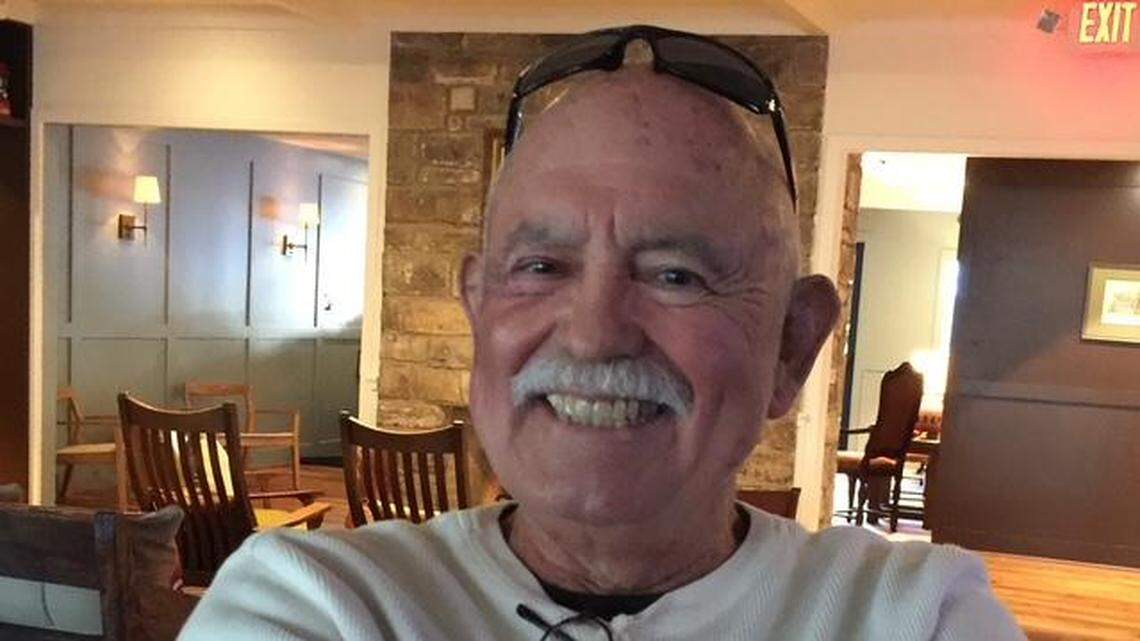
Eddy Herrera led several social service and health organizations in DFW with a mission to help the poor.
Courtesy
Linda Herrera
When former Fort Worth assistant city manager Ramon Guajardo Sr. started his new job with the city as a human resource recruiter for the police and fire departments in 1973, he contacted Eddy Herrera, a prominent Latino leader.
At the time, Herrera was a staff person with the Tarrant County Community Action Agency (TCCAA), a community organizer in the Saul Alinsky style, and outspoken advocate for the indigent and marginalized. Herrera knew probably more than anyone the Fort Worth Latino community needs, its leaders, and its social, educational, and economic solutions.
Herrera dedicated his adult life to land executive director positions with several social service and health agencies for the power to steer services to the poor. He headed the Fort Worth chapter of the American Red Cross, TCCAA, United Cerebral Palsy of Metropolitan Dallas, Visiting Nurses Association of Tarrant County, and Albert Galvan Health Clinic. He also served as the senior vice president for agency relations in the United Way of Dallas and assistant director of the Tarrant County Human Services Department.
Raised in Aspermont, Texas, in the late 1940s and 1950s, Herrera never knew his father John Herrera, who died in Luzon, Philippines, in 1945, as a result of mortar fire. Three uncles who also served in World War II returned alive. Given his family’s patriotic sacrifices, Herrera valued education and serving his community. After Herrera earned his master’s of science in social work at the University of Texas in Arlington (UTA), he attended community organizing training from the Industrial Areas Foundation of Chicago, and plowed into the hard work of empowering the poor and marginalized people in the 1970s and 1980s.
He organized North Side parents such as Rufino Mendoza Sr. and his son Mendoza Jr. to form the Mexican American Education Advisory Committee (MAEAC) in 1971 to address high dropout rates, the dearth of Latino and Latina teachers, counselors, staff, and administrators, and the designation of Latinos as a separate ethnic group. Herrera inspired them to engage Superintendent Julius Truelson and the school board in negotiations. They were eventually successful, primarily through a lawsuit and a new superintendent, to increase Latino presence in the administrative and professional ranks and to receive a distinct Latino category. This prevented the school district from lumping Latinos into the white category to reflect school integration.
Community activist and minister Pablo Calderon worked with Herrera on community projects. He admired his analytical skills, his ability to articulate the “big picture” and skills in dealing with recalcitrant, mostly white-dominated, boards. Calderon described him as personable with an infectious laugh who would act firm and forthright in negotiations. Calderon said Herrera admired farmworker advocate César Chávez and participated in boycotts at local Safeway grocery stores for selling non-union grapes where police arrested Herrera and others. Calderon revealed in first grade an Anglo teacher had difficulty pronouncing Herrera’s birth name Eustolio and called him Eddy. Eustolio derived from the Greek Eustólios, meaning in good order, well-prepared, and well-dressed, all descriptive of Herrera.
Herrera maximized the impact of health, social service agencies
Don Campion worked closely with Herrera as an accountant at the Red Cross, Dallas United Way and the North Side Albert Galvan Health Clinic. As the first director of the federally qualified community health center, Herrera invited the Tarrant County public health director and TCU academics to help him design an effective health care delivery system. Campion observed Herrera’s challenges included the United Way’s metropolitan size and Anglo-centric culture. Herrera diversified the agency’s volunteer roster and led a needs assessment project, interviewing 5,000 people. The feedback resulted in redesigning allocations to prioritize community impact and outcome measurements.
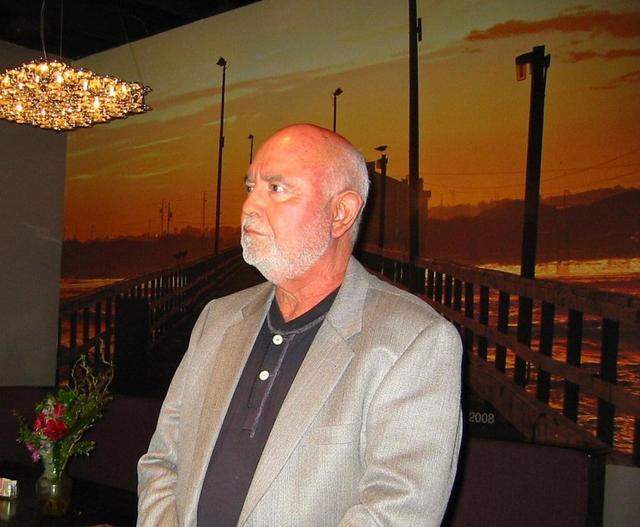 Eddie Herrera is remembered for his wide degree of professional skills and his ability to stand up to power brokers as an advocate for the poor and Latino needs. Courtesy Linda Herrera
Retired social worker Francine Esposito Pratt served as an American Red Cross board member when Herrera was the director. She observed some well-heeled, Anglo elite board members disagreed with Herrera’s efforts to provide transportation services to the elderly and disabled. Herrera recruited new board members and successfully expanded services to the underserved. When Pratt expressed hesitancy in speaking up to the powerful, Herrera reminded her, “They pull their pants up the same way you do,” and encouraged her to “take the power back.”
Belinda Gonzalez Hampton remembered Herrera as a thorough instructor and highly knowledgeable about community resources in a sociology course at UTA. He mentored her in an internship, teaching Mexican American history at the Fort Worth Federal Correctional Institution (now named Federal Medical Center). She found the experience “eye-opening.” Later she worked at the Tarrant Council on Alcohol and Drug Abuse as a drug education prevention specialist aimed primarily at reducing inhalant abuse among Latinos. She secured a grant from the City of Fort Worth to write a handbook, “Drug Abuse Prevention: A Community Response,” that Herrera and his colleague Donna Bearden co-wrote with Hampton. On of Herrera’s lessons Hampton remembered well was to leave an organization after she had established it and to allow new leadership to surface.
Herrera’s professional, executive, and analytical persona in boardroom dealings with city, school, and agency power brokers masked his true passion. He honed his social justice advocacy skills through community organizing strategies to engage establishment power with people power. Herrera lived his retirement years with his wife Linda and died on Sept. 25, 2023, in Granbury, Texas.
Author Richard J. Gonzales writes and speaks about Fort Worth, national and international Latino history.
Related Stories from Fort Worth Star-Telegram