
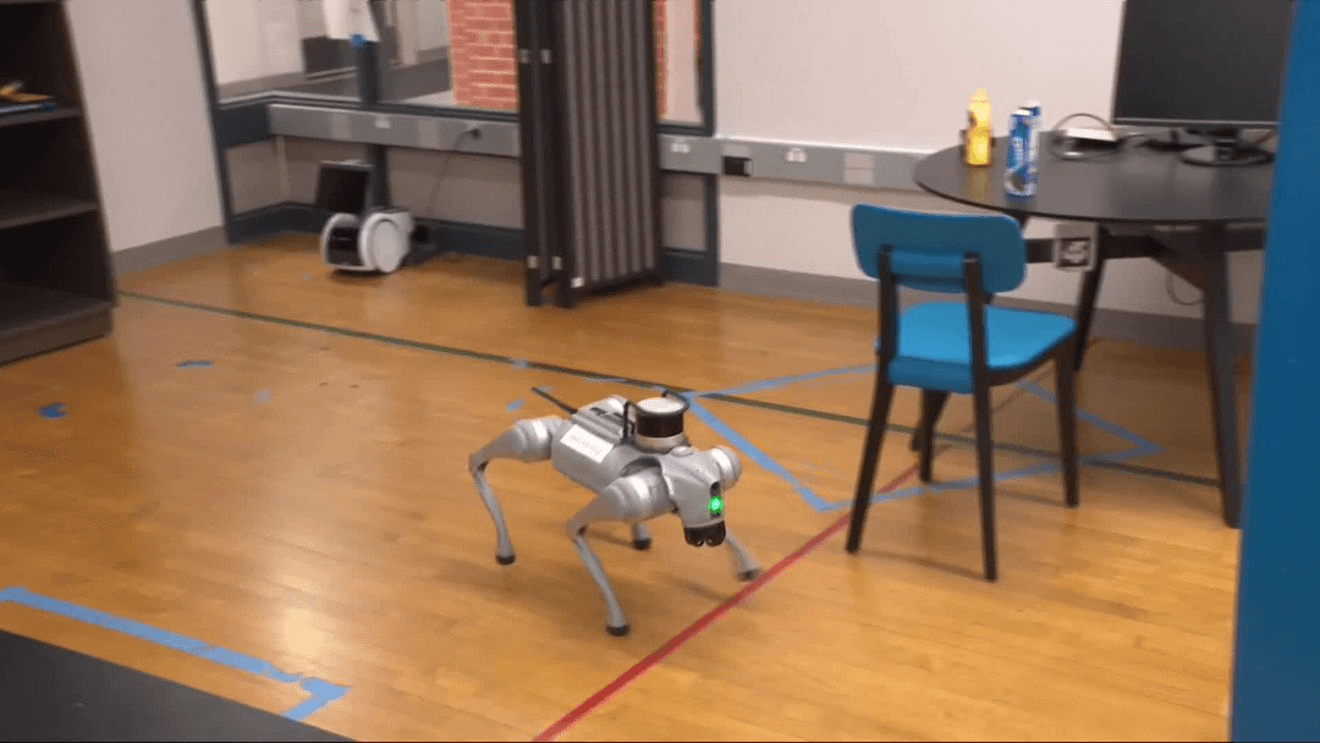
AUSTIN, Texas — Inside the historic Anna Hiss Gym at the University of Texas, the familiar squeak of sneakers has been replaced by something else entirely, the mechanical whir of a robot dog learning to walk.
The four-legged machine carefully navigates around obstacles, responding to commands, adjusting its balance, and making split-second decisions. It’s not just moving. It’s learning.
Welcome to the heart of Texas Robotics.
At UT’s Center for Autonomy, researchers are teaching machines how to see, think and operate in the real world. But beyond movement and intelligence, there’s a deeper mission: making sure these systems behave exactly the way they’re supposed to.
The Big Question: Can We Trust AI?
Artificial intelligence is already embedded in everyday life, from self-driving vehicles to large language models that respond in real time. These systems are powerful. But they can also be unpredictable.
“The main problem with them is we don’t have certificates or guarantees on whether they will do what they’re intended to do,” said Neel Bhatt, a research scientist at UT.
Bhatt focuses on what’s known as verification-centric AI — a framework designed to build safeguards directly into AI systems. Instead of treating AI like a mysterious black box, his research aims to embed physics and logical constraints into large language models (LLMs) and vision-language models (VLMs).
The goal? Systems that can be certified as safe and explained in ways humans can understand.
ALSO| Vibe Coding the Vote: Austin Founder Launches AI Election Tool
KEYE
Why It Matters
Austin has already seen the challenges firsthand.
Self-driving Waymo vehicles have been captured on video illegally and dangerously passing stopped school buses, raising concerns about child safety. Waymo has said it is updating its software to address the issue.
But the larger question remains: Why did the AI system make that decision in the first place?
Right now, many autonomous technologies can’t fully answer that.
“That’s where they’re failing right now,” Bhatt said.
Building AI That Can Prove Itself
Bhatt’s research doesn’t aim to slow AI down, it aims to strengthen it.
“We are focused on verification-centric AI,” he explained. “As AI is allowed to drive a car, walk through your home, or respond in a crisis, we want proof it will do exactly what it’s supposed to do.”
From Robot Dogs to Robot Taxis
Back inside Anna Hiss Gym, the robot dog keeps training, carefully stepping around barriers, adjusting its footing.
It’s a small but powerful symbol of where artificial intelligence is headed.
The future of AI may not just be about building bigger models or faster systems. At UT, the focus is on building AI we can trust, whether it’s navigating your street or walking across a gym floor.
Because in the age of autonomy, intelligence alone isn’t enough.