
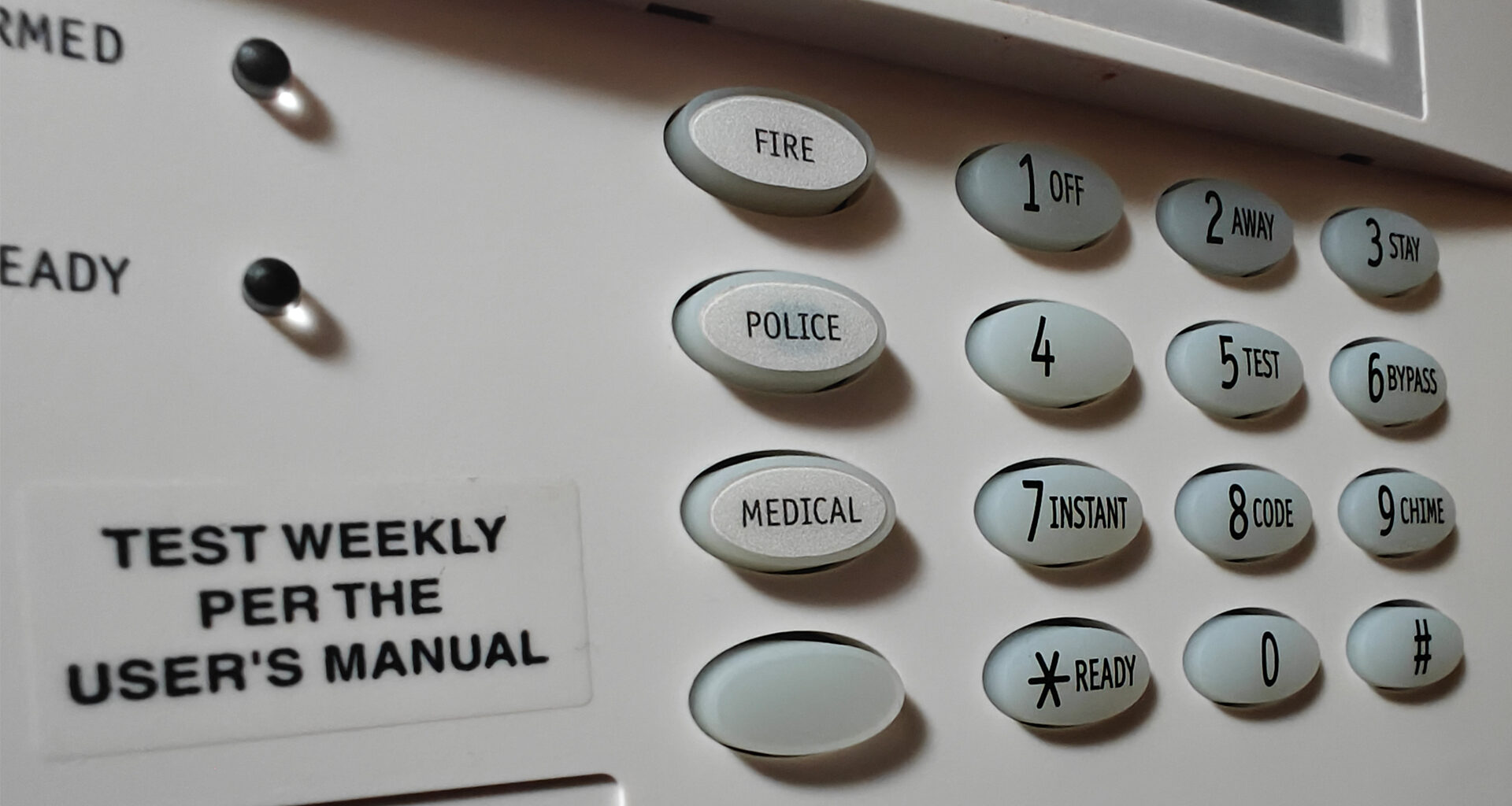
A public outcry stopped enforcement of an updated Lubbock alarm ordinance on October 17 with the issue coming back to the City Council on Tuesday.
David Glasheen, councilman for District 3, plans to repeal the update – eliminating the permit fee for an alarm system.
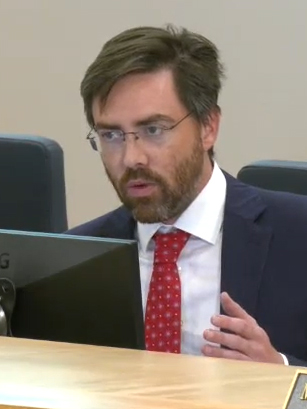 David Glasheen, City Councilman for District 3
“Everyone is already paying taxes for public safety. It’s not any different if you call 911 or if a dispatch service calls 911 on your behalf,” Glasheen said.
The problem presented to the Council in August was false alarms. Last year there were 9,829 false alarms, according to statistics police provided to LubbockLights.com for our previous coverage. Police send two officers to each alarm and typically the response time is roughly six minutes for each officer.
Jennifer Wilson, councilwoman for District 5, said, “What I have a problem with is that permit fee.”
The up-front fee hits everyone, she said, even those who have never had a false alarm.
“I do think that is potentially unfair to people that are maintaining their alarm systems appropriately,” Wilson said.
The dollar figure on the application fee did not change as part of the update. It had been $50 for most homeowners and $25 for those over the age of 65. That’s still the application fee. But the rules on when to pay did change.
Old vs. new
The previous ordinance said “… The chief of police may set a nonrefundable fee …” for an alarm permit.
The new ordinance uses the words “shall pay.”
The previous ordinance also said, “No person who is in control of an alarm site shall be required to obtain a permit for an alarm system unless the police department responds to at least three (3) false burglary alarm notifications or one false robbery alarm notification at such alarm site within any calendar year.”
The new ordinance says “no person” shall operate an alarm system without a permit.
What happened
“I really think a lot of us voted on something we weren’t very clear on,” Wilson said, adding that’s “no excuse.”
“Ultimately, that’s Council’s responsibility … something got out that I don’t think we were quite up to date on what it was asking of us,” Wilson said.
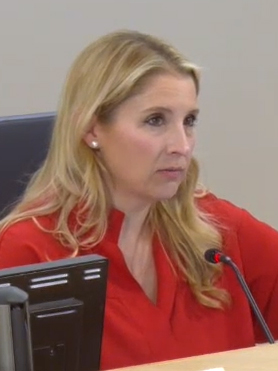 Jennifer Wilson, City Councilwoman for District 5
Glasheen said, “The ordinance came up during the budget cycle. It really didn’t get the attention or study that it deserves from Council, and I include myself in that as part of a self-critique.”
In late August Seth Herman, Lubbock police chief, told the Council, “We do request … that this become effective October 1 to be in line with the fiscal year, if possible.”
A second vote in September approved it, including the October 1 start date.
Glasheen said, “My intention on Tuesday is to cleanly repeal the ordinance as it was passed. The Council then will have enough time to go back and reconsider what, if anything, is appropriate.”
He thinks maybe the Council will be ready to finish this issue by the end of the year.
The police department declined to comment until after the Council has a chance to reexamine the issue. LubbockLights.com was invited to check back next week.
Police Department press release on October 14
LPD Reminds Public of Change in False Alarm Ordinance
(LUBBOCK, TX) – In an effort to combat misinformation, the Lubbock Police Department is reaching out to the public to remind citizens of the recent change to the City of Lubbock’s False Alarm Ordinance.
The change, which went into effect on October 1st, 2025, after approval by the Lubbock City Council, is documented on the department’s website at www.lubbockpolice.com under ‘Crime & Safety’ and ‘False Alarm Information’. Once there, citizens will find detailed instructions about the permitting process. The update to the ordinance requires all alarm systems to have a valid permit in place.
As part of this update, alarm holders will receive a letter from the LPD’s Records department, which notifies the owner of a permit fee associated with their alarm. The letter goes on to document with detailed instruction how the owner can go about making a payment for the permit, as well as who to contact should they have any questions.
The update to the ordinance was implemented in order to better allocate LPD department resources, with a goal of cutting down on false alarm responses and allowing officers to respond to true emergencies.
The timeline so far:
August 26 – A proposed update to Lubbock’s alarm ordinance was introduced for a first vote (and it passed) with a goal to reduce false alarms.
September 9 – Second vote and approval.
October 1 – The updated ordinance took effect with a three false-alarms as the threshold for a fee – reduced from five false alarms per year. Monitoring companies were also required to make two attempts to contact the owner before calling police. Alarms must shut off after 15 minutes; owners have 15 days to fix malfunctioning systems.
October 13-14 – Rollout and public notification letters with notice of a $50 fee went out to citizens saying, “No person shall operate an alarm system unless a valid permit has been issued by the City of Lubbock.”
October 15-17 – Public backlash began. Councilwoman Jennifer Wilson posted to Facebook she wanted the ordinance reconsidered.
October 17 – The city issued a news release 17 days into the updated ordinance, saying it was suspending all permitting and enforcement “to allow for further Council consideration.” No permits or fines have been issued since then.
October 28 – The City Council takes another look at the ordinance with “significant amendments” on the agenda.
Public reaction
“I’ve received a lot of negative feedback … both from the policy and from how it’s being implemented,” Glasheen said.
Wilson wrote on social media, “I want you to know your concerns have not gone unheard and constructive feedback is welcome.”
One person posted on Wilson’s page, “So now we have to pay the city to protect our own homes? That’s ridiculous.”
Another wrote, “Why should law-abiding citizens be punished because other people don’t know how to work their alarm?”
In summing up the public response, Wilson said, “The general consensus from most citizens is they like the fines but dislike the permit fee.”
No fee for public safety
“The city should be encouraging homeowners and property owners to use security features like alarms. They help make the community safer,” Glasheen said.
He’s open to penalties for non-stop false alarms but even then he has concerns.
“For example, a burglar is making various attempts to access a property – sets off the alarm several times. … So, I don’t think it’s fair to paint every call with the same sort of broad-brush strokes, but there certainly is a logic to disincentivizing negligent or inadvertent triggering of the alarm,” Glasheen said.
Wilson said, “I’m absolutely okay with fining people who have multiple false alarms to help LPD out.”
Her original thought was not a permit fee but people could be fined after their first free false alarm. That won’t work.
“State law says you can’t fine until after the third false alarm. So we can’t even make it where fines happen after the first or second,” she said.
Glasheen said, “I expect at the end of the day, there will be a consensus that we want to have some sort of penalty for multiple false alarms, but it’s an issue that needs to be studied more carefully.”
Related

Related posts