
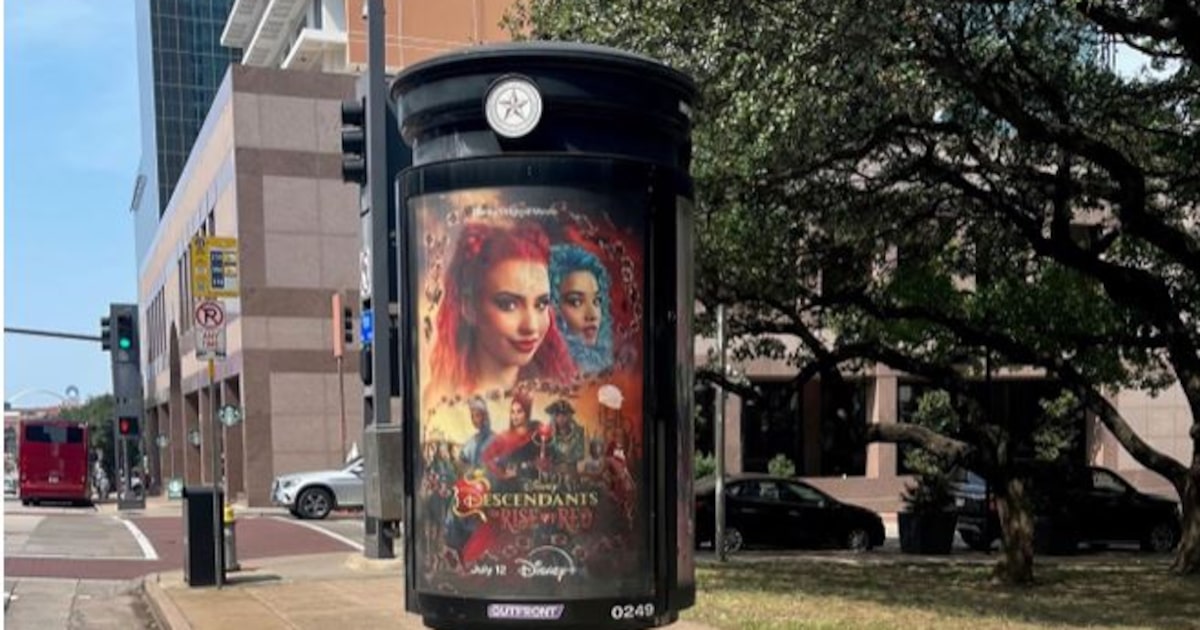
Pedestrians navigating Dallas’ already sub-par sidewalks will soon face another challenge: digital kiosks. You might recall that last summer, City Council members gave the city manager authority to execute a contract with IKE Smart City to install up to 150 interactive kiosks in the public right-of-way. The council made the deal official in December by approving a licensing agreement with IKE Smart City.
The company has been identifying potential locations for kiosks, mostly by reviewing vehicular traffic counts and zoning. The city is reviewing the sites for safety and appropriateness.
Almost two dozen locations have received preliminary approval; the city has scheduled multiple public meetings this month for community feedback. One on Thursday at the J. Erik Jonsson Library downtown attracted only six attendees.
This Editorial Board has argued, strongly and repeatedly, against sidewalk kiosk programs. When they’re in the wrong place, kiosks become physical obstacles and visual clutter. If they’re inadequately maintained, they become vertical litter. The city’s past misadventure with large, barrel-shaped kiosks produced all these problems.
Opinion
The new interactive kiosks will have a slimmer profile than the existing cylindrical ones. IKE Smart City has committed to 24-hour remote monitoring, and cleaning each kiosk six days per week. When not in active use, they will display a mix of advertising and city information, announcements and art. Dallas expects to receive tens of millions of dollars in revenue from the program over 20 years. The company hopes to have several kiosks installed before FIFA tourists arrive this summer.
Supporters stress the digital kiosks will provide exposure for local events, businesses and cultural groups as well as offer useful services such as free Wi-Fi and directions. Months of negotiations have attempted to address council members’ concerns about data collection and privacy.
But the program still must overcome Dallas’ poor track record of enforcing sidewalk rules. Abandoned electric scooters still block downtown sidewalks despite tougher regulations. A 7-foot tall “BIKE LANE CLOSED/SHARE THE ROAD” sign with an awkward X-shaped base has languished on a sidewalk near our office for so long no one can recall what construction project prompted its appearance. Dallas has to increase its capacity to keep sidewalks clear and maintained.
The proposed locations for kiosks also need refinement. Some sites seem logical and safe, such as at the entrance to the Farmers Market downtown. Other potential locations seem inexplicable or unsafe, which is why public feedback is so important. Two are on a stretch of western Lemmon Avenue that is heavy on vehicle traffic and light on pedestrians. Another, in the Bishop Arts District, would add a distraction to an irregular, busy and visually cluttered intersection.
IKE Smart City’s representative for Dallas accepted feedback from attendees at the public meeting. More residents need to speak up.
The city committed us to kiosks despite overwhelming opposition from residents and civic groups. They’re going to be installed, so we might as well help make them as useful, relevant and safe as they can be.
We welcome your thoughts in a letter to the editor. See the guidelines and submit your letter here.
If you have problems with the form, you can submit via email at letters@dallasnews.com